
Last updated September 10, 2026
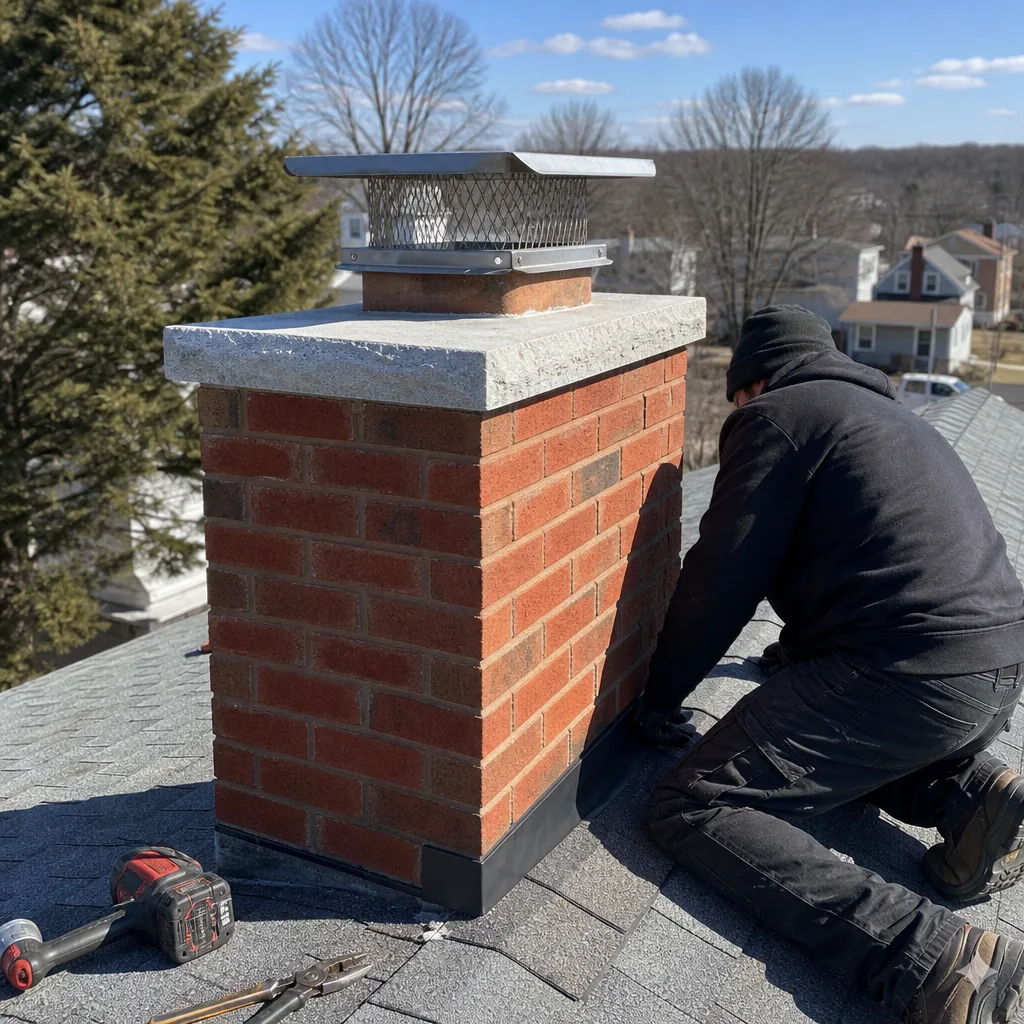
Level 1 sweep and inspection to the NFPA 211 annual standard - flue, crown, cap, and flashing checked and photographed
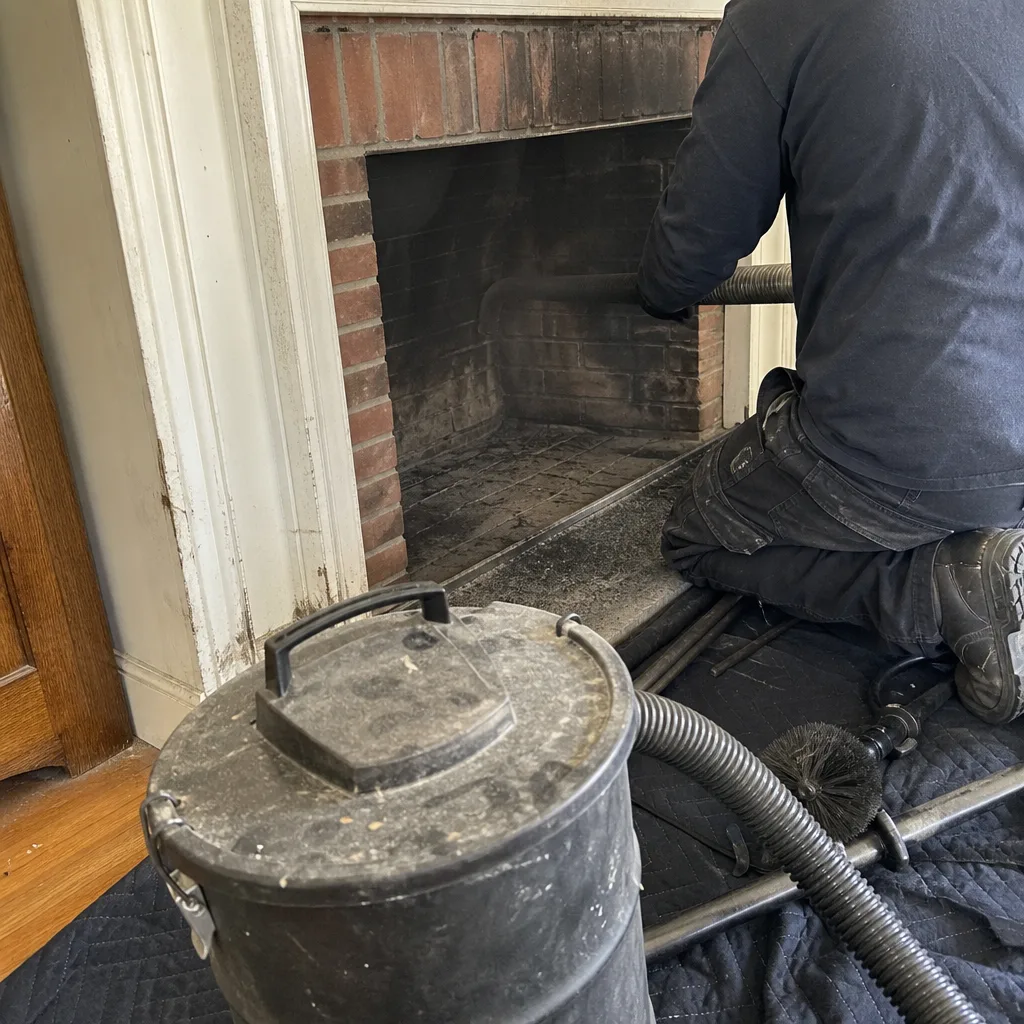
Chimney sweep logs do not sweep chimneys. They loosen some creosote - which then falls where a brush and vacuum still have to collect it.
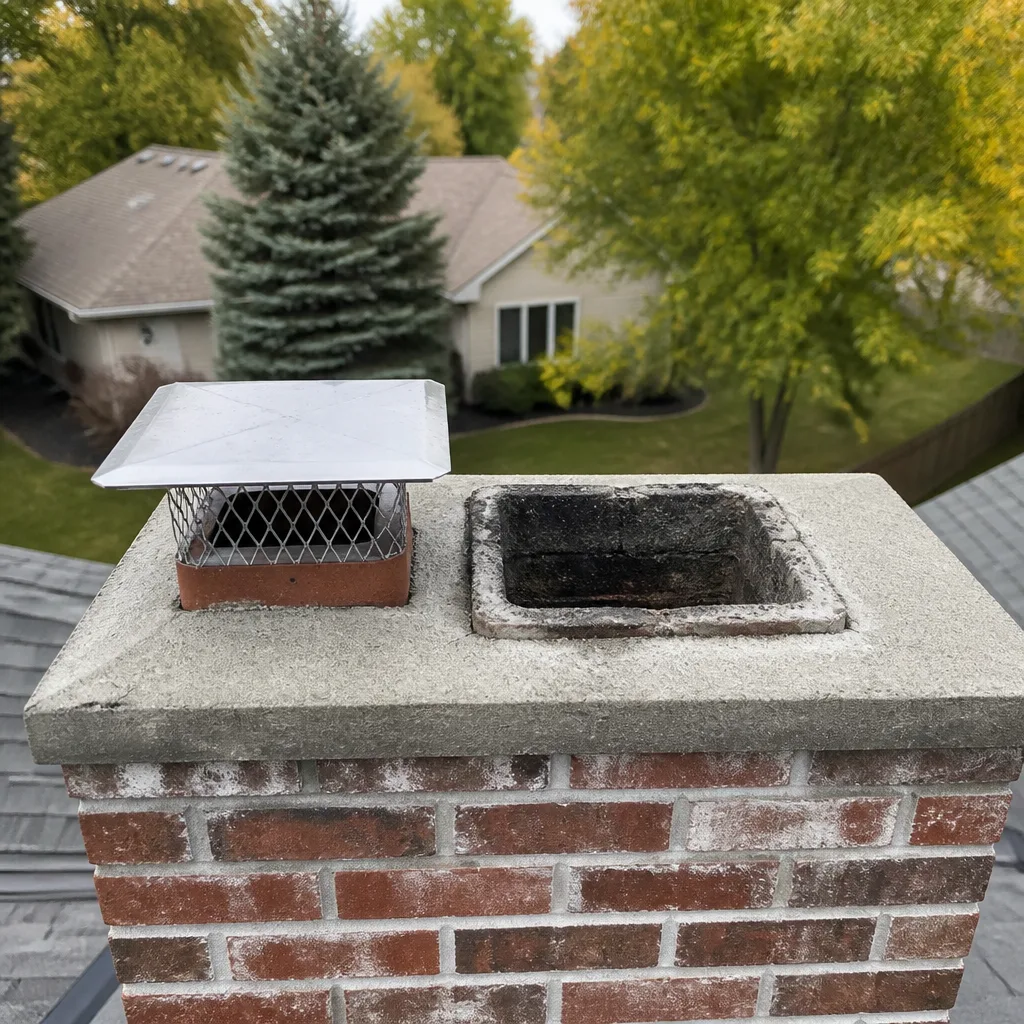
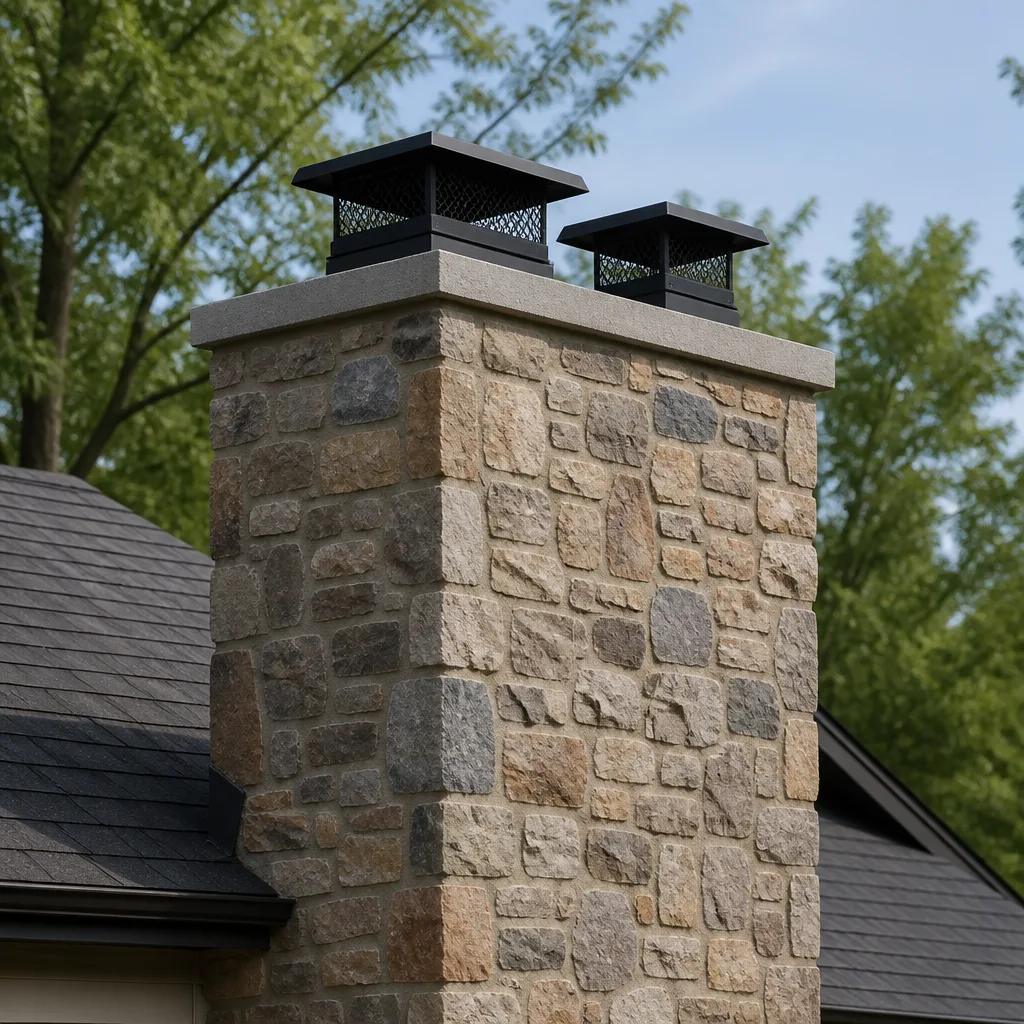
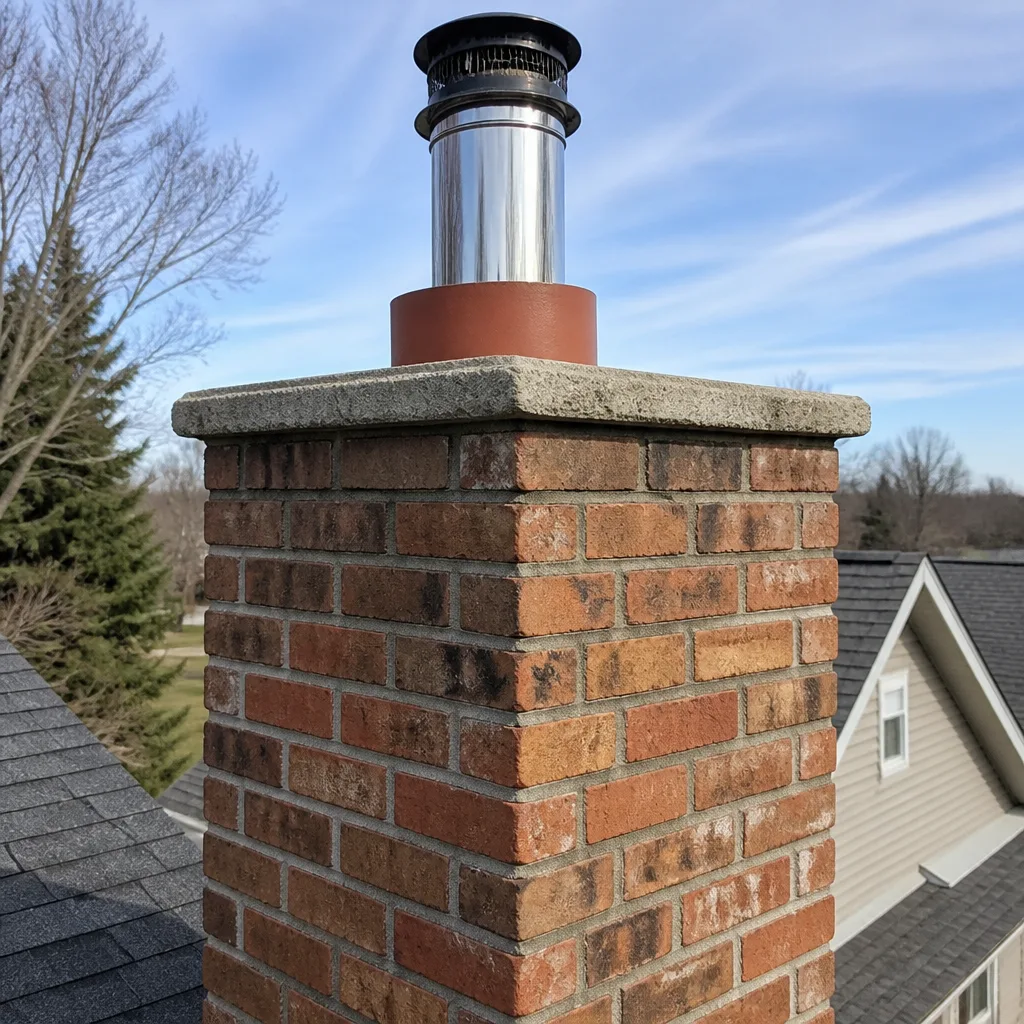
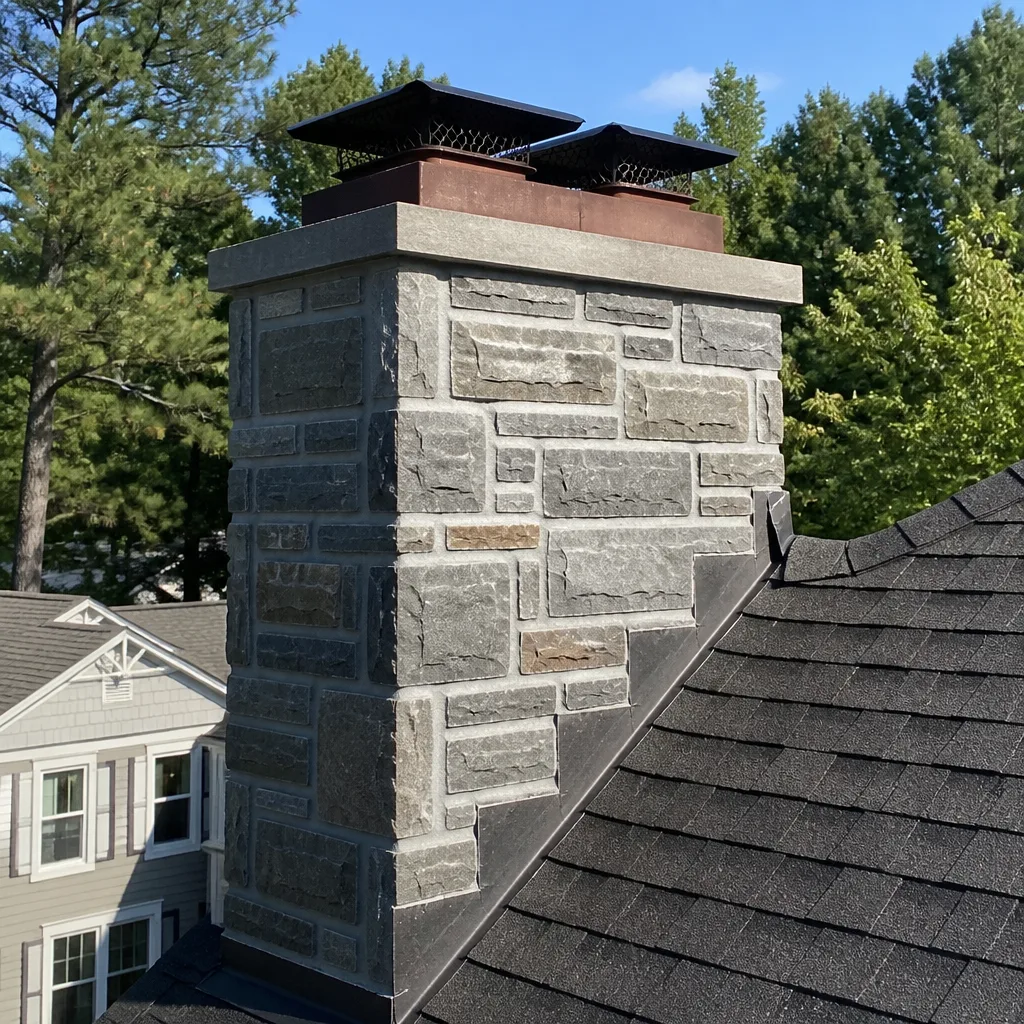
 Before
 After
After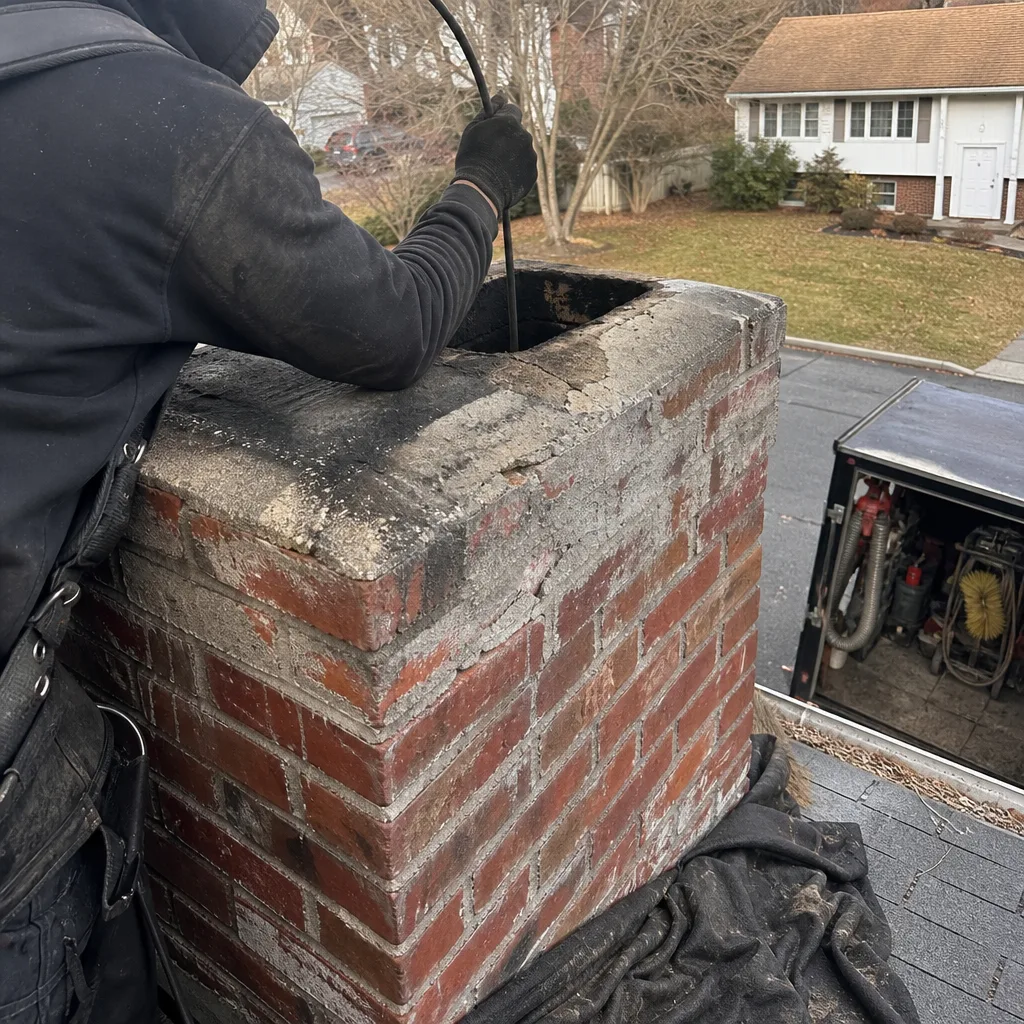 Before
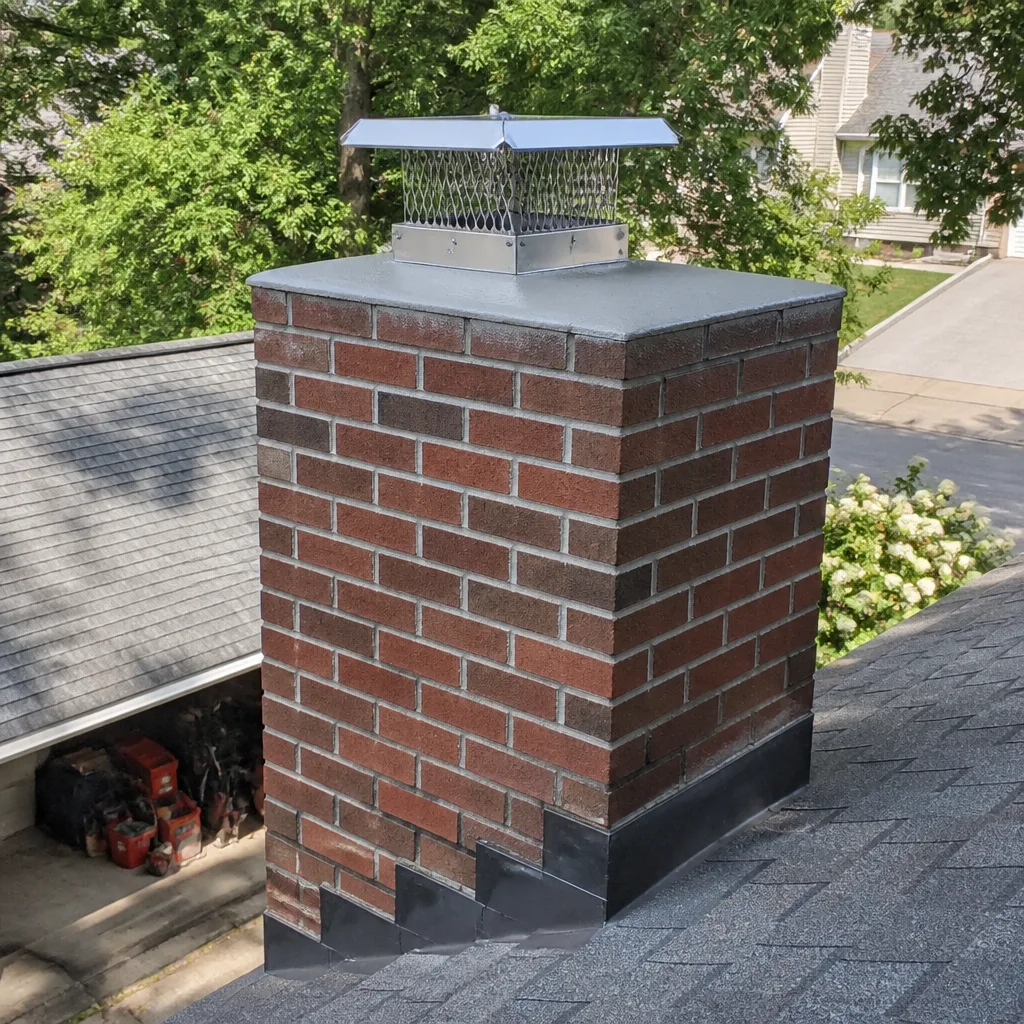 After
After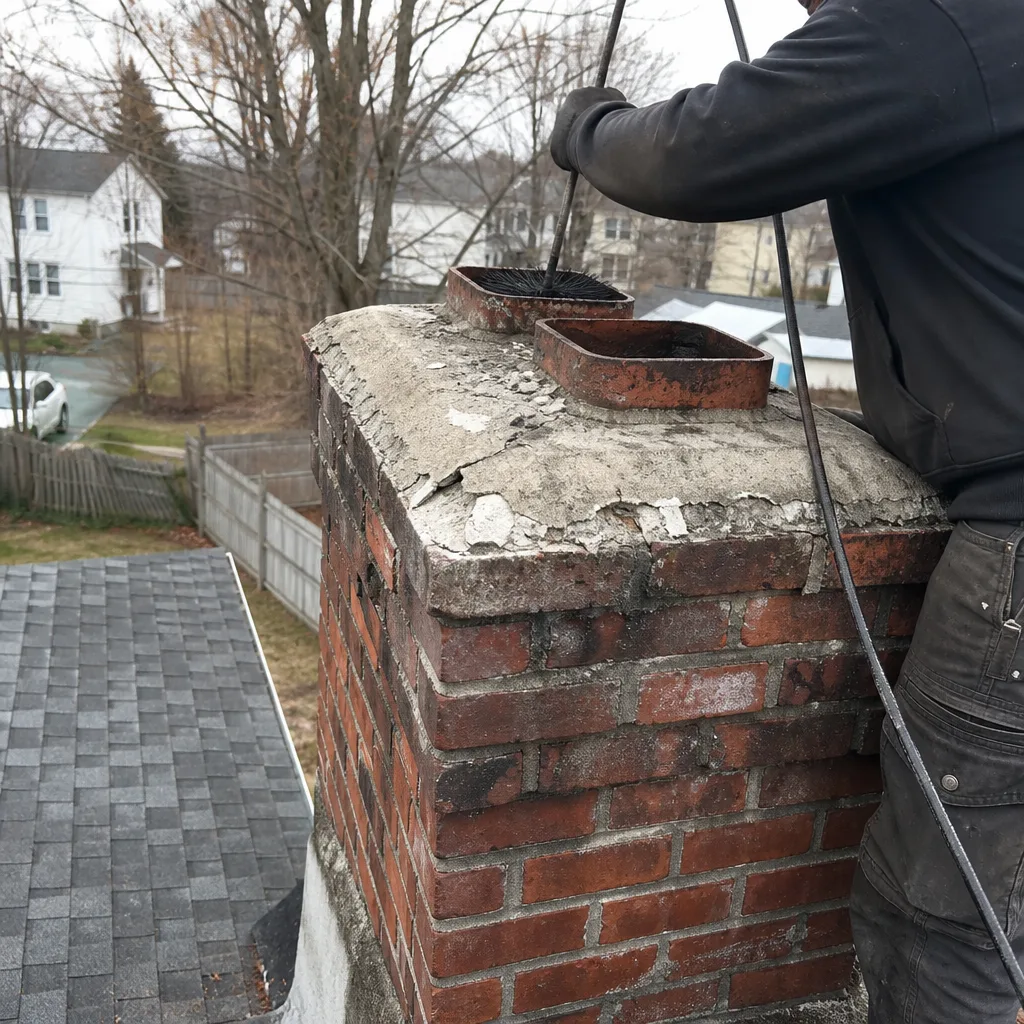 Before
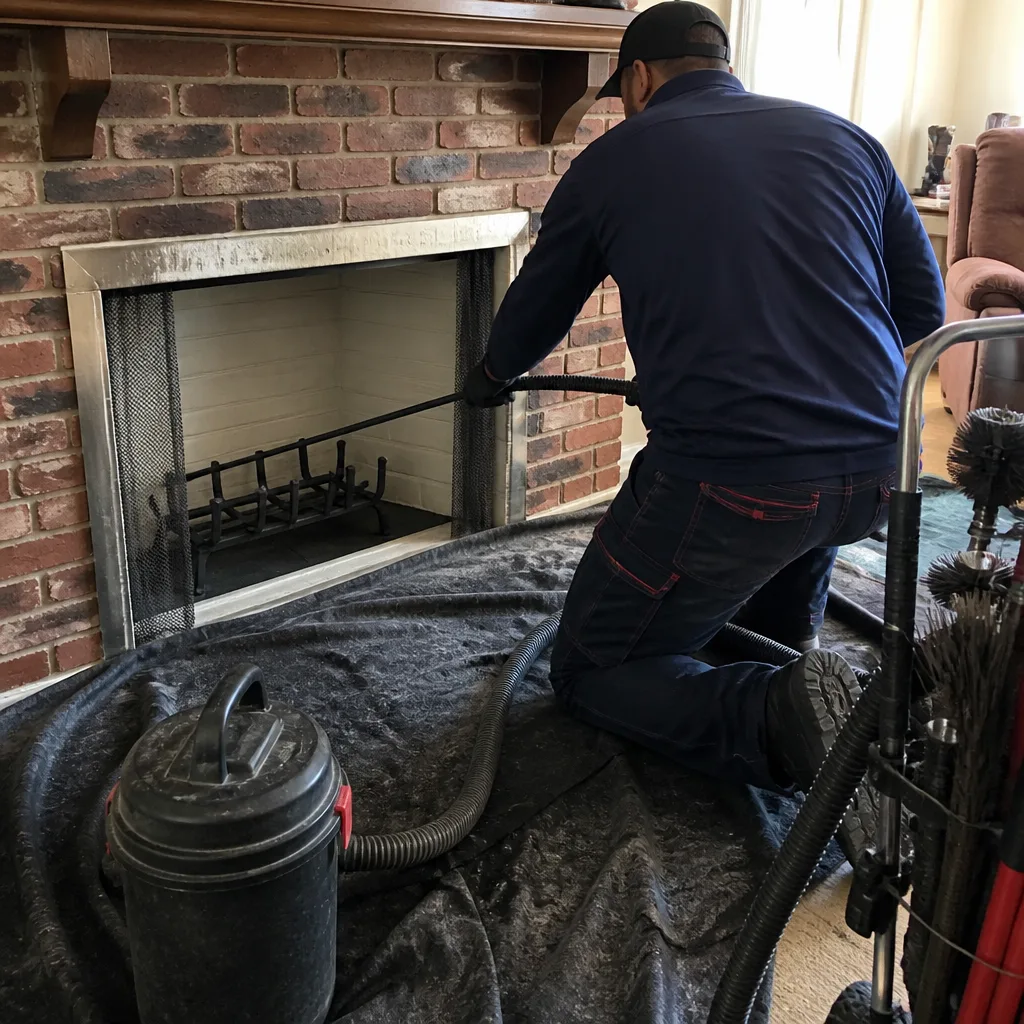 After
AfterChimney Cleaning Warning Signs: A Peabody Homeowner’s Reference Guide
The chimney fires that make the news in Essex County weren’t surprises. In nearly every case, the signs were there weeks earlier: a smell that came and went, a stain spreading on the brick, a fire that didn’t draw the way it used to. The homeowners didn’t recognize those signals because nobody had ever described what they actually look like. This guide changes that. It’s written for Peabody homeowners who want the specific, describable warning signs, not vague advice about “unusual sounds.” By the time you finish, you’ll know which signs mean call this week, and which ones can wait for your annual appointment. Most of them you can check yourself with a flashlight and fifteen minutes.
Quick Answer
Chimney warning signs in Peabody fall into five specific categories: a persistent creosote smell in the house even when the fireplace is cold, a fire that suddenly drafts poorly or puffs smoke into the room, white staining (efflorescence) or cracked mortar visible from the ground, flaking brick inside the firebox, and any puffback during use. If you notice a sharp, acrid smoke smell while burning, stop using the fireplace that day and call a professional. Creosote smell alone usually means you’re due for a sweep, not an emergency.
Table of Contents
- The Creosote Smell: When It’s Manageable and When It’s Not
- Smoke in the Room: Why a Fireplace That Drafted Fine for Years Suddenly Doesn’t
- Puffback: The Specific Warning That Requires Inspection Before the Next Fire
- Exterior Masonry Signs You Can See From the Ground
- The One Interior Sign That Means Call This Week
- Off-Season Warning Signs: Chimneys Break When You’re Not Looking
- Creosote Stages: What Sweeps Actually Find in Peabody Chimneys
The Creosote Smell: When It’s Manageable and When It’s Not
Creosote has a smell, and if you know what it is, you’ll recognize it immediately. Most people describe it as what a campfire smells like the morning after, but inside the house. It’s acrid, tarry, and it gets stronger on humid days. When rain moves through Peabody in the spring and fall, moisture finds its way into the flue, and creosote soaked into the masonry releases that smell back into the living room. This is the smell you notice when the fireplace hasn’t been used in days.
Here’s the distinction most Peabody homeowners never get, and it matters:
- Creosote smell when the fireplace is cold: This is usually a buildup signal. It means your flue has accumulated enough creosote that it’s releasing odor through the chimney. You’re probably overdue for a sweep, but this isn’t an emergency. Book the appointment, avoid burning until it’s done if the smell is strong.
- Sharp, acrid smoke smell while the fire is burning: This is different, and it’s a stop-using-the-fireplace signal. It means smoke is not exiting the flue the way it should, and some of it is entering the living space. That’s a draft problem, a blockage, or a flue issue, not just buildup. Stop using the fireplace that day.
We’ve been inside enough Peabody chimneys to know that first-degree creosote is a brush job and third-degree is a glaze. The smell is your earliest warning about which one you’re dealing with. If you’re smelling creosote in a room far from the fireplace, like an upstairs bedroom, that’s often a sign the odor is traveling through the house, which means the concentration in the flue is substantial. Don’t ignore that one.
For homeowners who want the full picture on what a sweep actually removes and how the process works, our Chimney Cleaning & Sweep in Peabody page walks through it step by step.
Smoke in the Room: Why a Fireplace That Drafted Fine for Years Suddenly Doesn’t
You’ve burned in this fireplace every winter for a decade. Then one evening in November, you light the fire, and within twenty minutes the room is hazy. You open a window, fiddle with the damper, maybe you even turn off the furnace fan. Nothing fixes it. This is the most common call Wendell gets between Thanksgiving and Christmas in Peabody, and here’s what most homeowners don’t know: a sudden draft failure is almost always a specific, diagnosable problem. It is not “just the chimney needing cleaning.” A chimney doesn’t lose its ability to draft overnight from normal soot buildup. Something changed.
The most common causes Wendell finds in Peabody chimneys when a fireplace suddenly starts smoking:
- Nesting material or debris in the flue. Squirrels, birds, and raccoons love chimneys in Peabody’s older neighborhoods, especially in the South Peabody and West Peabody areas with mature trees close to rooflines. A nest can sit in the flue for months and only become obvious when a fire’s heat loosens it and smoke can’t get past it.
- Chimney cap failure. If the cap rusted through or shifted, rain gets in, and wet creosote collapses against the flue walls. That narrows the passage and kills the draft.
- House pressure changes. You added a new bathroom exhaust fan. The kitchen range hood got upgraded. You replaced windows or added insulation. Any of these makes the house tighter, and a tight house changes the pressure balance the fireplace depends on. This one’s misdiagnosed by homeowners constantly because the chimney didn’t change, the house did.
- Damper warping or cracking. A damper that doesn’t open fully or has a corner broken off won’t let enough air through. It looks fine from the firebox. It isn’t.
The point is this: a fireplace that suddenly smokes has a cause. It doesn’t need a guess. It needs someone to put a camera up the flue and look. That’s the difference between treating a symptom and fixing the problem.
Puffback: The Specific Warning That Requires Inspection Before the Next Fire
Puffback sounds like a small word for a scary thing. It’s the moment when the fire seems to “burp” smoke back into the room instead of sending it up the chimney. You might see a puff of gray smoke exit the fireplace opening. You might hear a soft “whump” sound. In the worst cases, the smoke fills the room and the firebox visibly behaves differently for a second or two.
Here’s what’s actually happening. A fire is burning, the flue is doing its job, and then something interrupts the draft. It could be wind shifting against a chimney cap. It could be a burst of creosote igniting in the flue. It could be a sudden pressure change inside the house, like a bathroom fan cycling on or an HVAC system starting. Whatever the cause, the draft reverses for a moment, and smoke takes the path of least resistance, which is now into your living room.
A single puffback on a windy day might be nothing. Two puffbacks in one season is a pattern. And any puffback that happens on a calm day, or happens more than once in a single fire, is a specific warning that needs inspection before you light another fire. The issue is rarely the damper setting. It’s usually something structural, and it won’t fix itself by fiddling with the controls.
If you’ve had a puffback this year, schedule a camera inspection. It’s the fastest way to see exactly what changed inside the flue. For Peabody homeowners with older chimneys, this is especially important because firebox and flue geometry in houses built in the 1950s through 1970s often differs from what you’d find in newer construction. What worked for thirty years doesn’t account for the cap rusting out or a partial flue collapse.
Exterior Masonry Signs You Can See From the Ground
You don’t need a ladder to spot most exterior chimney problems in Peabody. You need to stand in your yard and actually look at the chimney, which most people never do. Here’s what to look for, in order of urgency.
White staining (efflorescence)
Efflorescence is the chalky white deposit that appears on brick. It means water is moving through the masonry and dissolving salts that get deposited on the surface when the water evaporates. It’s the earliest visible sign of water infiltration. By itself, efflorescence is not an emergency. It is, however, a warning that your chimney is absorbing water, and water + freeze-thaw cycles in Peabody = spalling brick. You have time to address this one, but don’t put it off for years. The fix often involves sealing or repointing, not a rebuild, if you catch it early.
Cracked crown
The crown is the concrete slab at the very top of the chimney. It’s designed to shed water away from the flue. Crowns crack. When they do, water enters the very top of the chimney structure and works its way down through freeze-thaw cycles. A cracked crown is a moderate urgency issue. It won’t fail tomorrow, but every New England winter with a cracked crown ages the chimney faster than a healthy one. This is also one of the most cost-effective fixes in chimney work, which means waiting often turns a $400 repair into a $4,000 rebuild.
Missing or deteriorated mortar joints
Run your eyes along the mortar lines between bricks. In a healthy chimney, they’re uniform. If you see gaps, crumbling mortar, or places where it looks like the mortar has turned to sand, that’s the classic sign of weather erosion. Peabody winters are hard on mortar. Missing mortar lets water in and also reduces the structural stability of the chimney. This one is also a “call this season” situation rather than a “call this decade” situation.
Spalled brick faces
Spalling is when the flat face of a brick has popped off, leaving a recessed, rough surface. It’s what happens when water inside the brick expands as it freezes. If you see spalled brick on the exterior, the water has been working for years. Spalling is the most serious of the ground-visible signs because it means structural degradation is already happening. Schedule an inspection.
For a deeper look at what exterior chimney damage means and how it’s repaired, see our Chimney Repair in Peabody guide.
The One Interior Sign That Means Call This Week
If you take nothing else from this guide, take this. Open the damper, get down to eye level with the firebox, and shine a flashlight around the inside. What you’re looking for is flaking, pale, or powdery residue on the firebox walls and floor, especially if it’s appearing in sheets or layers rather than as simple soot.
That flaking material is often creosote or a creosote-soot combination in its second or third stage. Here’s the thing Wendell tells Peabody homeowners over and over: Your flue doesn’t care how the fire looks. It cares how it breathes. Third-degree creosote is a glaze. It’s shiny, it’s tar-like, and it’s fuel. When it ignites, you have a chimney fire, and a chimney fire can crack a flue liner in seconds. That cracked liner is then a pathway for the next fire’s heat to reach the house framing. That’s how chimney fires become house fires.
The flaking inside the firebox is a sign that the same material is coating your flue, and the flue is where it matters most. This is the one sign that should move your call from “when I get around to it” to “this week.” A sweep with a camera can tell you in under an hour what stage you’re dealing with and whether a cleaning is enough or whether the flue needs closer work.
HeatShield and DuraFlex are two of the liner systems we work with when a flue has been compromised by creosote fire damage or years of heat stress, and the camera footage drives that recommendation. There’s no guesswork in it.
Off-Season Warning Signs: Chimneys Break When You’re Not Looking
The most dangerous time for a Peabody chimney is not January. It’s April through September, when nobody is looking at it. Here’s why.
Peabody gets real freeze-thaw cycles. Water finds its way into hairline cracks in the fall, freezes, expands, and opens those cracks wider. When the ice melts, the crack is larger than it was. Next freeze, it expands again. Over a few winters, a hairline crack becomes a visible gap. This process doesn’t pause because you stopped using the fireplace. It continues all year, and it accelerates in the spring and fall when temperatures oscillate around freezing.
Off-season warning signs to watch for:
- Damp smell from the fireplace in summer: This is water sitting where it shouldn’t be. It could be rain getting past a failed cap or crown, or it could be condensation in a flue that isn’t drying out. Either way, moisture in a chimney is never good.
- New efflorescence on the exterior in spring: Water moved through the brick during winter. The white staining might not have been there in November.
- Debris falling into the firebox during the off-season: You open the damper in September to get ready for burning season and there’s a pile of twigs, leaves, or worse. That means the cap was compromised and whatever fell in spent the summer in your flue.
- Rust stains below the damper or on the damper itself: Water’s been running down the flue. Rust on the damper is a sign that rain is getting through and the flue is wet.
Burn or no burn, once a year is the rule. Chimneys break in the off-season, and the off-season damage is what makes the first fire of October a surprise. If you’re in the habit of only calling a sweep when something’s wrong, you’re always going to be calling after a problem has had months to develop. The Peabody homeowners who schedule a spring or summer sweep catch crown cracks before they become spalled brick, and they’re the ones who never meet a chimney fire.
Creosote Stages: What Sweeps Actually Find in Peabody Chimneys
Creosote is the byproduct of burning wood, and it’s not one substance. It’s three different stages, and knowing the difference helps you understand what you’re looking at in your own firebox.
- First-degree creosote: Dusty soot, soft, dark brown or black. It brushes off easily. This is the stage that a routine sweep removes, and it’s the stage that most Peabody homeowners have if they burn dry, seasoned wood and get swept annually. No emergency here.
- Second-degree creosote: Flaky, crusty, and shiny in spots. The flakes can be wide and the texture is more like cracked paint than dust. This stage requires more than a brush in places. It signals that burning conditions have been less than ideal: unseasoned wood, low fire temperatures, or an undersized flue.
- Third-degree creosote: A hard, shiny glaze, like tar that’s been baked onto the flue walls. It’s fuel. It can ignite at around 2,000 degrees, which is well within the range of a normal fire’s flue gases. Third-degree creosote is what turns a simple chimney fire from a contained event into a structural threat. Removing it often requires rotary tools or specialized chemicals, and a camera inspection afterward to confirm the flue walls are intact.
Here’s the part that surprises most Peabody homeowners: the wood you burn matters more than how often you burn. Green or partially seasoned wood produces more creosote per fire than dry, two-year-seasoned hardwood. If you burn whatever you can find in the garage, you’re loading the flue with the feedstock for third-degree creosote. Burning low, smoldering fires does the same. Hot fires with dry wood are cleaner. Your flue doesn’t care how the fire looks. It cares how it breathes.
Common Mistakes to Avoid
- Assuming a smoke smell means you simply need the chimney swept. It might be buildup, but it might be a draft problem, a failing cap, or a pressure issue in the house. Cleaning won’t fix a damper that isn’t opening all the way.
- Burning the creosote out with a hot fire. This is the advice Wendell still hears from old-timers in Peabody, and it’s dangerous. A deliberate hot fire in a flue lined with third-degree creosote is how chimney fires start. Never attempt to “burn out” creosote.
- Ignoring efflorescence because it comes off with a brush. Brushing off the white staining doesn’t stop the water infiltration that causes it. The water is still getting in. The stain is just the symptom.
- Waiting until the first cold snap to book a sweep. In Peabody, the first serious cold snap in October is exactly the day every homeowner remembers their fireplace exists. Book in August or September. You’ll have your pick of appointment times, and you’ll know the chimney is ready.
- Assuming a newer house doesn’t need a chimney inspection. Modern, airtight homes have different draft characteristics than older homes, and newer construction often has prefab chimneys that wear differently than masonry. No house is exempt from chimney physics.
- Using a fireplace that had a puffback “just one more time” before getting it checked. The next puffback might be the one that fills the room with smoke in the middle of the night. If you’ve had one, the next fire should be after the inspection.
When to Call a Professional
You should call a professional if you’ve noticed any of these: flaking or shiny creosote buildup visible in the firebox, a fireplace that suddenly smokes into the room, more than one puffback in a season, white staining spreading on exterior brick, cracked or missing mortar joints, a damp smell from the fireplace in summer, or debris falling into the firebox between uses. If you smell sharp, acrid smoke while burning, stop using the fireplace and call. Top Hat Chimney offers free estimates in Peabody, and camera footage comes with every inspection. The camera footage and a plain-English verdict, every time, no exceptions. Call (978) 637-8560.
If you’ve got a fireplace in need of attention beyond the flue itself, our Fireplace Services in Peabody page covers what we check and how we keep the whole system working. And if you’re new to Peabody or just want the full picture of what a well-maintained chimney looks like, start with the Top Hat Chimney home page and work from there.
Frequently Asked Questions
Creosote smells like a cold campfire, tarry and acrid, and it’s strongest on humid days when moisture releases the odor from the flue. It’s most noticeable when the fireplace hasn’t been used in a day or more. A persistent creosote smell means buildup in the flue and you’re likely due for a sweep.
A standard chimney sweep in Peabody typically runs between $175 and $300 depending on the level of creosote, flue height, and whether the chimney has been swept recently. If the creosote has reached second or third stage, the cleaning costs more because it requires rotary tools or chemical treatment. Call (978) 637-8560 for an exact quote before the sweep arrives, no hidden adjustments afterward.
You can brush a first-degree creosote chimney yourself if you have the right equipment and are comfortable working at height, but you cannot inspect what you cannot see. A brush removes soot; a camera shows you the cracks, failed mortar, and liner damage. In our experience, most DIY chimney cleaning in Peabody gives homeowners a false sense of security without ever revealing the actual condition of the flue.
Once a year, even if you rarely use the fireplace. Chimneys in Peabody are exposed to freeze-thaw cycles, wind-driven rain, and wildlife. A chimney that sits unused still collects debris, absorbs water, and develops problems that only show up when you light a fire again. An annual sweep is the maintenance that prevents the repair.
Creosote builds, and it does not go away on its own. First-degree soot becomes flaky second-degree creosote, which becomes shiny third-degree glaze. At that point, the flue is lined with fuel, and a hot enough fire can ignite it. A chimney fire can crack the flue liner, and a cracked liner lets heat and gases reach the framing of the house. The cost of a sweep is the cheapest insurance you will ever buy for your home. Call (978) 637-8560 for a free estimate.
Not always. A camera inspection shows exactly what condition the liner is in. If the liner is intact but heavily coated, a thorough cleaning plus a shielding product like HeatShield can extend the liner’s life. If the liner is cracked or collapsed, a new liner from a brand like DuraFlex is often the long-term fix. The camera footage tells the truth either way, and you’ll see it with your own eyes before anyone quotes you a repair.
The Bottom Line
Chimney warning signs in Peabody are visible and smellable long before they become dangerous. The creosote smell in your living room, the sudden smoke in the firebox, the white staining on the brick, the flaking glaze inside the firebox, the puffback on a cold night: these all have specific causes, and every one of them gives you time to act if you know what you’re looking for. Most Peabody chimney problems start small. The ones that make the news are the ones nobody recognized. Check your firebox with a flashlight this week. Look at your chimney from the yard. If something’s changed, call (978) 637-8560, and Wendell will be the one who shows up to look.
Written by Wendell Pike, Owner at Top Hat Chimney, serving Peabody since 1999.