
Level 1 sweep and inspection to the NFPA 211 annual standard - flue, crown, cap, and flashing checked and photographed
Chimney sweep logs do not sweep chimneys. They loosen some creosote - which then falls where a brush and vacuum still have to collect it.
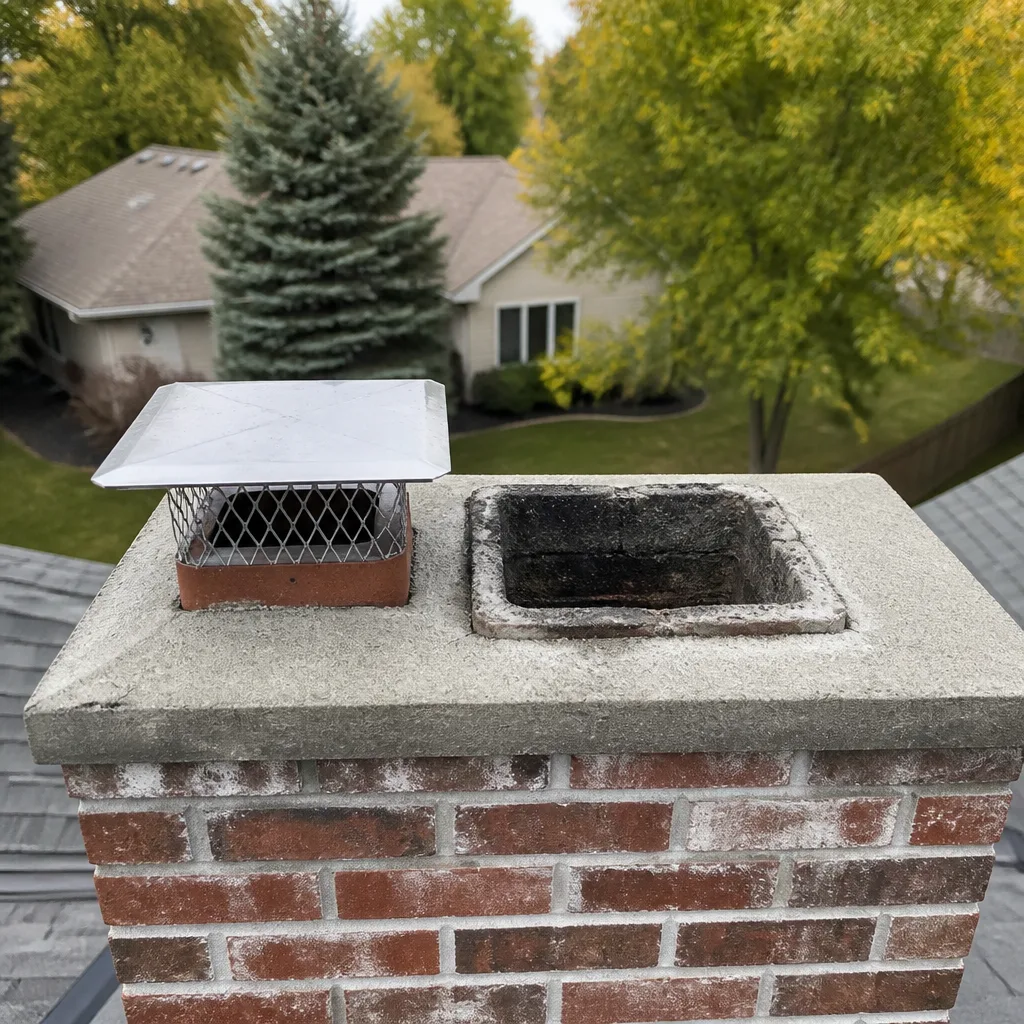
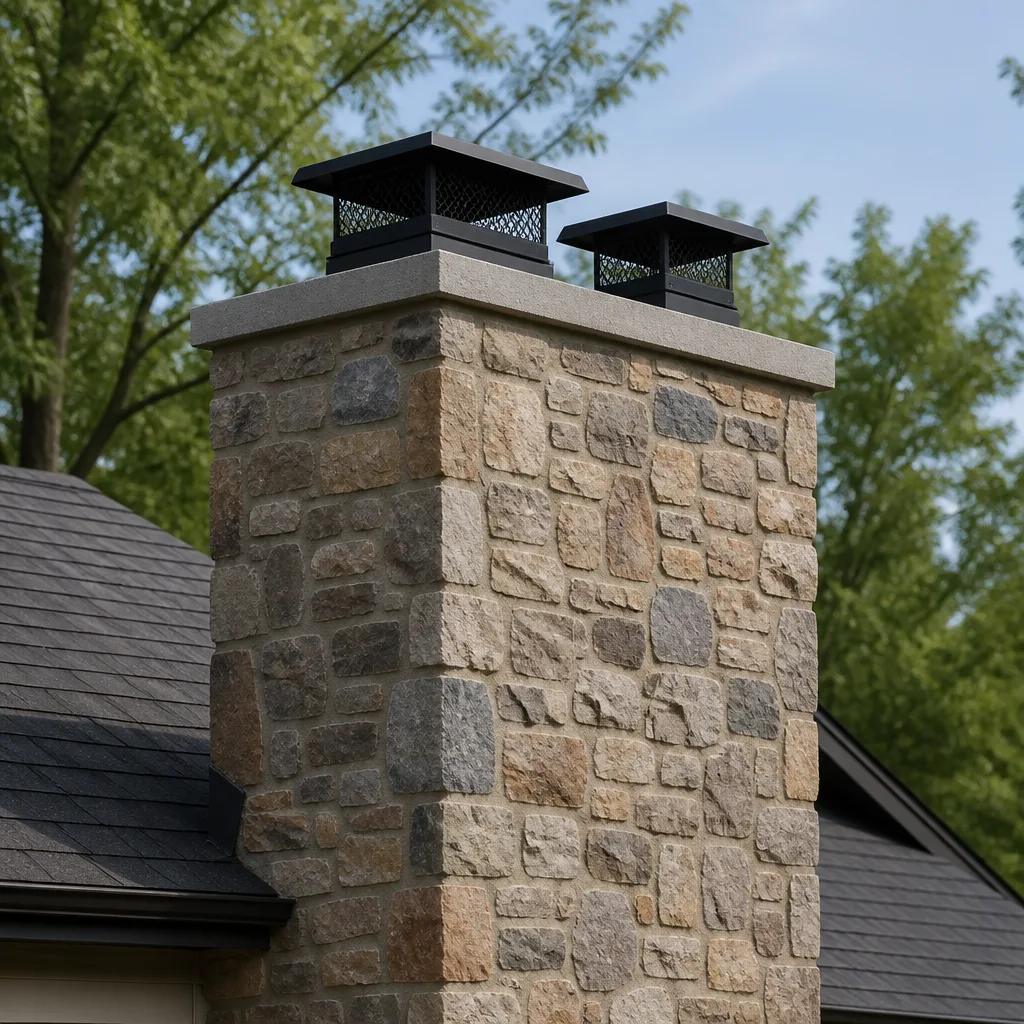
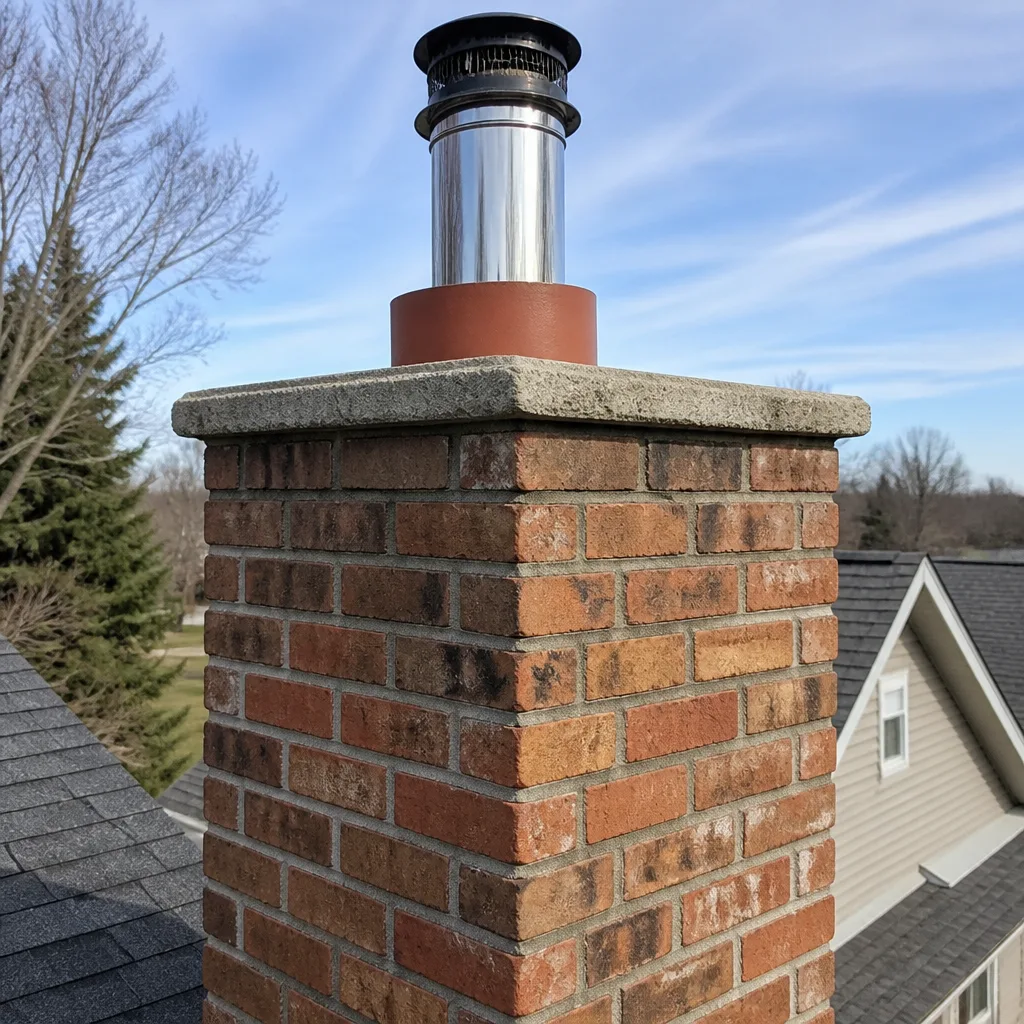
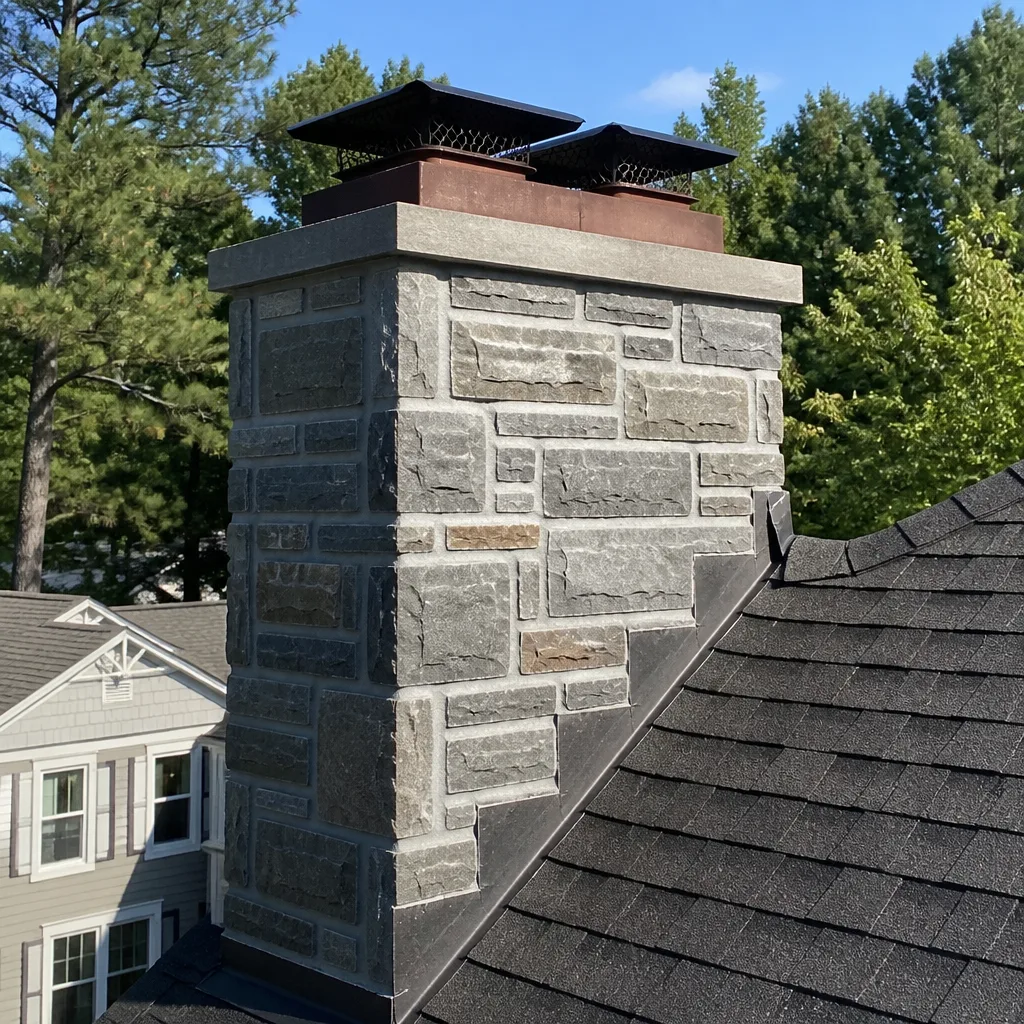
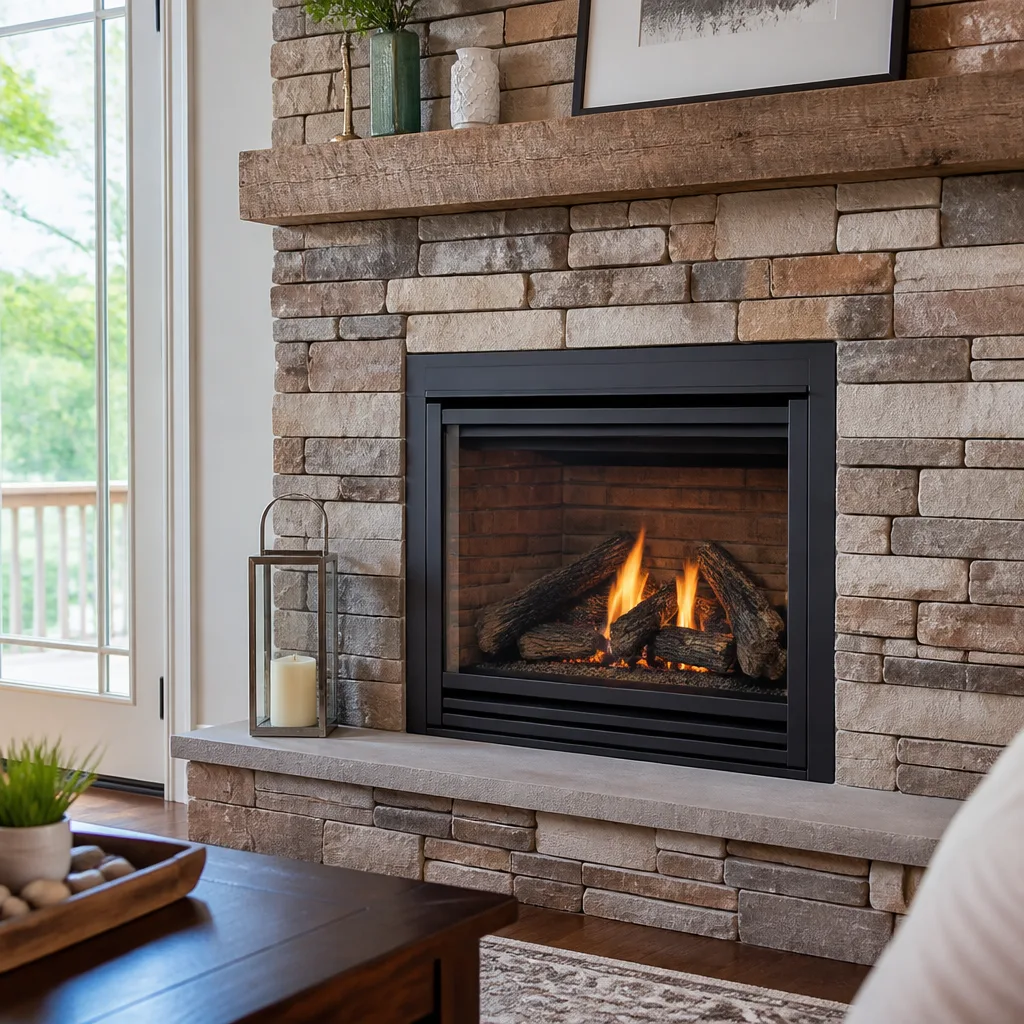
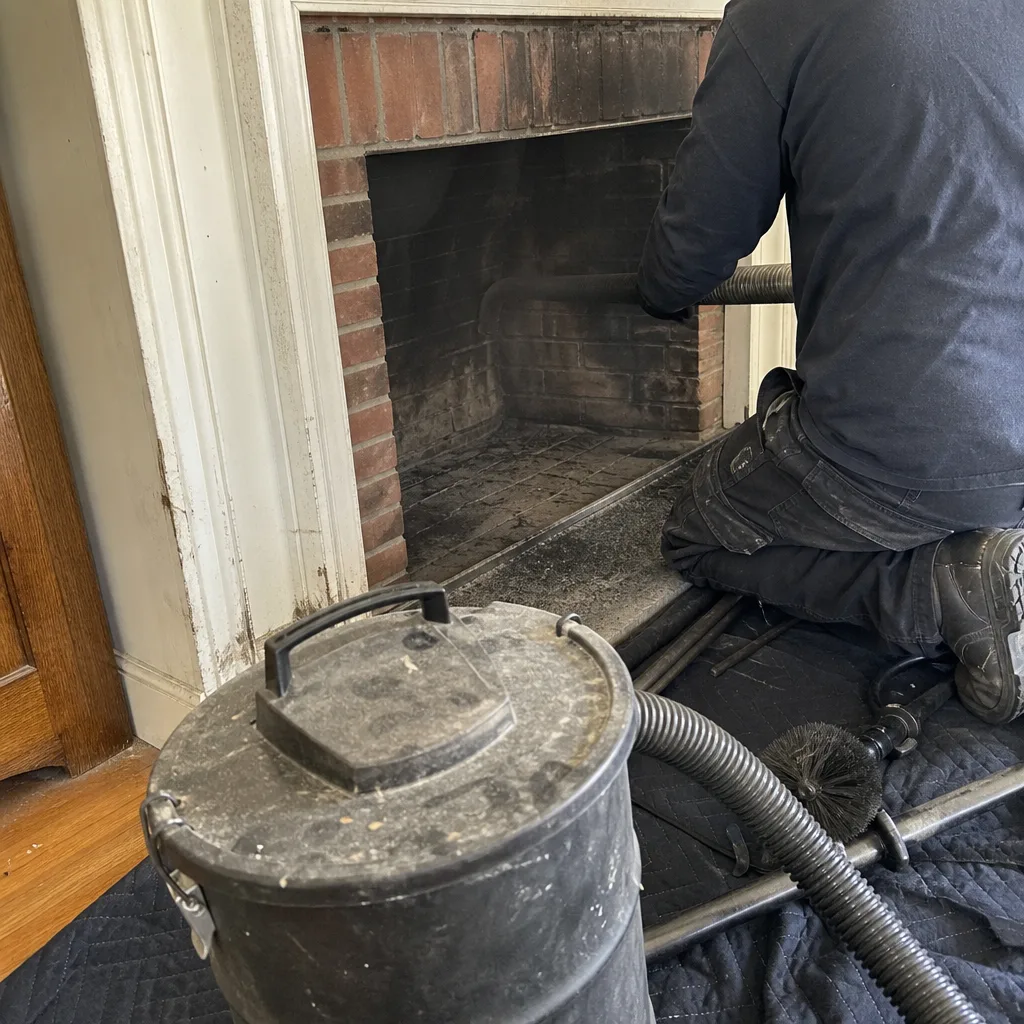 Before
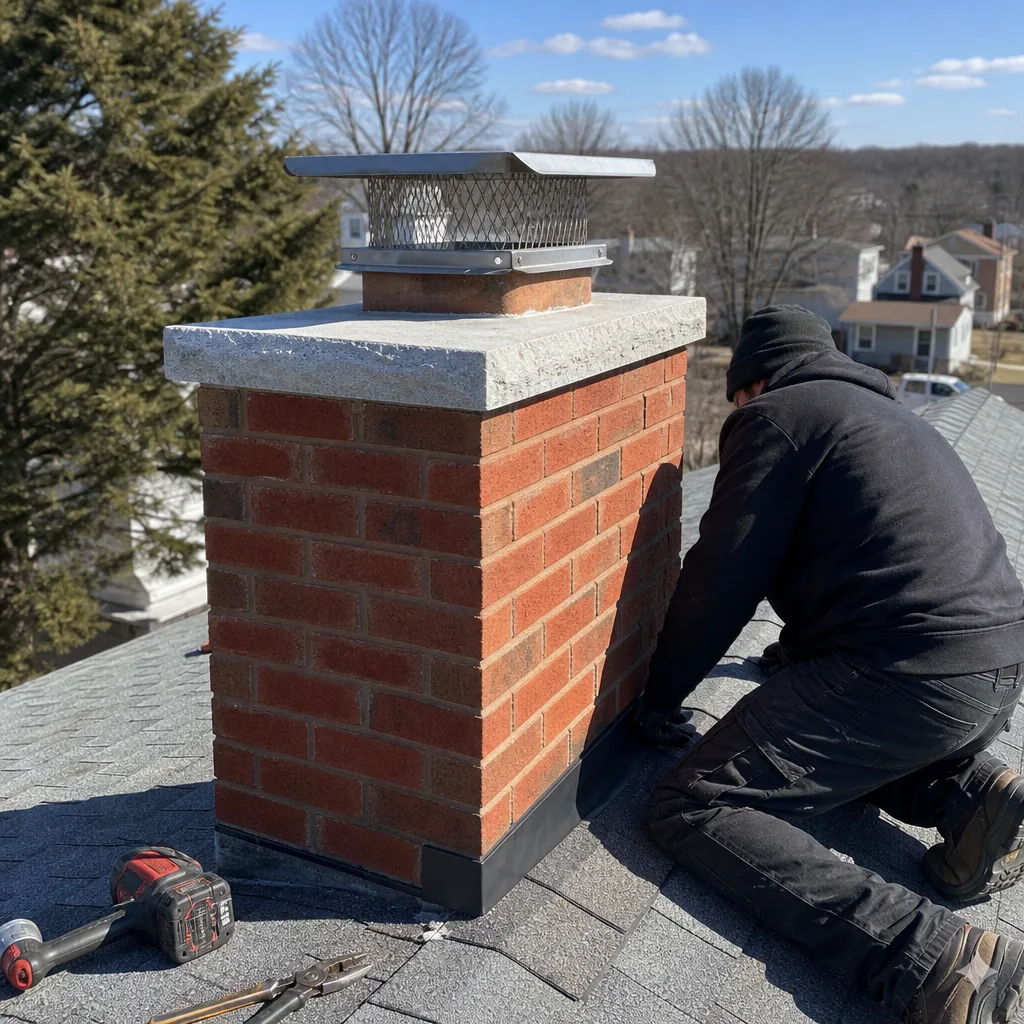 After
After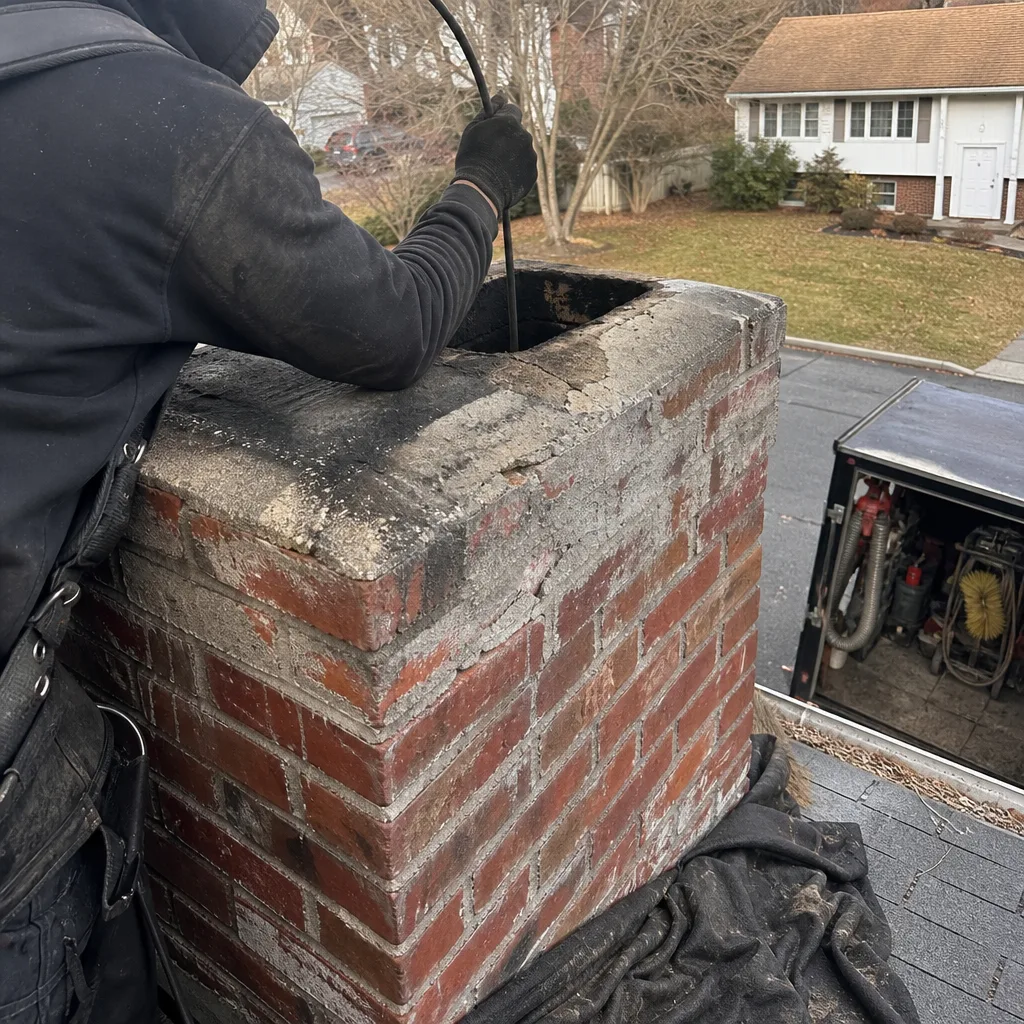 Before
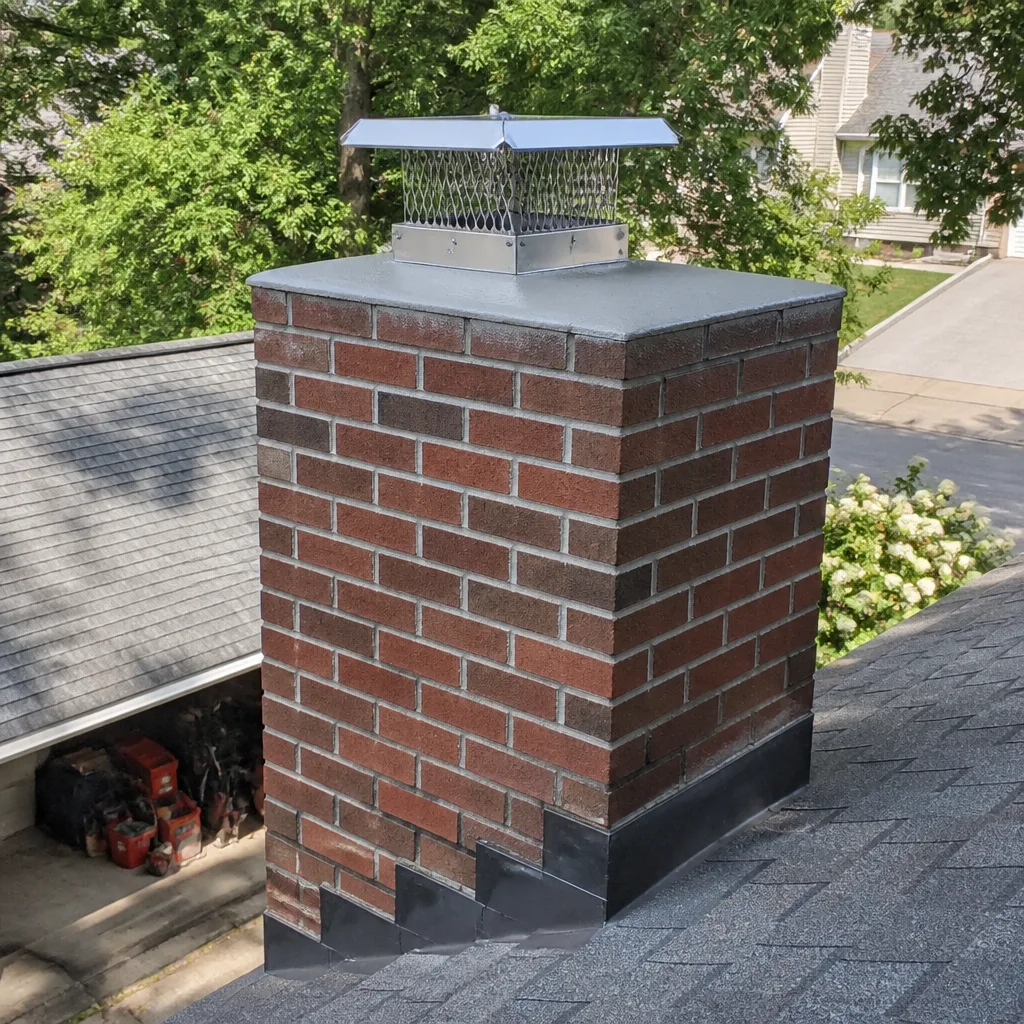 After
After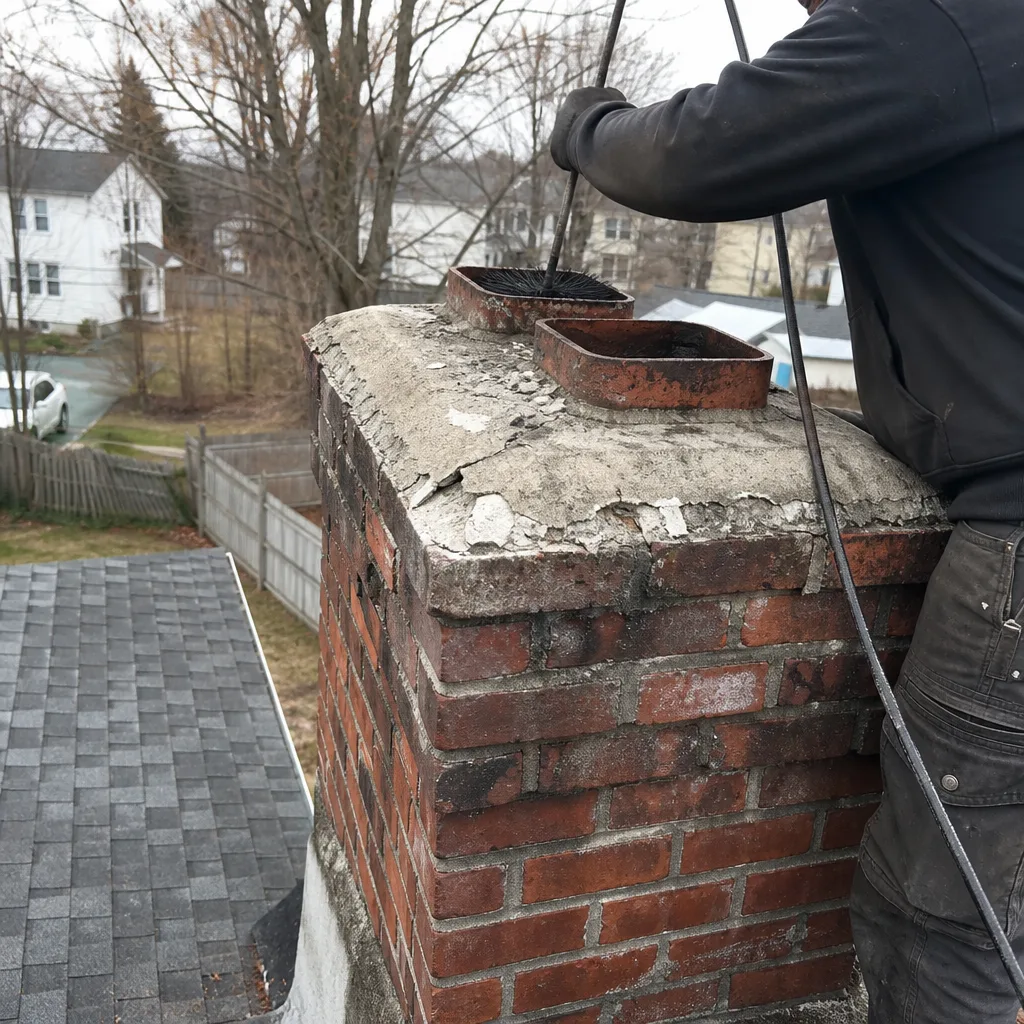 Before
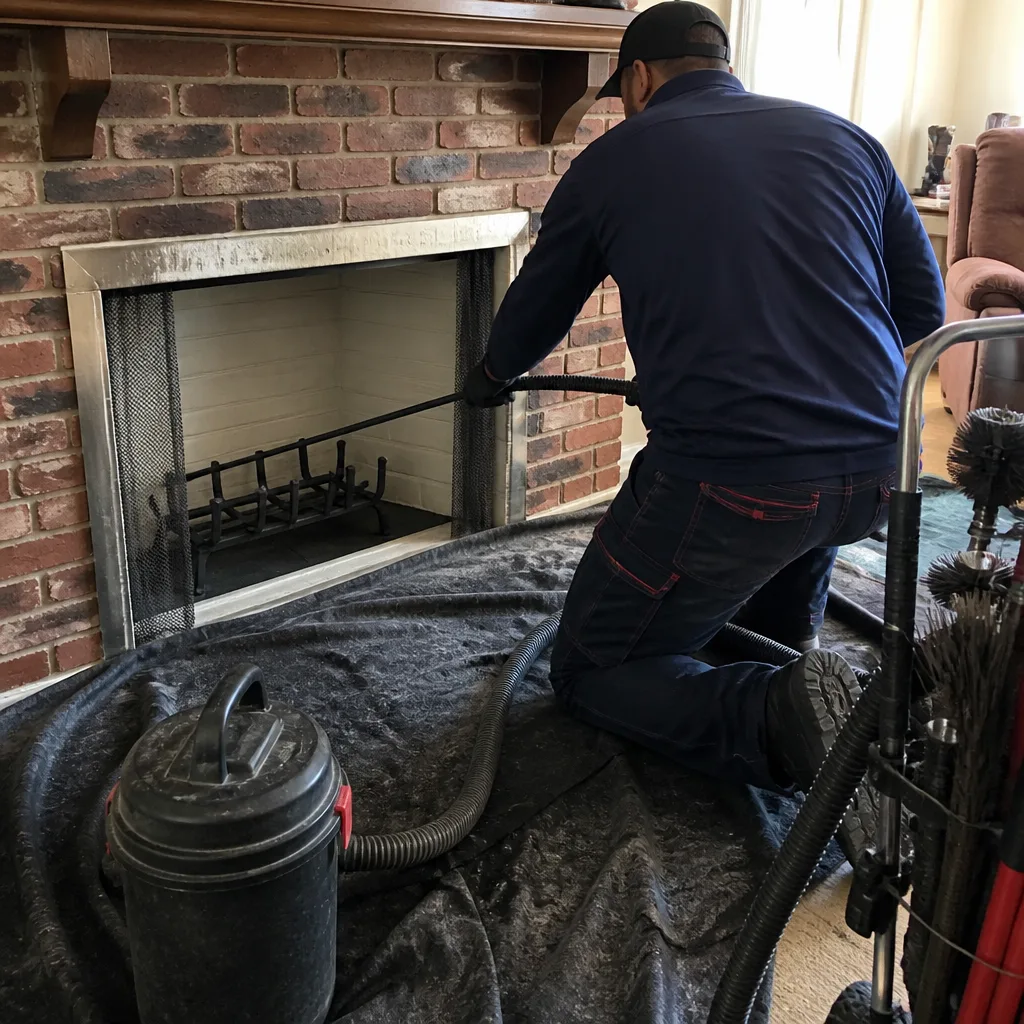 After
AfterMortar Repointing in Peabody, MA
Mortar repointing in Peabody typically runs between $300 and $1,200 depending on how much of the chimney’s joint work needs attention, and most jobs on a standard two-story colonial take less than a day. If you’ve noticed crumbling, cracked, or recessed mortar joints on your chimney, that’s not cosmetic — it’s the early signal of water intrusion that gets expensive fast in Essex County winters.
Wendell Pike has been repointing chimneys in Peabody and the surrounding North Shore communities since 1999. He’s seen what a Peabody winter does to aging mortar: freeze-thaw cycles on the North Shore are relentless, and a quarter-inch gap in a joint is wide enough for moisture to wedge in, expand, and start splitting brick from the inside. By the time you see a crack in your living room wall, the chimney has usually been letting water in for two or three seasons already. The good news is that repointing — done right, done early — stops that cycle before it becomes a full Chimney Repair in Peabody project costing several times more.
If you want an honest look at what you’re dealing with, call us at (978) 637-8560. A live person picks up, around the clock, and it may well be Wendell himself. No call center, no voicemail, no runaround.
When You Need Mortar Repointing
Mortar doesn’t fail overnight. It’s a slow erosion — years of rain, salt air blowing in off the Atlantic, and Peabody’s hard freeze-thaw winters wearing the joints down a little at a time. Here’s what actually tells us the chimney needs repointing:
- Mortar joints are visibly recessed or crumbling. If you can drag a key across a joint and pull out sandy powder, the mortar has carbonated past the point of doing its job. We see this regularly on chimneys built in the 1960s and ’70s throughout the West Peabody and downtown neighborhoods — original lime-based mortar that’s just reached the end of its life.
- White staining (efflorescence) on the brick face. That white residue is salt being carried out of the masonry by moisture moving through failing joints. The staining itself washes off; the moisture problem behind it doesn’t.
- Water in the firebox after rain. Standing water at the base of the firebox is sometimes a cap or crown issue, but failed mortar joints in the upper courses are a common culprit — water follows the path of least resistance right down the chase.
- Brick faces spalling or flaking. Once water breaches the joint and saturates the brick, it freezes inside the brick itself. That expansion pops the face off. Repointing before this stage saves the brick. After this stage, you’re looking at brick replacement on top of repointing.
- The chimney is 20-plus years old and has never been repointed. Most mortar mixes used before the late 1990s have a service life of roughly 20 to 30 years in New England climates. If your Peabody home was built in the 1980s or early ’90s and the chimney has never been touched, it’s worth a look even if everything appears fine from the driveway.
- You’re seeing cracks at the joint line between different materials. Where the chimney transitions from brick to flashing, or from the brick chase to the clay liner, mortar can fail at a different rate than the surrounding material. These transition points are especially prone to water infiltration in a coastal climate like Peabody’s.
Our Mortar Repointing Process
We do this the slow way because the slow way is the only way that actually holds. Squirting fresh mortar over old mortar sounds quicker — it isn’t repointing. Within a season or two, the new material pops right off because it never had a clean surface to bond to. Here’s what Wendell and his crew actually do:
- Inspection before anything else. We start with a close look at every course of mortar on the chimney — not just the spots you can see from the ground. We identify how deep the joint deterioration goes and whether there’s any underlying brick damage that needs to be addressed at the same time. You get a plain-English rundown of what we found before a single tool comes off the truck. The number you hear on the phone is the number on the invoice.
- Grinding and raking the old mortar out. We cut or rake the deteriorated mortar to a minimum depth of three-quarters of an inch — typically closer to an inch on joints that have already started to hollow behind the face. This is not optional. Anything shallower and the new mortar doesn’t have enough surface area to grip. We use angle grinders with masonry blades or hand-raking tools depending on joint width and the age of the surrounding brick; older Peabody brick is softer and more prone to chipping if you rush this step.
- Cleaning the joints. Dust, loose fragments, and residual powder are blown out and brushed clean. Any moisture present has to be managed — we don’t pack mortar into a wet joint. In the summer months, we’ll lightly dampen very dry joints before packing so the brick doesn’t pull moisture out of the fresh mortar too fast and weaken the cure.
- Mixing and packing the new mortar. Mortar mix selection matters more than most homeowners realize. Modern high-strength mortars are actually the wrong choice for older brick — they’re harder than the brick itself, and when there’s movement or settlement, the brick cracks before the joint does. We match mortar hardness to the age and type of brick on your chimney. For pre-1950 Peabody homes especially, that usually means a softer, more flexible Type S or Type N mix.
- Tooling the joints. Once packed, the joints are tooled to match the existing profile — typically a concave or weathered joint — so water sheds off the face rather than sitting on a flat surface and soaking in. Tooling also compresses the mortar against the brick edges, which is what creates the actual bond.
- Final check and cleanup. We walk the full chimney once the work is done, check joint continuity, clear any mortar smears off the brick face, and leave the area clean. If the job is covered by our 90-Day Done Right Promise, and every job is, you’ve got three months to call us back if something isn’t right. One call, no charge.
Mortar Repointing Pricing in Peabody
Mortar repointing in Peabody runs across a fairly wide range because chimneys vary a lot — how tall the stack is, how many exposed faces need work, how deeply the mortar has deteriorated, and whether there’s any Spalling Brick Repair that needs to be addressed at the same time. Here are honest ranges based on what we actually see in this market:
| Scope of Work | Typical Price Range |
|---|---|
| Spot repointing (1-2 deteriorated sections, accessible from roof edge) | $300 - $500 |
| Partial repointing (one or two full faces of the chimney) | $500 - $850 |
| Full chimney repointing (all four faces, standard single-story stack) | $800 - $1,200 |
| Full repointing on a tall or multi-story chimney (scaffolding required) | $1,100 - $1,800+ |
| Repointing combined with brick replacement (per brick, in addition to above) | $25 - $60 per brick |
A few things that move the number up or down:
- Height and access. A two-story Peabody colonial with a rear chimney that requires a full extension ladder setup takes longer to work safely than a single-story ranch where the sweep can step onto the roof from a standard ladder. Scaffolding adds cost but is sometimes necessary and always non-negotiable for safety at height.
- How deep the deterioration goes. Surface-level joint erosion rakes out in minutes. Joints that have hollowed behind the face — common on chimneys that have been neglected for 15-plus years — take significantly longer to clear properly.
- Mortar matching on historic or older brick. Some older Peabody homes have handmade or early machine-made brick that requires custom mortar formulation. Getting the mix wrong causes more damage than it fixes.
Standing offers that apply to every Chimney Repair job: $40 off any repair over $200, and a 10% discount for seniors and veterans, always. If you’ve already got a written estimate from another company, we’ll give you a free second opinion — no trip charge for homes inside our service area.
Call (978) 637-8560 for an upfront quote. We’ll give you a firm number before any work begins — not a range, not an “it depends,” but an actual price you can hold us to.
FAQs: Mortar Repointing in Peabody
How long does chimney mortar last in Peabody’s climate?
Most mortar joints on a Peabody chimney last 20 to 30 years before repointing becomes necessary, though chimneys on the windward side of a house or with poor crown drainage can deteriorate faster. Essex County’s freeze-thaw cycles are among the most damaging in New England — water works into a joint, freezes, expands, and widens the gap a little more each winter. We’ve repointed chimneys here that were original to 1980s construction and had never been touched; by year 25, they were letting water into the attic every hard rain. Call us at (978) 637-8560 and we’ll take a look — no charge for the estimate.
Can I repoint just the damaged sections, or does the whole chimney need to be done?
Spot repointing is a completely legitimate approach when only isolated sections have failed and the surrounding mortar is still sound — and it’s genuinely less expensive. We assess the condition of every joint and only recommend full repointing when the deterioration is widespread enough that doing it in sections would mean coming back within a few years anyway. We’re not going to sell you a full job when a partial one is the honest answer. If you’ve got a competing estimate that says the whole thing needs to go and you’re not sure, call us for a free second opinion.
Is mortar repointing the same as tuckpointing?
Tuckpointing and repointing are often used interchangeably, but technically they’re different techniques. Repointing means removing deteriorated mortar and replacing it with fresh mortar that matches the original. Traditional tuckpointing means packing the joint with one color mortar and then pressing a thin line of contrasting mortar down the center — it’s largely decorative and was common in older New England masonry. What matters for your chimney’s structural integrity is the repointing itself. We’ll tell you clearly which technique applies to your chimney and why, before we start.
Does mortar repointing fix a leaking chimney?
Failed mortar joints are one of the most common causes of chimney leaks, and repointing resolves those leaks effectively when the joints are the actual source. That said, a chimney can leak through the crown, the cap, the flashing, or the liner — sometimes several at once. Before we repoint anything, we identify where the water is actually getting in. We’re not going to repoint a chimney and hand you a bill if the crown is the real problem. The inspection comes first, you hear the honest answer, and then you decide. Call (978) 637-8560 and we’ll get out there for a look.
Why Peabody Homeowners Call Top Hat Chimney
There’s no shortage of chimney companies willing to drive to Peabody. Some of them are good. Some quote one price on the phone and show up with a different number on the invoice. Some send whoever’s available that day and answer to a call center you’ll never reach again. We’ve heard the stories — usually from homeowners in the Brooksby Village area or up off Lynn Street who called us after a bad experience with one of the larger outfits.
Wendell Pike started Top Hat Chimney in 1999 and has been working Essex County chimneys ever since. He puts his name on every job, answers the phone himself when he can, and backs everything with a written 90-Day Done Right Promise. If the work isn’t right, one call brings him back — no argument, no additional charge.
The work we do on your chimney — repointing, crown repair, liner work, full rebuilds — is part of the broader home maintenance that keeps your house sound. It’s not glamorous, but it matters. And Peabody’s winters are not patient with chimneys that don’t get attention.
We work with quality materials including products from Gelco and Olympia Chimney where they fit the job, and we’ll tell you exactly what we’re using and why. No mystery materials, no substitutions after the estimate is signed.
Key Takeaways
- Mortar repointing in Peabody typically costs $300 to $1,200 for most residential chimneys, with taller stacks or scaffolding jobs running higher.
- Peabody’s freeze-thaw climate accelerates mortar joint failure — chimneys 20-plus years old are worth a look even if they seem fine from the ground.
- Repointing done correctly means cutting old mortar out to at least three-quarters of an inch and matching the new mix to the hardness of the original brick. Anything less is a patch job that won’t hold.
- Spot repointing is a legitimate and less expensive option when only isolated sections have failed.
- Every Top Hat Chimney job is backed by the 90-Day Done Right Promise in writing.
- Seniors and veterans receive 10% off, always. Any repair over $200 gets $40 off.
- Call (978) 637-8560 for a free, upfront estimate — a live person answers every time.
Schedule Your Repointing Estimate in Peabody
If your Peabody chimney has crumbling joints, white staining on the brick, or water showing up where it shouldn’t, don’t let another winter make it worse. Call (978) 637-8560 and talk to a real person — no voicemail, no call center. Wendell and his crew serve Peabody and the surrounding North Shore communities, with upfront pricing every time and a written guarantee on every job. Estimates are free, and there’s no trip charge for calls inside our service area.
Written by Wendell Pike, Owner at Top Hat Chimney, serving Peabody since 1999.