
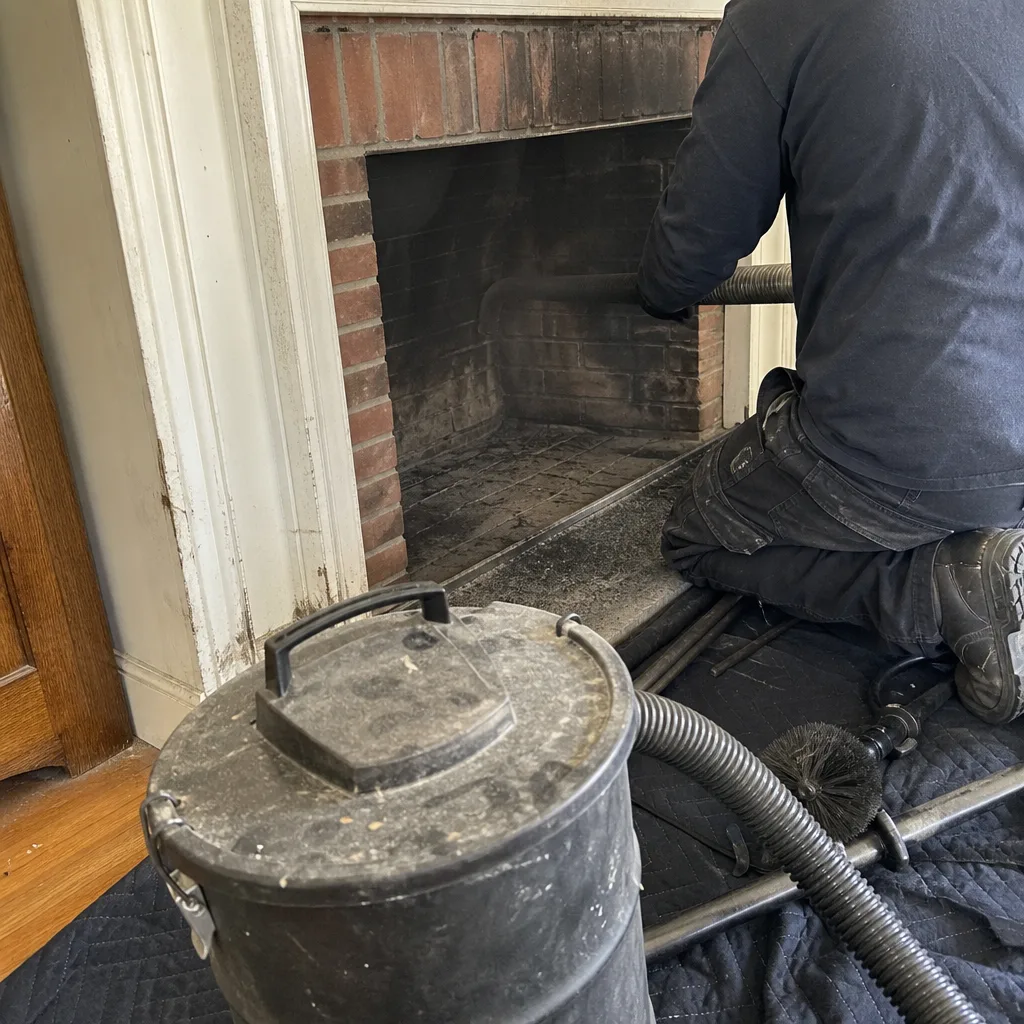
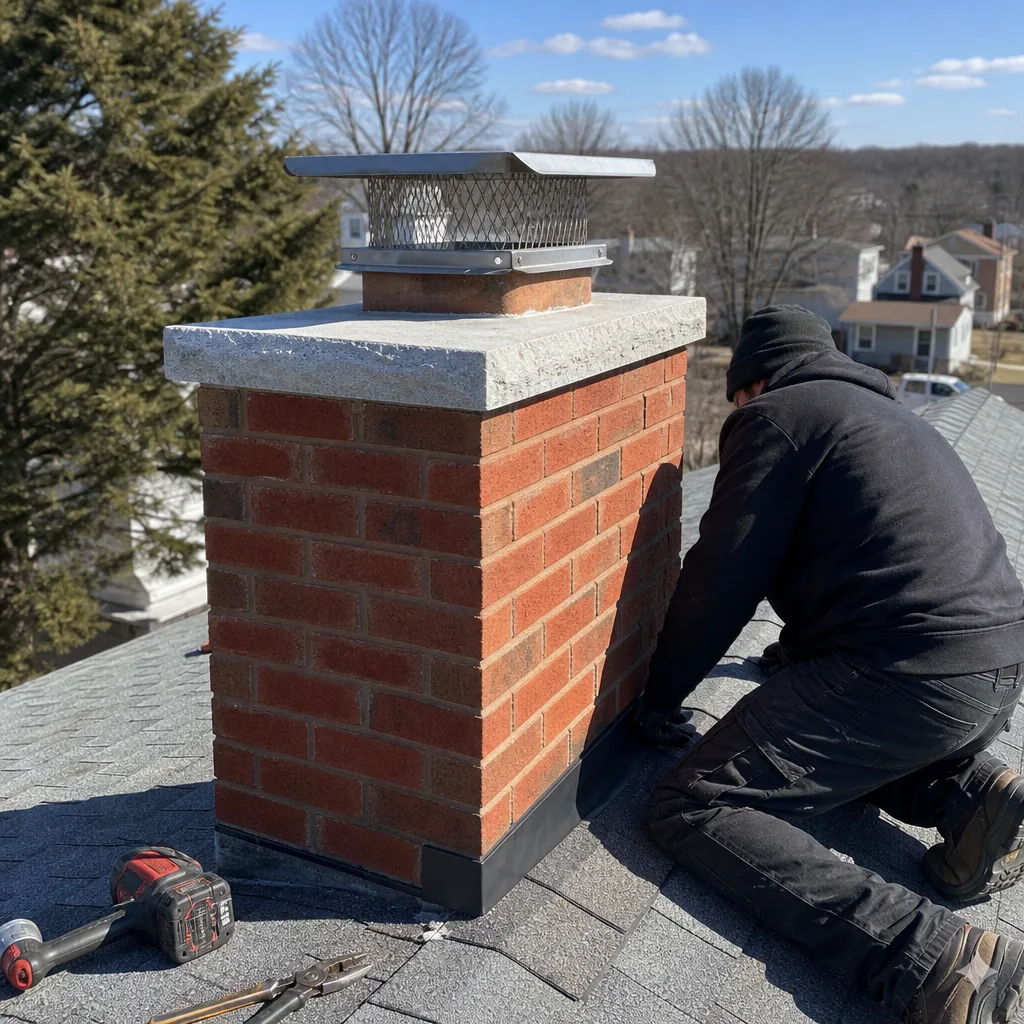
Level 1 sweep and inspection to the NFPA 211 annual standard - flue, crown, cap, and flashing checked and photographed
Chimney sweep logs do not sweep chimneys. They loosen some creosote - which then falls where a brush and vacuum still have to collect it.
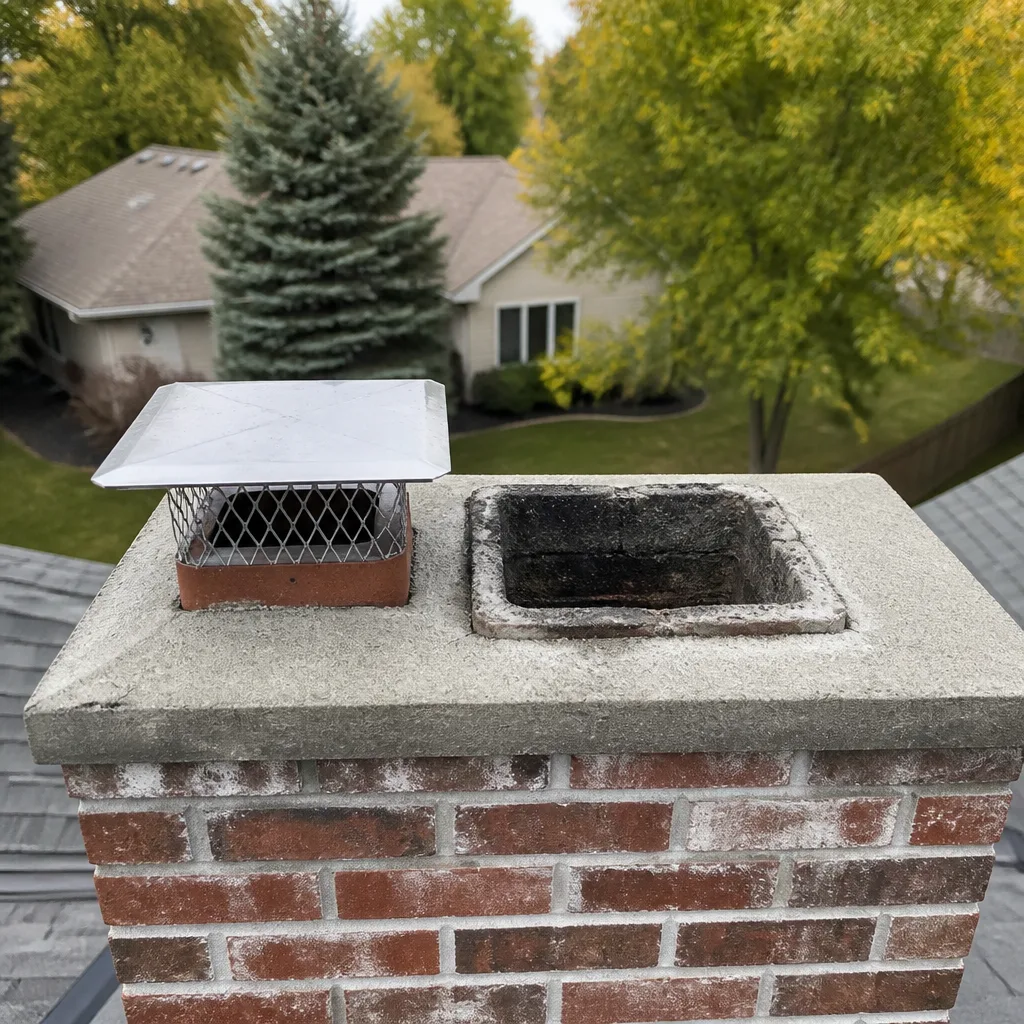
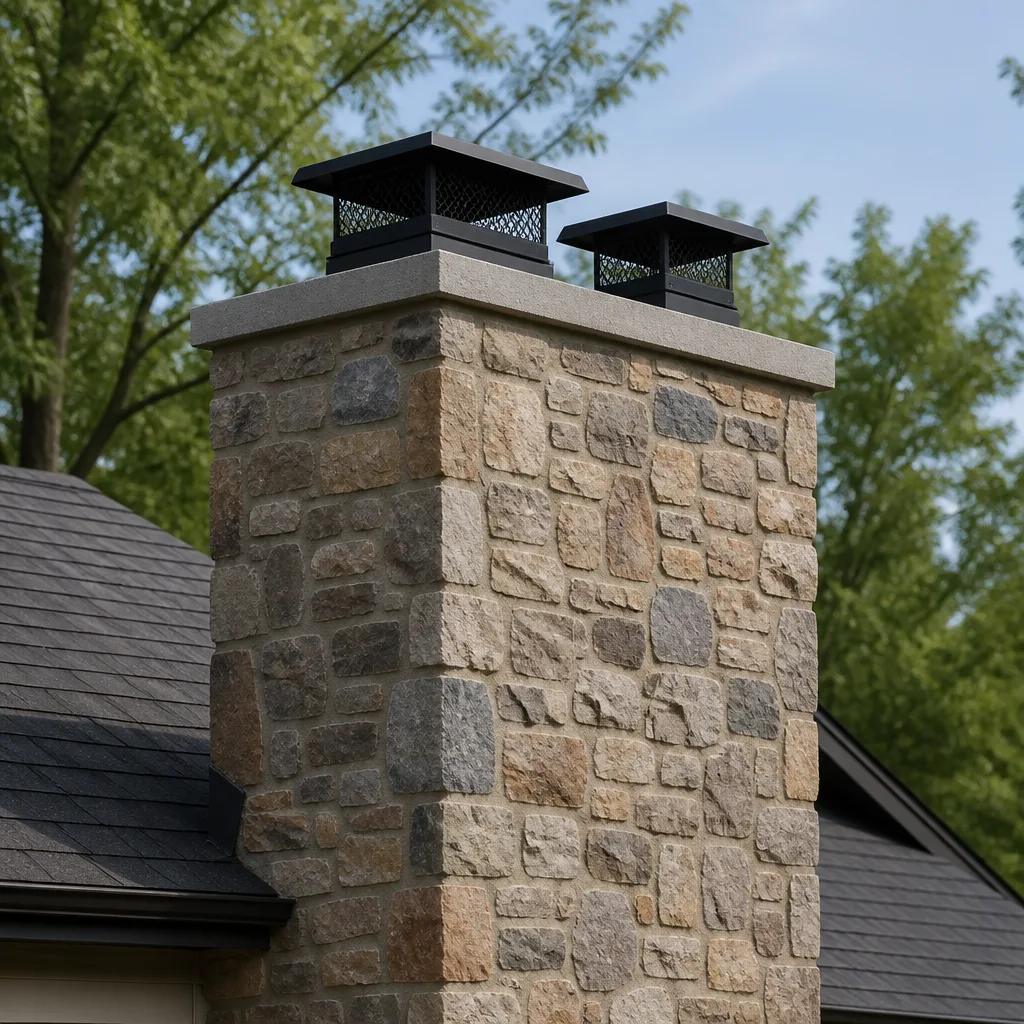
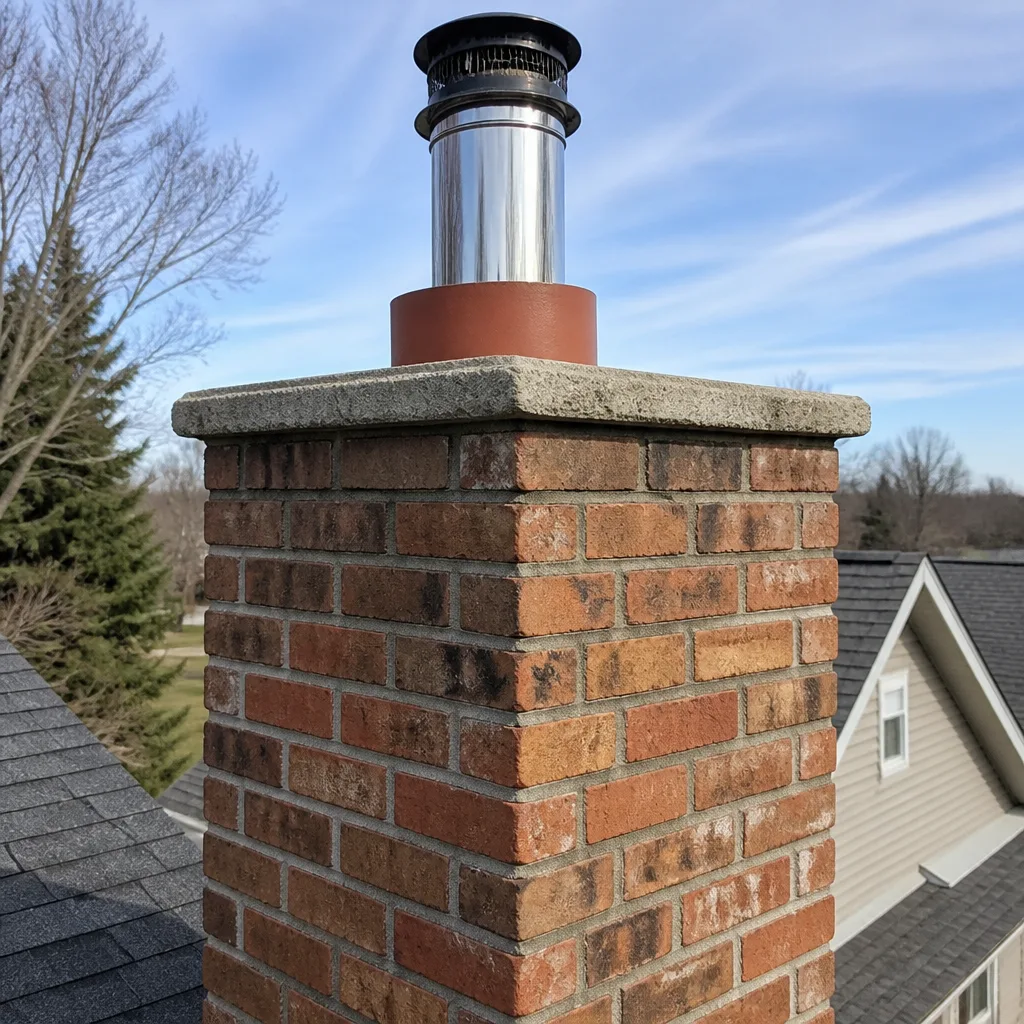
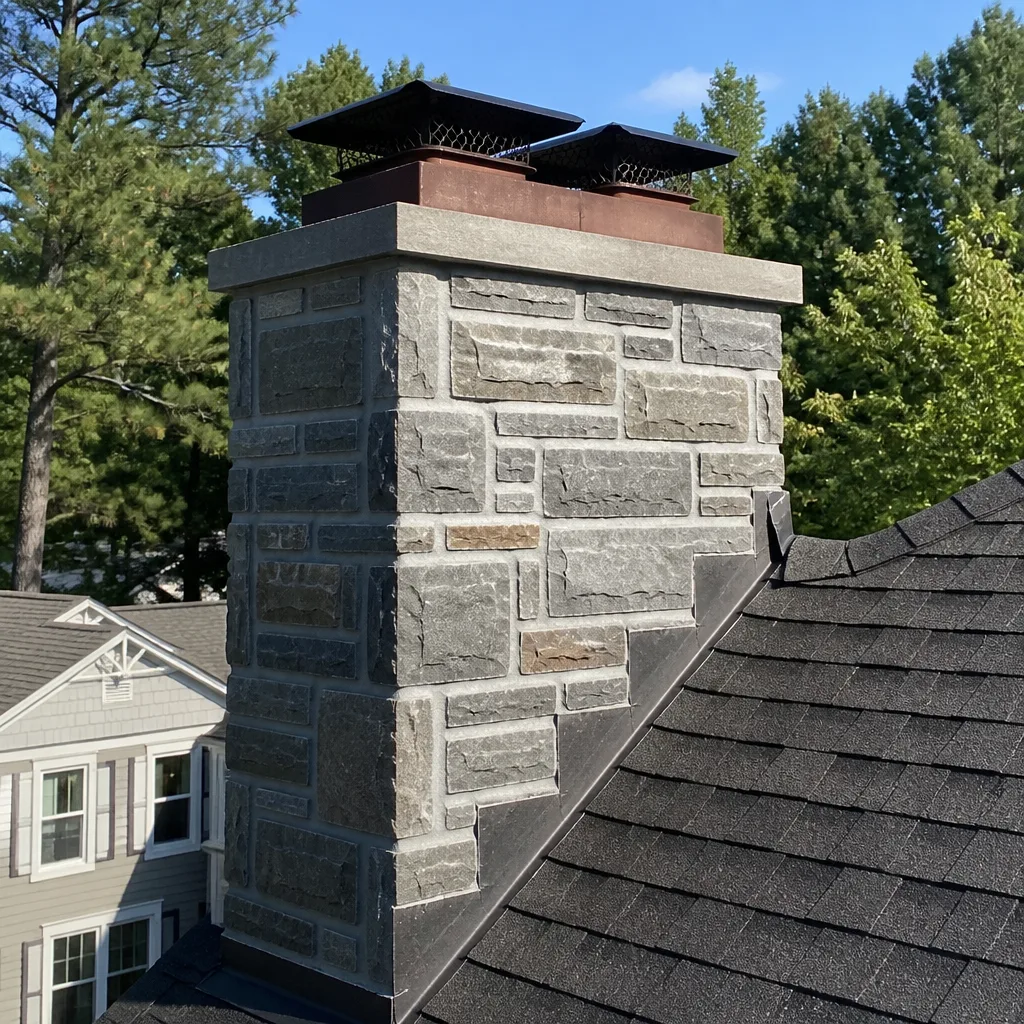
 Before
 After
After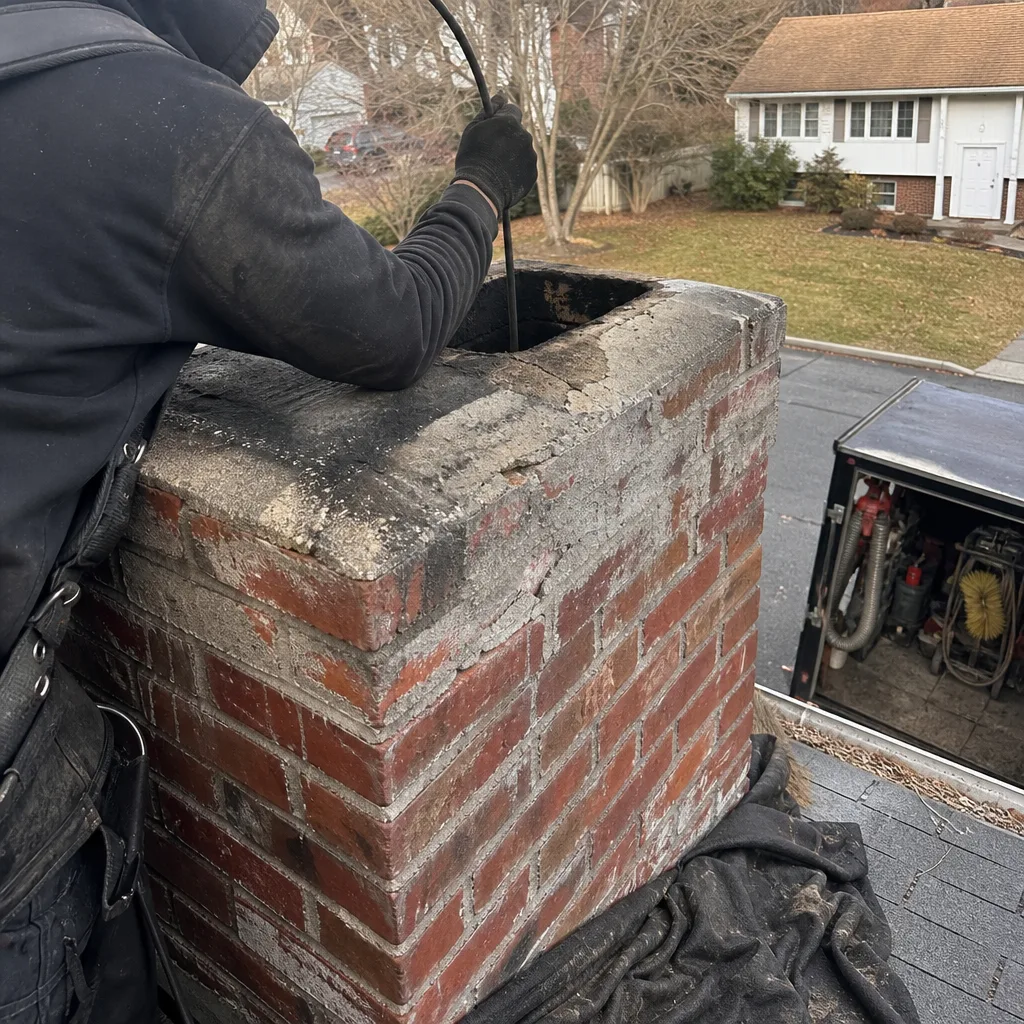 Before
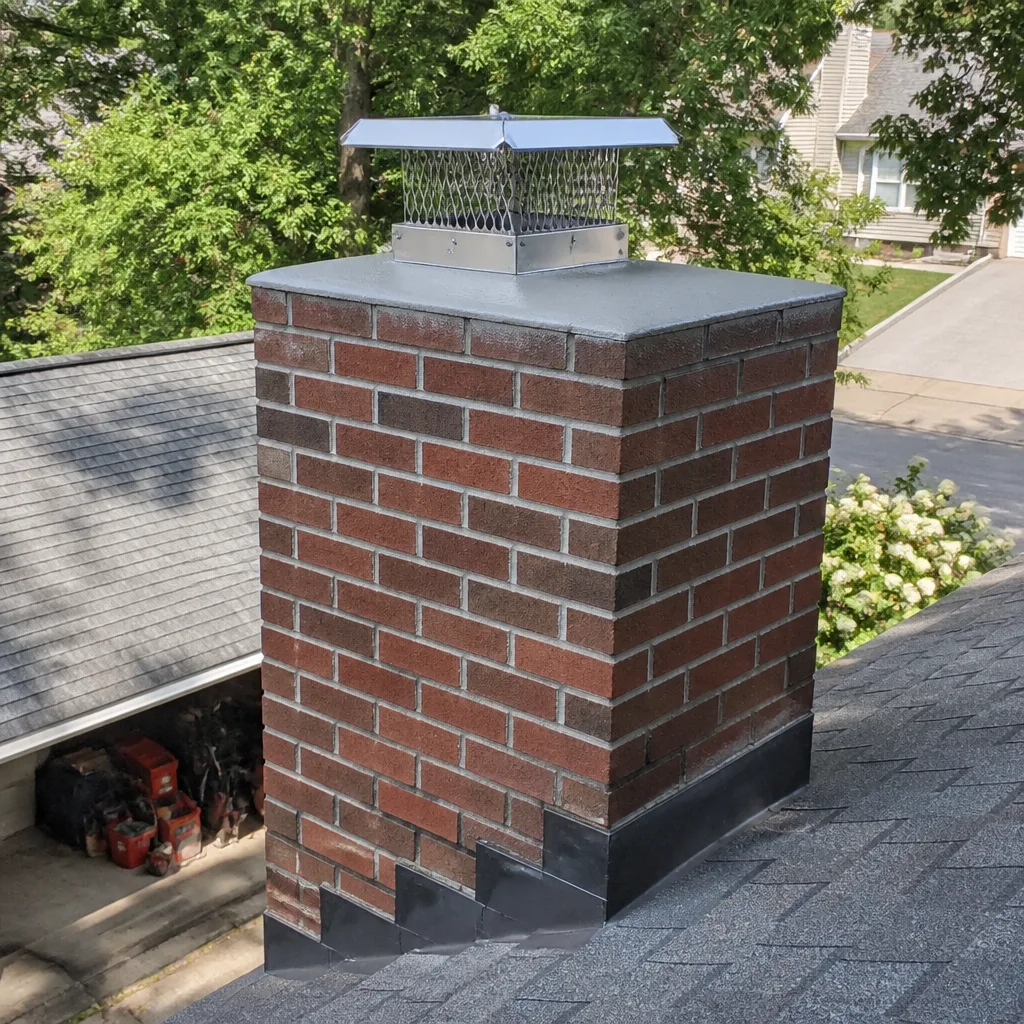 After
After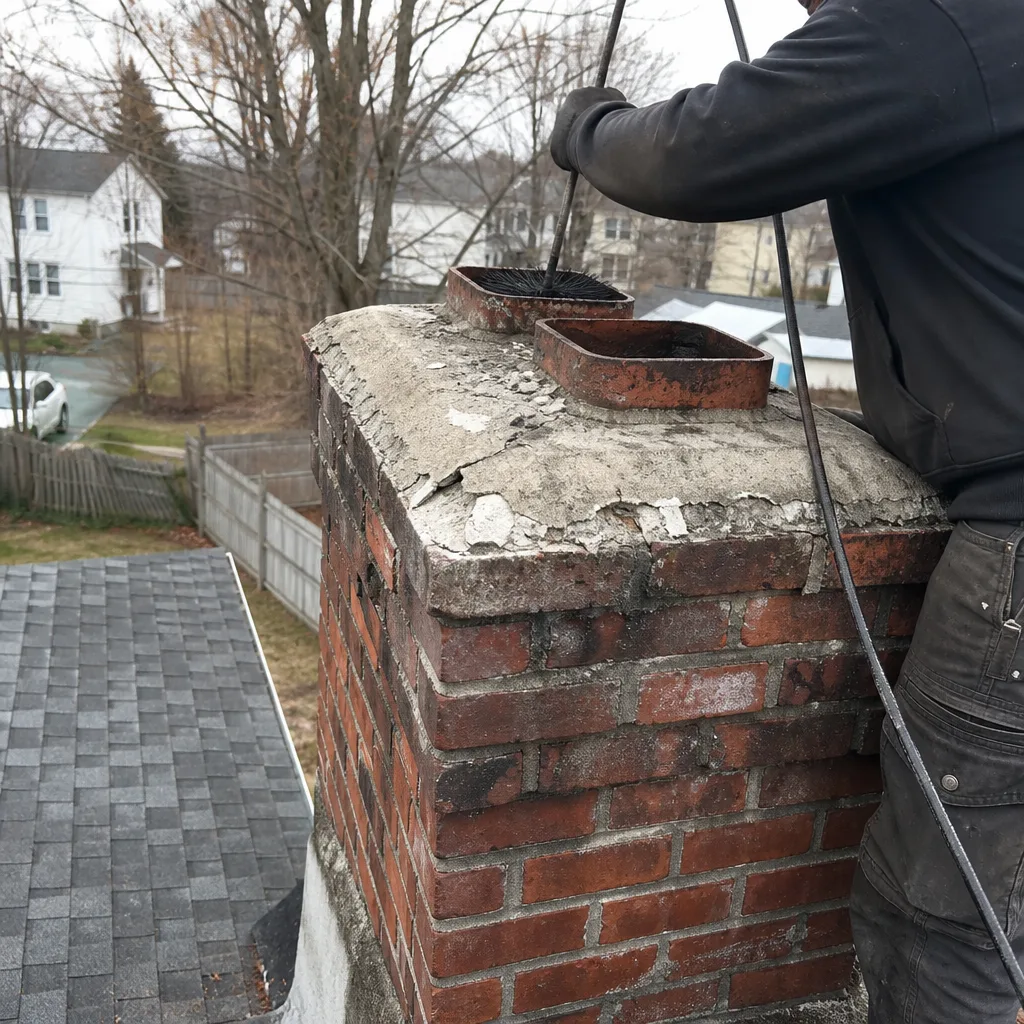 Before
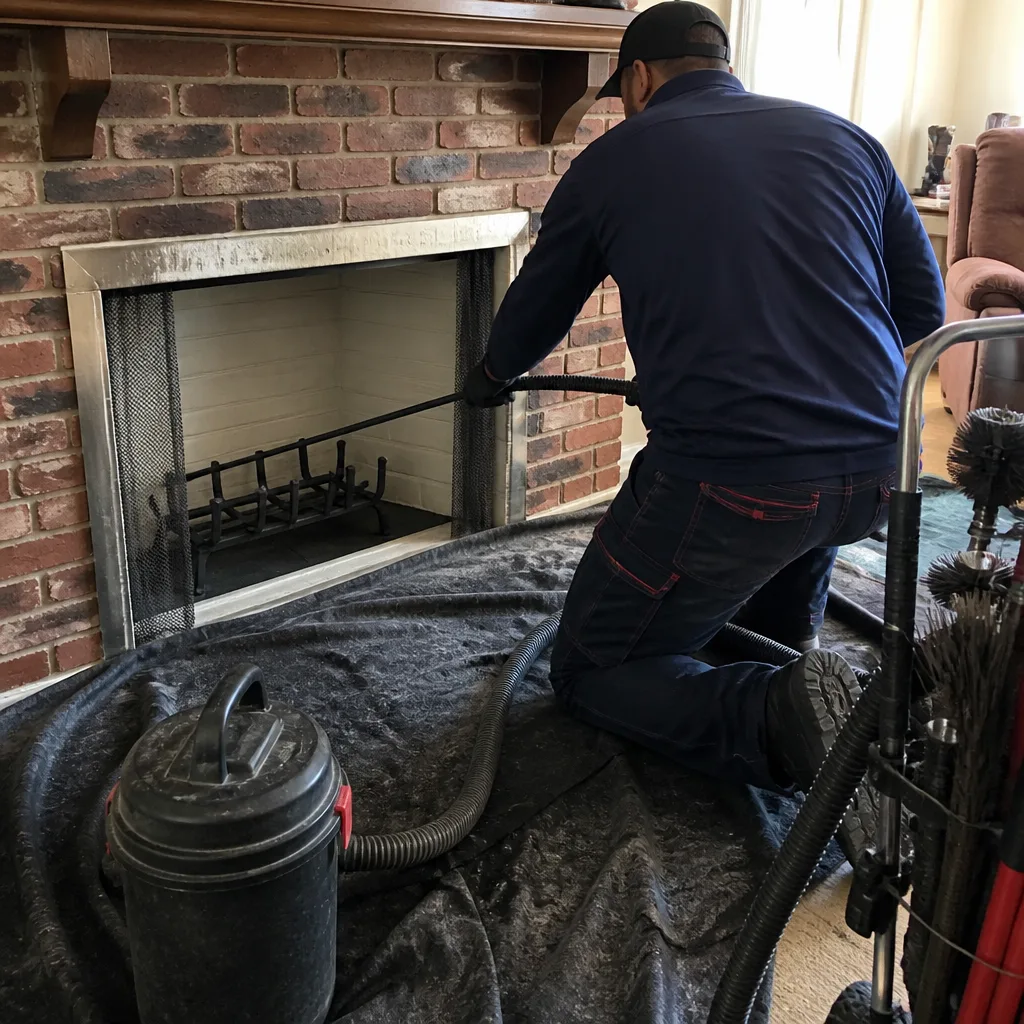 After
AfterSpalling Brick Repair in Peabody, MA
Spalling brick is what happens when moisture works its way into the face of a brick, freezes, expands, and then pops the outer layer right off. In Peabody, where we routinely swing between wet nor’easters and hard February freezes, chimneys take that punishment year after year. If you’re seeing chunks or flakes of red brick collecting at the base of your chimney, that’s spalling – and it doesn’t stop on its own.
We’ve been providing our Chimney Repair services for spalling chimneys in Peabody and across Essex County since 1999. Wendell Pike started Top Hat Chimney to give homeowners a straight answer about what’s actually wrong and what it’s going to cost to fix it – before anyone picks up a trowel. If you’re seeing early signs of brick deterioration, call us at (978) 637-8560 and we’ll take a look. Estimates are free, the price we quote is the price you pay, and every repair is backed by our 90-Day Done Right Promise.
Spalling brick repair falls under our broader Chimney Repair in Peabody work, which covers everything from cracked crowns to failing flue liners. This page focuses specifically on the brick face and mortar damage that freeze-thaw cycles cause on Peabody chimneys season after season.
What Causes Brick Spalling on Peabody Chimneys?
Peabody sits in a climate zone where the temperature crosses the freezing mark dozens of times each winter. That’s not just cold – that’s repeated freeze-thaw cycling, which is specifically brutal on masonry. Water seeps into tiny pores in the brick face and mortar joints during a wet spell, then expands roughly 9% when it freezes. That expansion has to go somewhere, and it goes outward, popping the brick face off in sheets or chunks.
A few things accelerate this in Peabody specifically. Older brick – and there’s plenty of it in neighborhoods like South Peabody and around the downtown historic district – was often fired at lower temperatures than modern brick, which makes it more porous and more vulnerable. Chimneys that face north or northeast catch the most wind-driven rain off Salem Sound and dry out more slowly, giving moisture more time to penetrate. And any chimney where the crown has cracked or the flashing has started to lift is essentially funneling water directly into the masonry.
Age and sun exposure matter too. UV breaks down the surface of brick over decades. A chimney built in the 1960s or 1970s on a Peabody colonial that has never had its mortar joints repointed is going to show spalling sooner or later – the only question is how far it’s progressed before someone catches it.
When You Need Spalling Brick Repair
- Brick fragments or flakes at the base of your chimney. This is the clearest sign. If you’re finding red chips in the gutter or on the roof deck after a freeze, the face of your brick is actively separating. Left alone, a few seasons of this can hollow out enough material to compromise the structural integrity of the chimney stack.
- Visible pitting or cratering on the brick face. You can sometimes spot early-stage spalling from the ground – the brick surface looks rough, pocked, or hollowed in spots rather than flat and solid. This is worth a closer look before it becomes a larger removal-and-replacement job.
- White staining (efflorescence) on the chimney exterior. Those white, chalky streaks are mineral salts being carried to the surface by water moving through the masonry. Efflorescence by itself isn’t structural damage, but it’s a reliable sign that water is migrating through your brick on a regular basis – and spalling usually follows.
- Mortar joints that look recessed, crumbling, or soft. When you can press your finger into a mortar joint or scrape material out with a key, the joint is failing. Deteriorated mortar is both a symptom and a cause – it lets more water in, which accelerates the spalling of the brick beside it.
- A chimney that was tuck-pointed more than 20 years ago and hasn’t been inspected since. Mortar has a finite lifespan. In Peabody’s climate, repointing done in the 1990s or early 2000s may be reaching end of life now, especially on chimneys with southern or western exposure that get significant thermal cycling.
- Water showing up inside near the fireplace after rain. Spalling that has progressed far enough will open pathways for water to track down into the firebox or the attic framing around the chimney. At that point you’re dealing with both a masonry repair and potential interior moisture damage.
Our Spalling Brick Repair Process
- Visual inspection and documentation. Wendell or one of his crew will walk the perimeter of your chimney, check the cap and crown for existing cracks, and photograph the areas of active spalling. For chimneys with interior concerns, we may also run a camera check of the flue as part of a broader chimney inspection. You get a clear picture of what’s happening before any conversation about repair options starts.
- Upfront written estimate before work begins. We assess the extent of the spalling – how many courses of brick are affected, whether any bricks need to be fully removed and replaced versus resurfaced, and what the mortar joint situation looks like. That assessment goes into a written estimate with a firm number. The estimate is what you pay. No adjustments at the door.
- Removal of damaged material. Spalled brick faces and deteriorated mortar are cut out or carefully removed. On a chimney where only the face has popped off but the brick body is still sound, we can sometimes resurface rather than full replacement. Where bricks have lost too much material to hold properly, those units come out and go in fresh.
- Repointing and mortar matching. New mortar is applied to failing joints – a process called repointing or tuck-pointing. Mortar type and mix matter here: the replacement mortar has to be compatible with the existing masonry. Using a mix that’s too hard in a soft historic brick wall actually creates new spalling points over time, because the brick becomes the weakest link. We match the original as closely as possible.
- Surface application and sealing where appropriate. Once repaired sections have cured, we apply a breathable masonry sealer to help slow future water intrusion. The sealer we use allows vapor to escape outward while blocking liquid water from penetrating inward – which is critical. Trap moisture inside masonry with the wrong sealer and you’ve made the problem worse.
- Final walkthrough and 90-Day Done Right Promise. We go over the completed work with you before we pack up. If anything isn’t right within 90 days of the job, one call brings us back at no additional cost. That’s in writing on every job – not a verbal promise you might or might not get honored.
Spalling Brick Repair Pricing in Peabody
How Much Does Chimney Repair Cost? (2026 Price Guide) - Peabody, MA: spalling brick repair typically runs between $300 and $2,500, depending on how many bricks are affected, how many courses need repointing, and whether any bricks require full removal and replacement rather than resurfacing. Here’s a realistic breakdown of what drives the number:
| Scope of Work | Typical Range (Peabody) |
|---|---|
| Minor repointing – isolated joint repair, 1-3 courses | $300 – $550 |
| Moderate spalling repair – multiple face bricks replaced, repointing included | $550 – $1,100 |
| Significant spalling – full section repair, brick replacement, sealing | $1,100 – $2,000 |
| Extensive damage requiring partial chimney rebuild | $2,000 – $2,500+ |
A few things that move the number in Peabody specifically: chimneys on taller homes in the Centennial Drive or Lynn Street areas sometimes require additional staging or ladder work, which adds to labor. If your chimney crown is also cracked – which is common when spalling is present – repairing the crown at the same time saves you a second service call and usually costs less than two separate visits. We’ll tell you if that’s the case.
Repairs over $200 automatically qualify for $40 off. Seniors and veterans always receive 10% off. And if you’ve already gotten a written estimate from another company, bring it – we’ll give you a free second opinion with no obligation attached.
Call (978) 637-8560 to schedule a free estimate. The number on the phone is the number on the invoice – that’s not a sales line, it’s just how we operate.
Why Peabody Chimneys Spall Faster Than You Might Expect
Peabody’s geography puts chimneys in a tough spot. The city sits close enough to the coast that nor’easters hit hard and wind-driven rain is a regular occurrence, especially in the fall and early spring. That moisture load is higher than inland communities at similar elevations. We’ve worked on chimneys in West Peabody that homeowners thought were fine – no visible exterior damage – only to find the upper courses had been drinking water for years through a failed cap joint.
The other factor is the housing stock. A large portion of Peabody’s single-family homes were built between 1950 and 1980. That means many chimneys are now 45 to 75 years old, and they were built with brick and mortar that is simply reaching the end of its effective service life. This isn’t a failing of the original builder – masonry has a lifespan, and that lifespan runs out. In our experience since 1999, a chimney that hasn’t been repointed in 30 years almost always shows spalling damage on inspection, even when it looks presentable from the driveway.
Catching spalling early keeps the repair bill reasonable. A few loose brick faces and a couple of bad mortar joints might run $400 to $600. The same chimney two winters later, after water has gotten behind the brick and expanded repeatedly, might be looking at a partial rebuild. Wendell is direct about this: if the job doesn’t need doing yet, he’ll tell you to watch it and call back in a year. But if it does need doing, waiting costs more than acting.
Key Takeaways
- Spalling is driven by freeze-thaw cycling – Peabody’s coastal climate makes chimneys here more vulnerable than inland areas.
- Early-stage spalling is a manageable repair. Advanced spalling that has progressed to structural loss is significantly more expensive.
- Repointing mortar mix matters. Using the wrong hardness can cause new damage. We match the original masonry type.
- A breathable sealer applied after repair slows future water intrusion without trapping moisture inside the masonry.
- Every repair Top Hat Chimney completes is backed by the 90-Day Done Right Promise – in writing, no exceptions.
- Seniors and veterans always receive 10% off. Repairs over $200 get $40 off automatically.
FAQs – Spalling Brick Repair in Peabody
How much does spalling brick repair cost in Peabody, MA?
Spalling brick repair in Peabody typically costs between $300 and $2,500, depending on how many bricks are affected and whether the damage requires full brick replacement or repointing only. Minor joint repair on an otherwise sound chimney usually falls in the $300 to $550 range. A more significant repair involving multiple replaced bricks and full repointing of several courses will run $800 to $1,500 in most cases. We’ll give you a firm written number before any work starts. Call (978) 637-8560 for a free estimate – the quote is binding.
Is spalling brick just cosmetic, or does it affect chimney safety?
Spalling brick is not just cosmetic. In early stages, losing the face of a few bricks is mostly an aesthetic issue and a moisture warning sign. As spalling progresses, it reduces the effective mass and structural integrity of the chimney stack. Severe spalling can compromise the structural soundness of the chimney above the roofline, create pathways for water to enter the home, and – in advanced cases – allow combustion gases to bypass damaged sections of the liner. A chimney in active deterioration should be evaluated before the next heating season.
Can spalling brick be prevented after it’s repaired?
Yes, meaningfully so. After we complete the repair, applying a breathable masonry sealer slows the rate of water absorption significantly. Keeping the chimney crown in good condition is equally important – a sound crown with a good overhang is the first line of defense against water reaching the brick below. Repointing mortar joints before they fail completely is another way to stay ahead of spalling. We generally recommend a visual inspection every two to three years on Peabody chimneys given the local climate. Catching a few soft joints early is a $400 repair; missing them for a decade is a $2,000 repair.
Do you need to replace the entire chimney if the bricks are spalling?
Full chimney replacement is rarely necessary because of spalling alone. In most cases, the affected bricks are removed and replaced individually, and the surrounding mortar joints are repointed. Even significant spalling that affects a full section of the chimney stack can usually be addressed with a partial rebuild of that section rather than tearing down and starting over. The only situations where a full rebuild makes more sense are when the structural core of the chimney has been compromised throughout, or when a chimney is so old and in such poor overall condition that piecemeal repairs would cost more than a fresh start. Wendell will tell you honestly which situation applies to your chimney – if it doesn’t need a full rebuild, he won’t tell you it does.
Talk to Wendell Before the Next Hard Freeze
If you’re seeing brick fragments on the roof, white streaking on the chimney face, or soft mortar joints you can press a finger into, don’t wait on it. Peabody winters are hard on masonry, and spalling that’s manageable now can become a much bigger job after one more freeze-thaw season. Wendell and his crew have been working chimneys in Peabody and across Essex County since 1999, and we’ll give you a straight read on what’s actually wrong and what it’s going to take to fix it.
Call (978) 637-8560 to schedule a free estimate. A live person picks up around the clock – no voicemail, no call center. And if you’ve already got a written estimate from another company, bring it along. We’ll take a look for free and tell you exactly what we think.
For the full picture on masonry and structural chimney work, visit our home page or see everything we cover under Chimney Repair in Peabody.
Written by Wendell Pike, Owner at Top Hat Chimney, serving Peabody.