
Last updated September 10, 2026
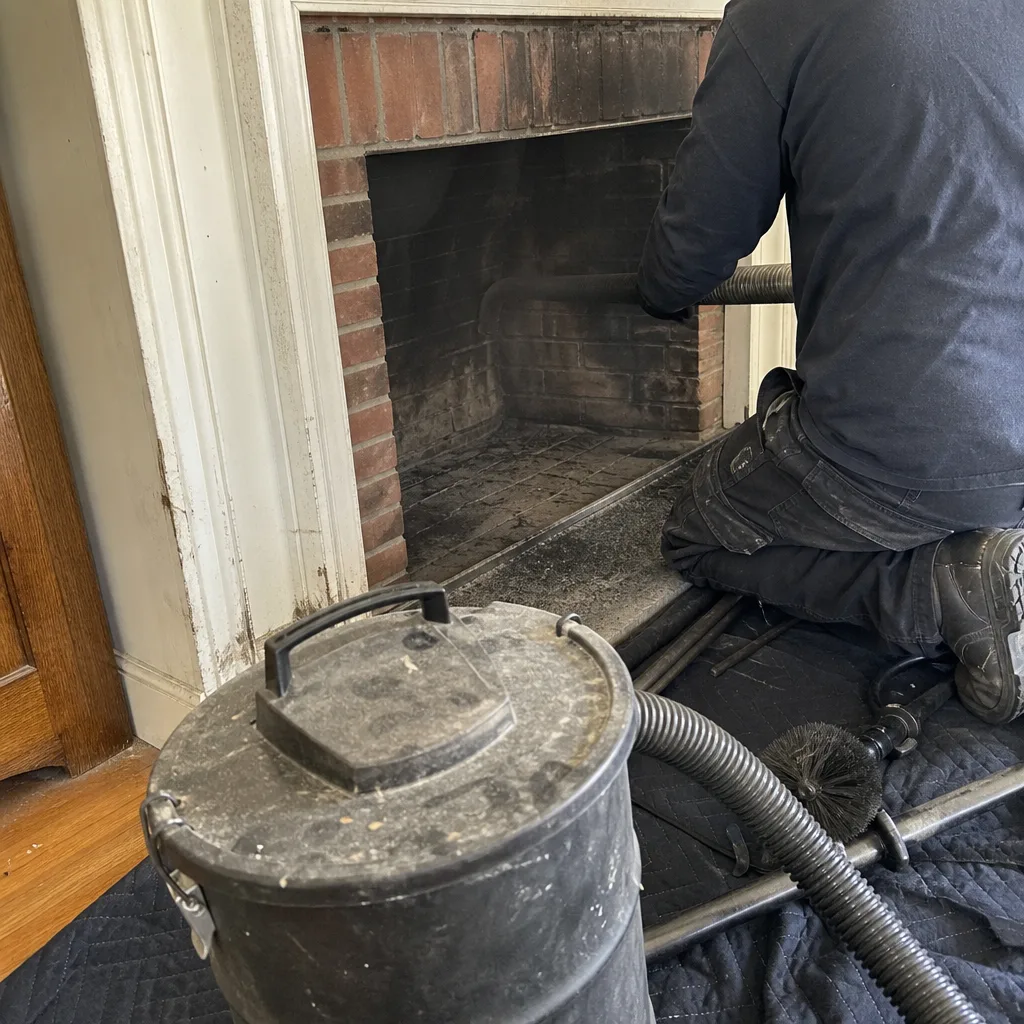
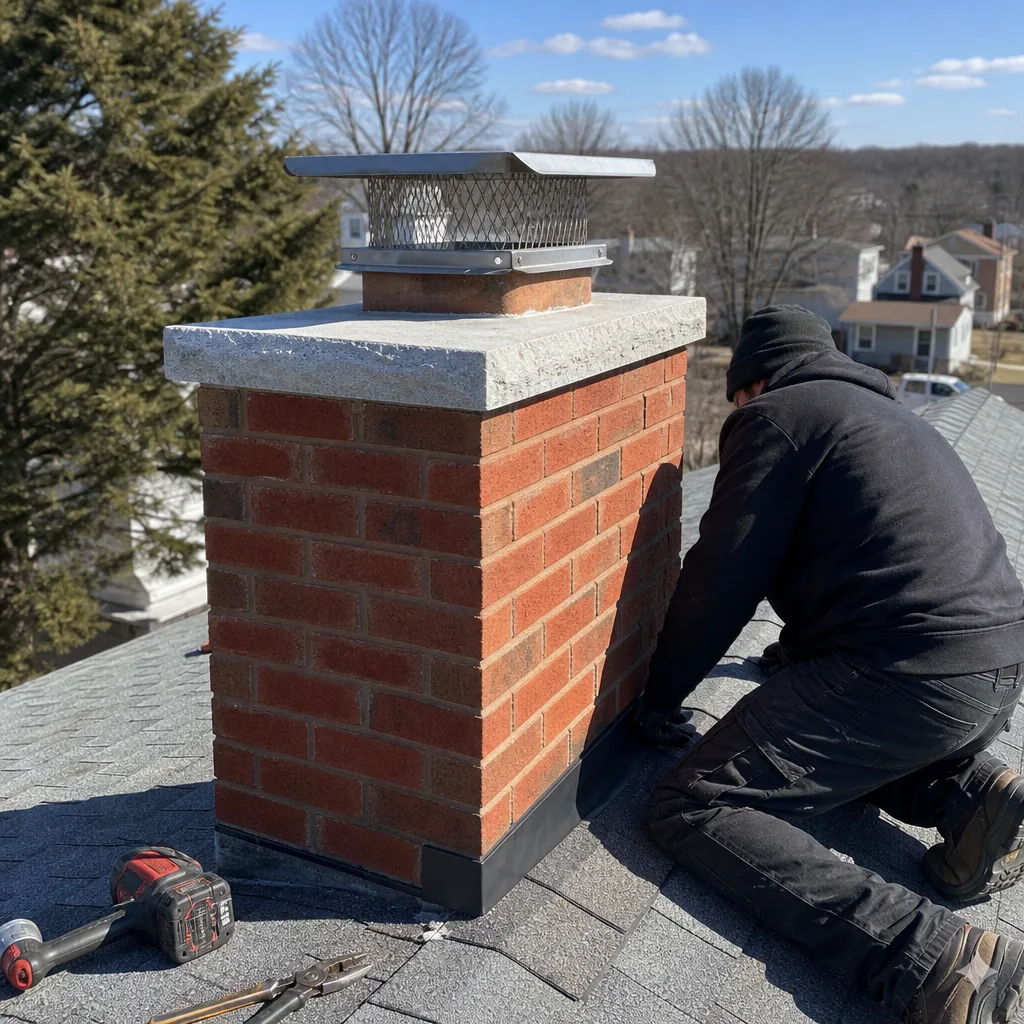
Level 1 sweep and inspection to the NFPA 211 annual standard - flue, crown, cap, and flashing checked and photographed
Chimney sweep logs do not sweep chimneys. They loosen some creosote - which then falls where a brush and vacuum still have to collect it.
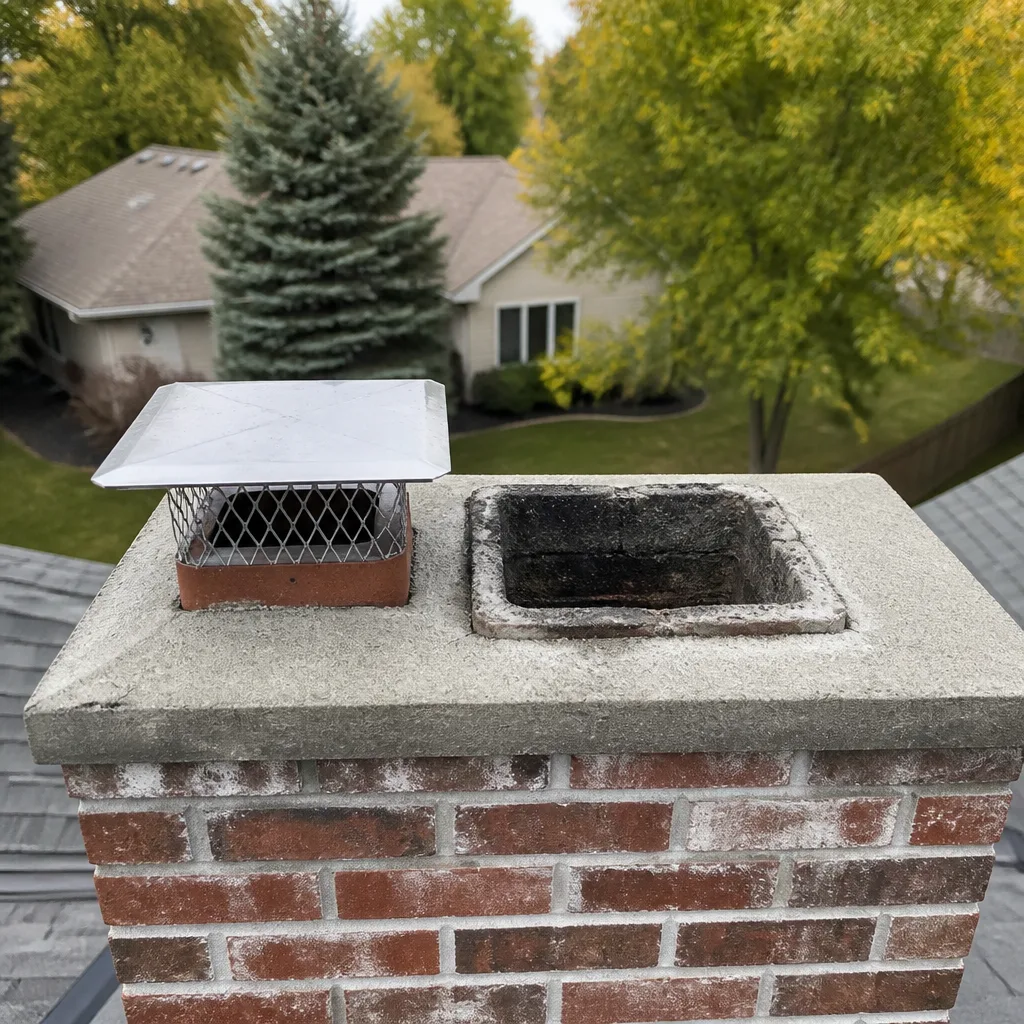
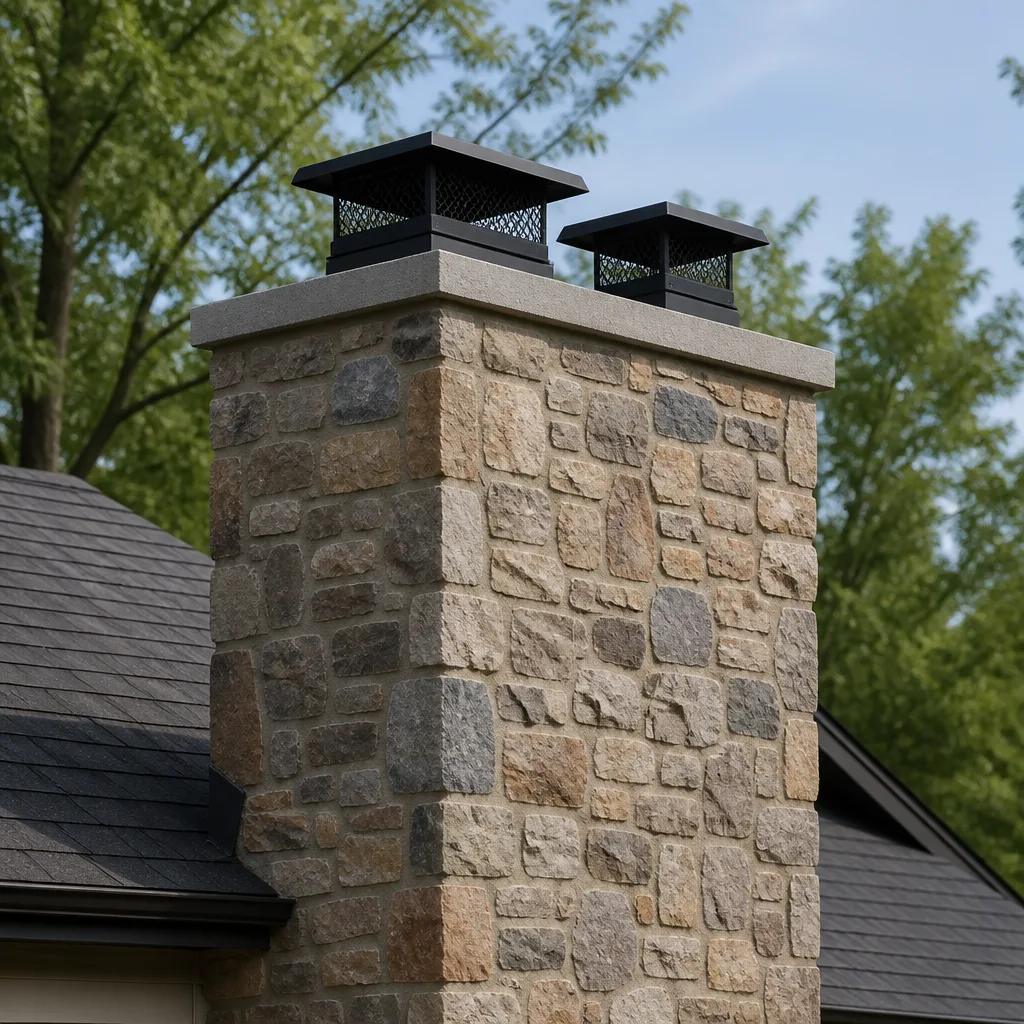
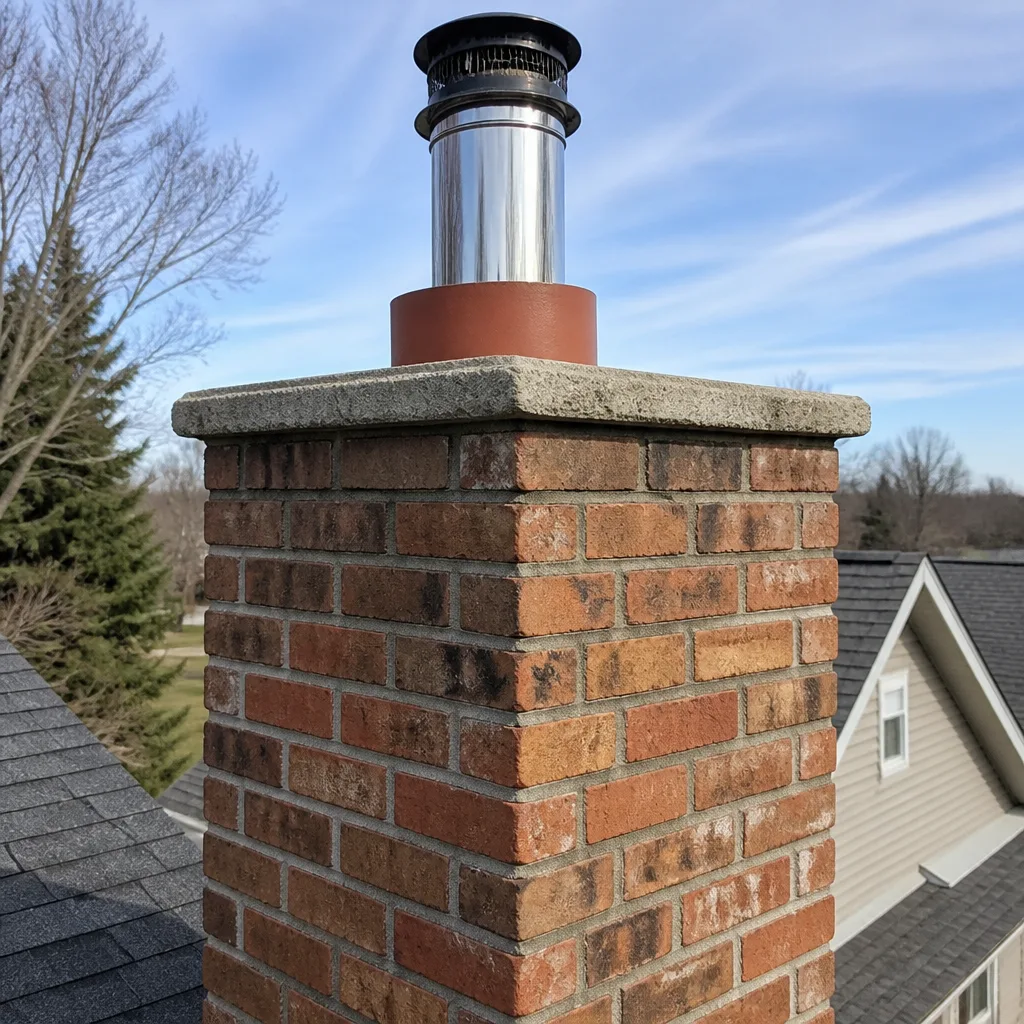
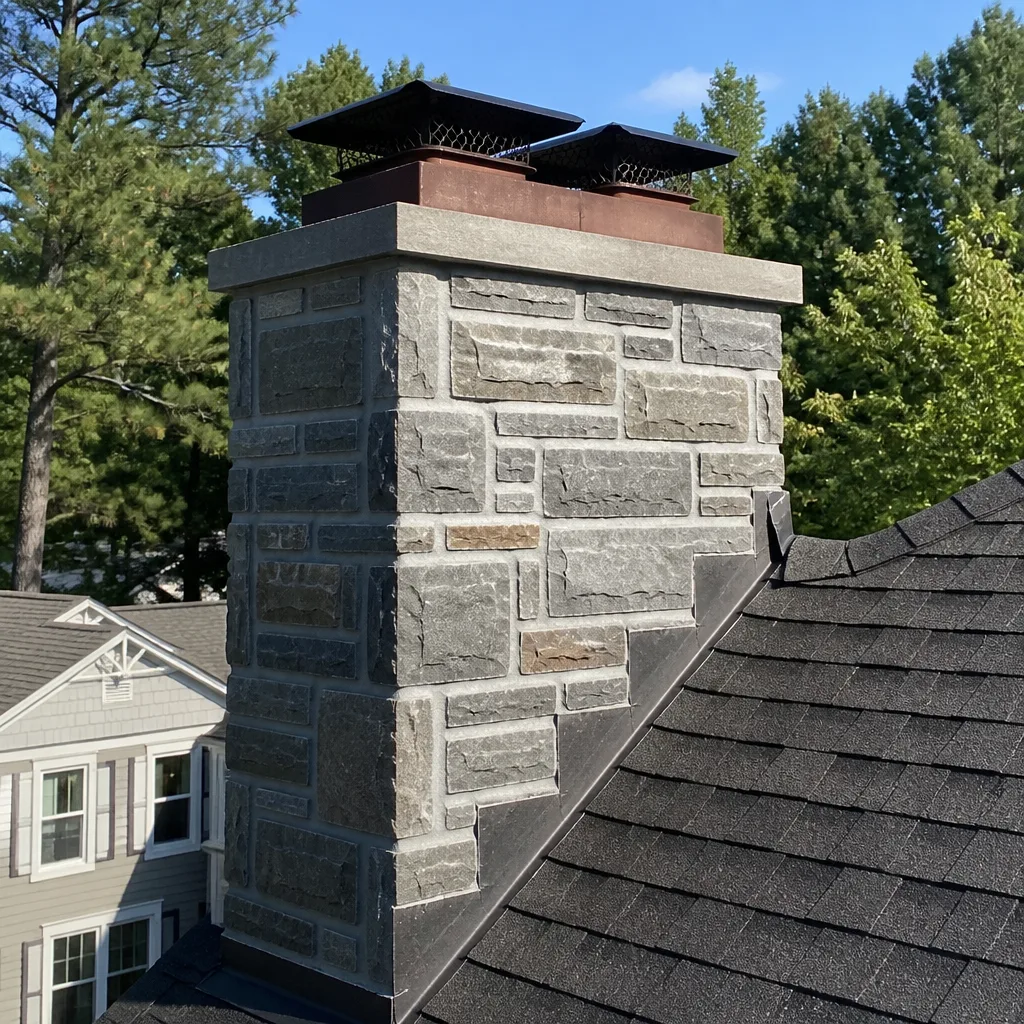
 Before
 After
After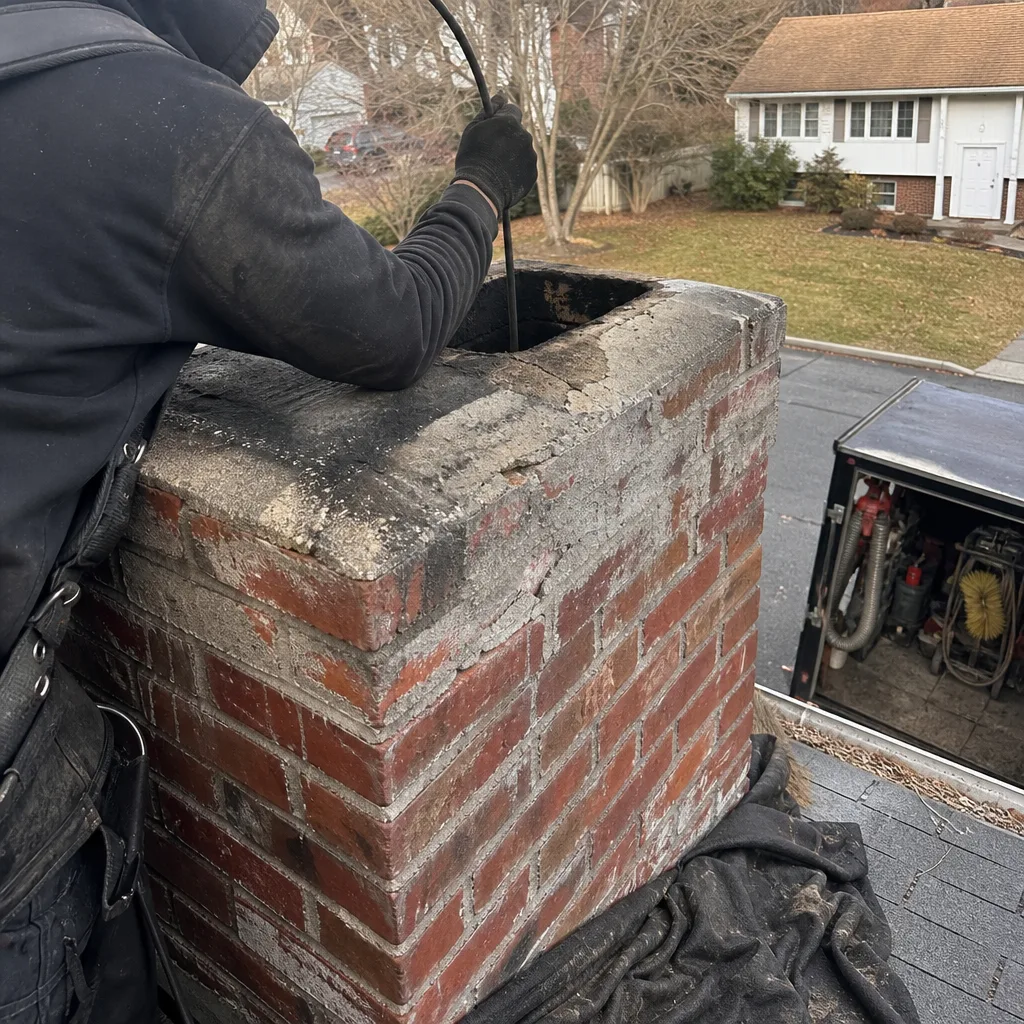 Before
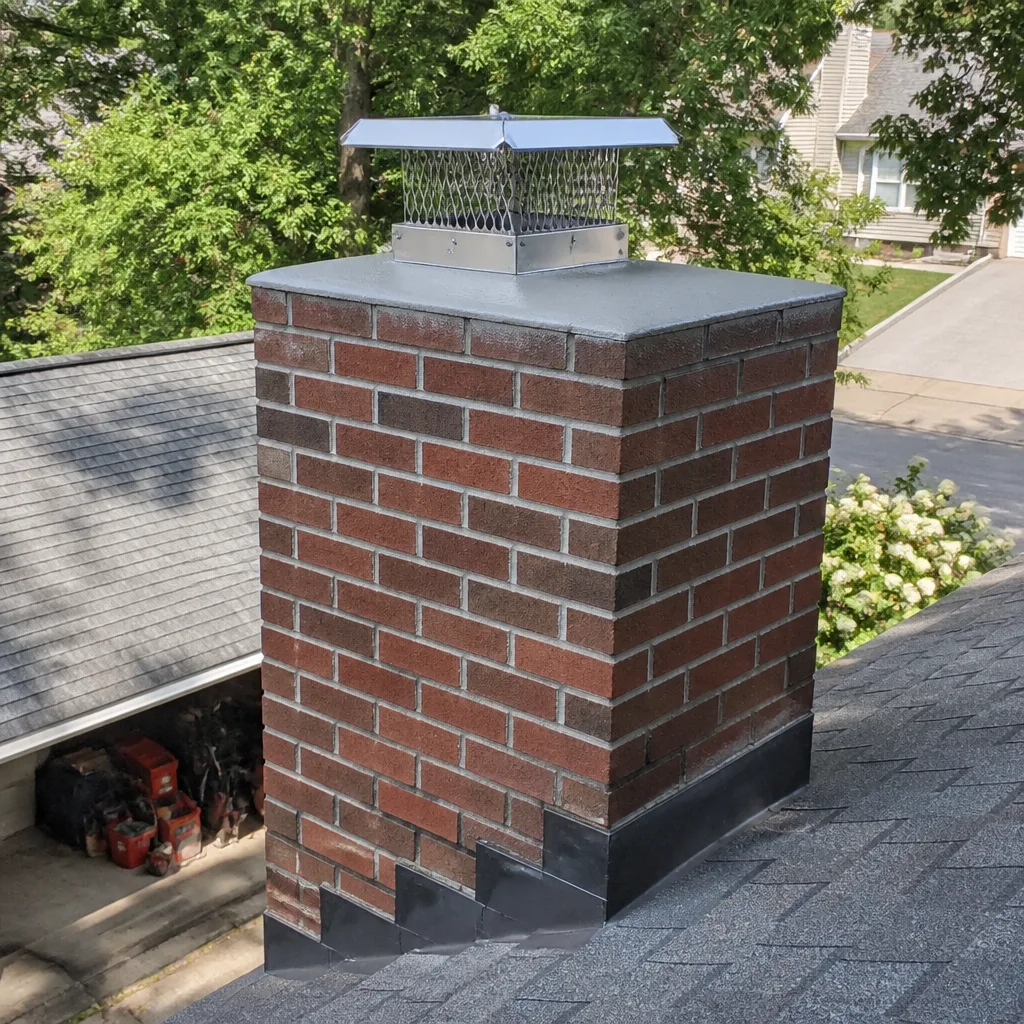 After
After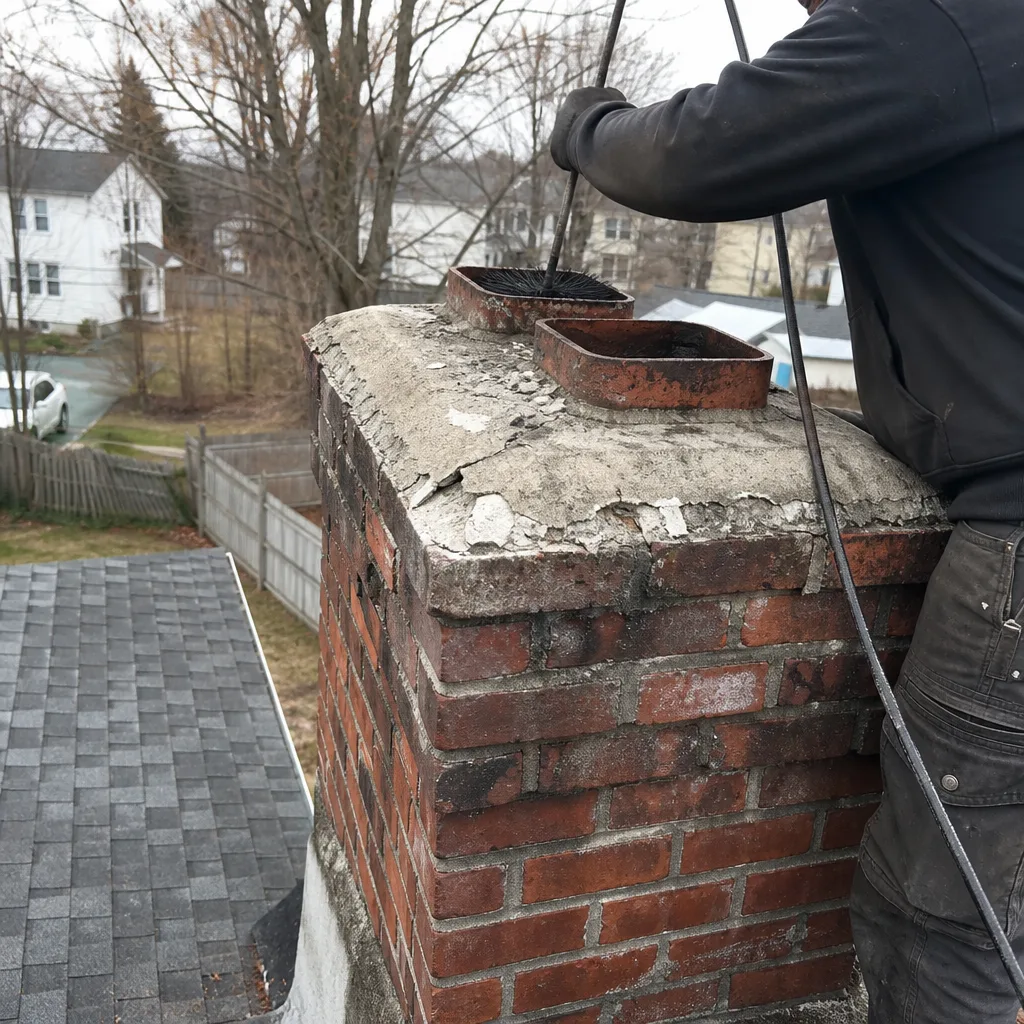 Before
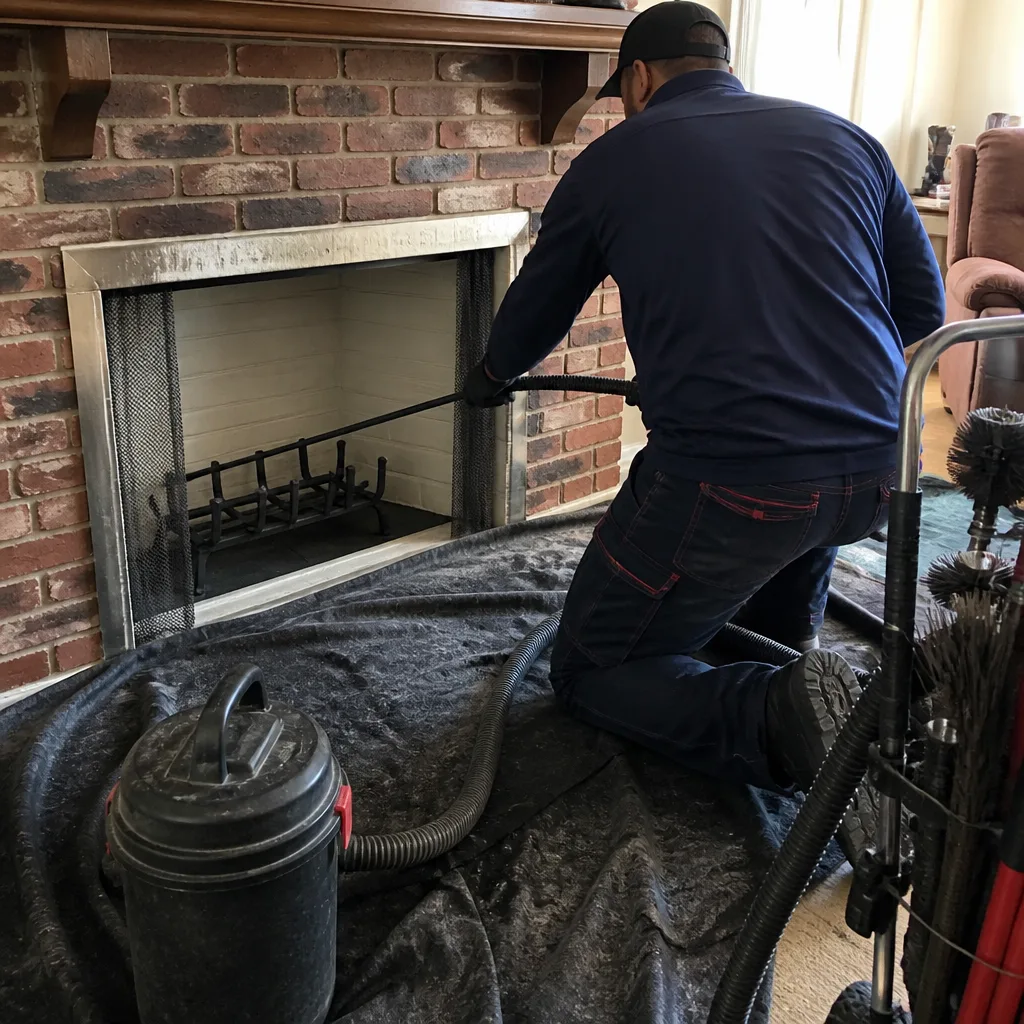 After
AfterChimney Cleaning & Sweep Maintenance Checklist for Peabody Homeowners
A professional sweep visits once a year. The other 364 days, you’re the one who will notice the first sign that something changed, if you know what you’re looking at. Most Peabody homeowners don’t get burned by dramatic chimney failures. They get burned by slow, quiet deterioration that would have been obvious at month six if someone had known to look. This guide is written for the person who lives in the house, not the sweep who visits it, and complements The Complete Guide to Chimney Cleaning in Peabody. It covers what to check yourself between professional visits, month by month, tied to the actual seasons we live through in Essex County. No ladder required for most of it.
Quick Answer
A homeowner chimney maintenance checklist for Peabody means one professional sweep per year plus monthly visual checks you can do from inside the firebox and from the ground outside. Check mortar joints, flue cap visibility, creosote buildup after fires, and any change in how your fireplace draws. If you spot spalling brick, white staining, or a cap that’s missing or tilted, call a sweep in Peabody before it becomes structural, or review Chimney Cleaning Warning Signs: A Peabody Homeowner’s Reference Guide to confirm what you’re seeing.
Table of Contents
- The Five-Minute Monthly Checklist
- A Month-by-Month Guide for Peabody’s Climate
- What to Look for Inside the Firebox, No Ladder Needed
- Masonry Conditions Common to Peabody: Spalling, Efflorescence, and Freeze-Thaw
- What to Photograph Before Calling a Sweep
- The Short List: What Always Requires a Professional
- How Often Should a Chimney Actually Be Cleaned?
- Common Mistakes to Avoid
- When to Call a Professional
- Frequently Asked Questions
The Five-Minute Monthly Checklist
You don’t need equipment for this. You need a flashlight, your phone camera, and five minutes. Do this once a month during burning season, November through March, and once in the fall before your first fire.
- Stand in front of the firebox and look up. Shine the flashlight toward the damper area. You’re checking for anything hanging, flaking, or built up on the walls of the flue. Fresh creosote looks brown or black and can be flaky, sticky, or shiny depending on its stage. If you can’t see past the damper because buildup is already visible, that’s your sign it’s time.
- Look at the damper plate itself. It should open and close without grinding or sticking. A damper that’s fighting you is telling you something about rust, warping, or accumulated debris. Don’t force it. Forcing a stuck damper is how homeowners turn a $150 adjustment into a $400 repair.
- Check the firebox walls and floor. Look for cracked firebrick, gaps in the mortar, or brick that has shifted out of place. In Peabody homes, small hairline cracks are normal after years of heating and cooling cycles. What you’re watching for is a crack wide enough to slide a quarter into, or brick that moves when you press on it gently.
- Walk outside and look up at the chimney. You’re checking three things from the ground: is the cap still there and straight, is any brick visibly flaking or missing, and is anything growing out of the mortar joints. You’d be surprised how many Peabody chimneys have a sapling in them by August.
- After any significant weather event, do a twenty-second version of this. Nor’easters, heavy rain, ice storms. Peabody gets all of it. A quick glance at the chimney and a shine of the flashlight up the flue after big weather catches shifted caps and water intrusion before they become spring discoveries.
These checks are not a substitute for a professional chimney cleaning and sweep in Peabody. They’re the early warning system between visits. Think of it like checking your oil between oil changes. You’re catching the thing that changed, not doing the service yourself.
A Month-by-Month Guide for Peabody’s Climate
Generic seasonal advice doesn’t hold up in New England. “Check your chimney in the spring” is fine for a house in Atlanta. In Peabody, the freeze-thaw cycle runs from November through March, sometimes April. Here’s a month-by-month breakdown tied to what actually happens to chimneys in Essex County.
September: The Pre-Season Inspection
This is the most important month of the year for your chimney. Before you light your first fire, you want a professional inside the flue looking for what summer left behind. Animals nest in chimneys between April and August. A professional sweep once a year is the standard in Peabody, and September is the right time to book it. You want to be on the schedule before the phones start ringing in October. By the time the first cold snap hits, every sweep in the county is booked three weeks out.
October: First Burn of the Season
Your first fire of the year should be a test burn, not a full evening. Burn one or two small, dry logs and watch what happens. Does smoke roll into the room when the damper is open? Does it draft slowly at first and then pick up? Those are clues about flue buildup, blockages, or a cold chimney that’s slow to establish draft. Once-a-year burn or no burn is the rule of thumb in Peabody, because chimneys break in the off-season too. If you skipped the September sweep, October is your last comfortable window before the rush.
November through February: Monthly Checks, Weekly Use
During heavy burning months, run the five-minute monthly checklist every two or three weeks instead of once a month. This is when creosote accumulates fastest, especially if you’re burning wood that isn’t fully seasoned. Pay attention to how much buildup you see near the damper month over month. If the rate of accumulation seems fast, that’s a fuel problem or a draft problem, and both are worth a conversation with a professional. In our experience in Peabody homes, first-degree creosote is a brush job. Third-degree is a glaze. Catch it early and you’re paying for a cleaning instead of a liner conversation.
March: The Freeze-Thaw Injury Report
March is when freeze-thaw damage shows itself. Warm days and freezing nights force water in and out of brick and mortar, and by late March, the damage from the whole winter becomes visible. This is the month to do a thorough exterior check. Look closely at mortar joints on the chimney body. Hairline cracks are normal. Crumbling or missing mortar is not. Efflorescence, the white chalky staining that appears on brick, typically becomes visible for the first time in March as water evaporates out of the masonry. We’ll get into that below.
April through August: The Off-Season Is Not the Off-Duty Season
In Peabody, the off-season is when chimneys quietly fail. Rain gets into cracks and soaks the masonry behind the brick. Animals build nests inside unlined or damaged flues. Squirrels love a chimney crown with a hairline fissure. One of the most common fall discoveries in homes around Peabody is a fully blocked flue that was clean in April. Off-season is also the right time to do chimney repair work in Peabody, because the weather is stable and you’re not competing with everybody else’s emergency call. If you spot something concerning in March and wait until September to address it, you’ve given the problem seven months to get worse.
What to Look for Inside the Firebox, No Ladder Needed
Here’s the thing most guides won’t tell you: from inside your living room, you can see roughly seventy percent of what matters for a basic safety assessment. You just need to know where to stand and what you’re looking at.
Where to Stand and How to Look
- Kneel or sit in front of the firebox, not off to the side. You want your line of sight going straight up the flue, not at an angle. A direct view reveals buildup on the flue walls that an angled view will miss.
- Turn off the room lights. Ambient light washes out the details inside the firebox. With the room dark, your flashlight shows contrast between clean flue tile and creosote buildup.
- Shine the light upward at a slight angle, and rotate it slowly. You’re trying to illuminate the interior walls of the flue, not just the back wall. Rotate the light in a circle and watch for spots where the surface texture changes. The surface should look like dark terracotta or smooth metal. If it looks fuzzy, flaky, or glazed, that’s creosote.
- Look at the smoke shelf. This is the flat ledge just above the damper. Debris collects here: creosote flakes, small animal nesting material, or bits of mortar that have fallen from higher up. A light coating of dust is normal. Actual piles of material are not.
What First-Degree, Second-Degree, and Third-Degree Creosote Look Like
- First-degree creosote is the soft, flaky, dark-brown or black soot that brushes off easily. This is what forms during normal wood-burning. It’s a routine cleaning, not a panic.
- Second-degree creosote looks like crunchy black flakes or tiny pebbles coating the flue wall. It doesn’t brush off with light pressure. It forms when the flue runs cooler than it should, often from wet or unseasoned wood or an oversized flue. This is when you want a sweep before burning season, not after.
- Third-degree creosote is the one that worries professionals. It looks like a shiny, glassy, black glaze, often with visible drips. It seals to the flue wall and can’t be brushed off. It’s highly concentrated fuel. Third-degree creosote requires chemical treatment or liner-level intervention, and it’s the stage where chimney fires happen. Your flue doesn’t care how the fire looks. It cares how it breathes.
If you’re not sure what you’re seeing, take a phone photo and send it to a sweep in Peabody. A good one will tell you honestly whether it looks like routine maintenance or something that needs eyes on it now. No charge for that conversation from us, and we’d rather you ask before you burn.
Masonry Conditions Common to Peabody: Spalling, Efflorescence, and Freeze-Thaw
Peabody’s climate is hard on chimneys. We get the full New England cycle: snow, ice, rain, sun, and the kind of temperature swings that make brickwork expand and contract constantly. Two conditions show up in Peabody chimneys more than anything else: spalling and efflorescence. Neither one fixes itself.
Spalling: Brick That Is Flaking or Falling Apart
Spalling is what happens when water gets inside the brick and freezes. The expanding ice breaks the face of the brick off. You’ll see brick that looks like its outer layer has chipped away, leaving rough, irregular, softer-looking material underneath. Sometimes you’ll find pieces of brick face on the ground near the chimney. That’s the most obvious sign, and it means the process is already underway.
Spalling in Peabody chimneys is a structural signal, not a cosmetic one. Each time the brick face flakes off, more of the softer interior is exposed to water. The damage accelerates. A spalled chimney can sometimes be repaired by a professional who understands fireplace and chimney systems in Peabody, but if the spalling is widespread, the structural integrity of the chimney itself becomes questionable. The fix gets more expensive the longer it waits. A missing brick face in March becomes a missing section of chimney by the following March.
Efflorescence: The White Staining and What It Actually Tells You
Efflorescence looks like white, chalky powder or staining on the brick surface. It’s caused by water moving through the masonry, dissolving salts inside, and carrying them to the surface where they crystallize as the water evaporates. This is common in Peabody because our wet winters and spring thaw cycles push water through brick and mortar constantly.
The white stain itself is not dangerous to the brick. What it signals is the problem: water is moving through your chimney in places it should not be. Efflorescence means there’s active water intrusion. It might be a cracked crown. It might be deteriorated mortar joints. It might be a failed flashing where the chimney meets the roof. Whatever the source, the water is traveling, and water moving through masonry is the slow destroyer of chimneys in New England. First-degree creosote is a brush job. The brick version of that is a white stain you see in March. Catch the water source early, and the fix is often a crown seal or a repointing job. Wait until you can see the mortar crumbling out of the joints, and you’re looking at a rebuild.
Freeze-Thaw Cycle: Why Peabody Chimneys Age Faster
The freeze-thaw cycle is the mechanism behind both spalling and efflorescence in our area. Water soaks into the chimney masonry. The temperature drops below freezing. The water expands by about nine percent as it turns to ice. That expansion pressure pushes cracks wider, loosens mortar, and breaks brick faces. When the thaw comes, more water gets into the now-larger cracks. The cycle repeats, and each repetition causes more damage than the last.
In Peabody, this cycle can run dozens of times in a single winter. A chimney with a small, hairline crack in November can have a half-inch gap by February, not because anything dramatic happened but because the freeze-thaw cycle worked on it every night for months. This is why off-season chimney work matters. The damage doesn’t pause because you’re not burning.
What to Photograph Before Calling a Sweep
If you notice something and you’re going to call a professional in Peabody, five minutes with your phone camera will make that conversation dramatically more accurate. Here’s exactly what to document.
The Four Photos That Answer Most Questions
- The full exterior chimney from the ground. Stand far enough back to get the entire chimney from roofline to cap in one frame. This shows the overall condition, the cap, the crown, and any obvious masonry issues. If you can get two angles, do it. Front and side.
- Close-up of any specific concern. Spalled brick, efflorescence staining, a crack in the crown, a leaning cap. Get close enough that detail is visible, but include some surrounding brick so the scale is clear. Hold a quarter in the frame next to a crack if you want to convey width. That’s a trick we’ve used for years.
- The firebox interior with ambient light only. No flash. Flash photography washes out creosote texture and makes third-degree glaze look like second-degree flakes. Take one shot straight up the flue if you can angle the phone inside, and one of the firebox floor and walls.
- The area around the chimney in the attic, if accessible. If you can safely access the attic space where the chimney passes through, photograph the masonry there. Dark staining on the brick in the attic tells a water intrusion story even before it shows up in the living space. If the attic is not safely accessible, skip this one. No photo is worth a fall through a ceiling.
Why These Photos Matter
When you call a sweep in Peabody about a concern, the person on the phone can do more with a photo than with a verbal description. “The brick looks kind of white and crumbly” might be efflorescence or it might be severe spalling, and those have very different levels of urgency. A clear photo lets the professional tell you whether this is schedule-this-month or get-someone-out-this-week. It also means the sweep who shows up knows what to expect and arrives prepared. And from the homeowner’s side, you have a dated record of what the chimney looked like when you first noticed the issue. If you’re getting a second opinion on a repair quote, those photos are worth their weight. We offer free second opinions on any written estimate, and dated photos make that conversation fair and accurate for everyone.
The Short List: What Always Requires a Professional
Some things are monitor-and-mention. Some things are do-not-touch, call-now. Here’s the short list of conditions that should never be watched and waited on, and should always get a trained sweep in Peabody on the phone.
- Any visible gap between the chimney and the house. This often means the chimney has shifted or settled. It could be a structural issue at the foundation level, and it doesn’t self-correct.
- A cap that’s missing or visibly leaning. The cap is your chimney’s roof. Without it, everything gets in: rain, snow, squirrels, raccoons, leaves. A leaning cap might be a loose connection or it might be a compromised crown underneath. Either way, it’s an open door.
- Smoke entering the house when the damper is open. This is a draft failure with potentially serious consequences, including carbon monoxide risk. Do not keep burning. Call a professional.
- Glazed, shiny creosote anywhere in the flue. Third-degree creosote is the state where chimney fires happen. This is not a monitoring situation. This is a stop-burning-and-call situation.
- Any sign of animal activity inside the chimney. Scratching sounds, nesting debris visible in the firebox, or an animal actually entering or exiting. Animals can be trapped, and a blocked flue can push carbon monoxide into the house.
- Water staining on the ceiling or walls near the chimney. This means water is coming through the roof or flashing and getting into the house structure. The longer it runs, the more repair it becomes: chimney work plus drywall plus possibly framing.
- A chimney fire, even a small one. If you’ve had a chimney fire of any size, the National Fire Protection Association requires a level-two inspection before the chimney is used again. This is not optional. The internal structure may have been compromised even if the exterior looks fine.
For anything in this category, the right move is a phone call. In Peabody, a live person answers around the clock, and it may well be Wendell himself at three in the morning. That’s the standard anyone should expect from a local chimney company.
How Often Should a Chimney Actually Be Cleaned?
The honest answer: once a year, burn or no burn. That’s the standard in Peabody and everywhere else in New England, and it holds for almost every household. Chimneys break in the off-season too. A flue doesn’t need a fire to develop a problem.
The once-a-year rule comes from the mechanics of creosote, not from any desire to upsell you on annual cleanings. Wood fires produce creosote with every burn. The amount varies based on what you burn, how hot the fire runs, and how efficient your fireplace is. But over the course of a New England burning season, even a light user accumulates enough to make a cleaning worthwhile. And animals nest during the warm months. Structural issues develop from weather exposure year-round. Your annual visit is the point where a professional actually looks at the whole system, not just brushes the flue.
Some homeowners burn so rarely that they ask if every other year is fine. Here’s the straight answer from Wendell, who has spent 29 years inside Peabody chimneys: the savings from skipping a year are roughly the cost of a dinner out. The potential cost of the thing you didn’t catch is a liner replacement or a masonry rebuild. Once a year. It’s the cheapest insurance you can buy for a house.
If you burn mostly softwood like pine, burn unseasoned wood, or burn more than three or four fires a week during the winter, you may need twice-yearly cleanings. The same goes for an older home with a larger, less efficient flue. An honest sweep will tell you if once a year isn’t enough for your particular setup. Ask anyone on your street in Peabody who’s had a chimney fire what they’d do differently. They’ll tell you they’d have called sooner.
Common Mistakes to Avoid
- Burning unseasoned wood. Wet or green wood burns cooler and produces more creosote. Wood should be seasoned at least six months to a year before burning. In Peabody’s humid summers, wood left uncovered won’t season well. Stack it off the ground, cover the top, and leave the sides open for airflow.
- Trusting the “chimney cleaning logs” instead of a sweep. Chemical cleaning logs can loosen some first-degree creosote, but they don’t remove it from the flue. The debris falls onto the smoke shelf and creates a new problem. They’re a supplement at best, never a replacement for a professional cleaning.
- Ignoring the chimney because you “don’t use it much.” The off-season is when Peabody chimneys take on water, host animal tenants, and develop masonry failures. Annual maintenance is not tied to usage volume. It’s tied to weather exposure and structural aging.
- Patching chimney cracks with store-bought sealant. Surface sealants trap moisture inside the masonry and make freeze-thaw damage worse in our climate. Masonry repairs need materials that match the existing mortar and allow the chimney to breathe. That’s a professional’s job.
- Waiting until October to call. Every sweep in Peabody is booked solid from October through December. If you call in September, you get your choice of appointment times. If you call in November, you wait. If you call in December with a problem, you’re paying for urgency.
- Comparing quotes on price alone. A low quote from a company that sends a stranger and changes the number at the door isn’t a bargain. A local operation with a published address and license number, one that answers the phone with a live person and puts the quote in writing before work starts, is a different value proposition. In this area, you want the name of the actual person who’ll be on your roof.
- Not documenting what you see. Photos with dates create a record. If a chimney concern develops over time, having a visual baseline makes conversations with professionals faster and more accurate, and protects you from being sold work you don’t need.
When to Call a Professional
You don’t need to become a mason to keep your chimney safe in Peabody. You need to recognize the moments when a phone call is the right next step. Call a professional when you see shiny or glazed creosote, brick spalling or efflorescence that’s new or spreading, a leaning or missing cap, water staining near the chimney, or any draft problem that pushes smoke into your living space. Call before burning season starts so the work can be done properly without pressure. And if you’ve had a chimney fire, call immediately, because the chimney needs a certified inspection before another fire is lit. Top Hat Chimney offers our Chimney Cleaning & Sweep services with free estimates in Peabody. Call (978) 637-8560 and talk to a live person, any hour of any day. No price changes at your door, and the number you hear on the phone is the number on the invoice.
Frequently Asked Questions
A standard chimney sweep in Peabody typically runs between $180 and $340 depending on the size of the chimney, the amount of buildup, and whether any animals or blockages are involved. Your final price should be quoted on the phone before anyone arrives. Call (978) 637-8560 for a free estimate with the number locked in before the work starts.
Once a year, regardless of how often you burn. Peabody’s freeze-thaw cycles, wet springs, and animal activity all affect your chimney year-round, not just when a fire is lit. If you burn more than three or four fires a week or burn unseasoned wood, ask about twice-yearly sweeps.
You should never be sold a liner replacement without seeing the evidence yourself. A professional using a camera inspection can show you exactly what the liner looks like from the inside. At Top Hat Chimney we install and service liners from brands like DuraFlex and HeatShield, but we don’t recommend one unless the camera footage shows it’s warranted. Ask to see the footage, and if a company won’t show you, get a second opinion. We’ll offer one free on any written estimate.
Most skipped years don’t result in fires. They result in accumulated creosote that hardens and becomes more expensive to remove later, animal nests that block the flue and cause draft problems, and masonry issues that go unobserved and worsen through another winter of freeze-thaw cycles. The purpose of the annual visit is to catch things while the fix is small and inexpensive. The risk of skipping isn’t dramatic in year one. It compounds in years two, three, and four.
You can visually inspect your chimney from inside the firebox, but a proper cleaning requires training, equipment, and an understanding of the flue system. Most importantly, a professional sweep is also looking at conditions you may not recognize as problems: liner cracks, proper draft, cap condition, masonry integrity. The cleaning is one part of the service. The inspection is the part that prevents expensive damage. And a good sweep in Peabody will tell you when your chimney genuinely doesn’t need work yet. We’d rather tell you to wait than sell you something you don’t need. We’ll run into you again on Saturday, and we want to be able to look you in the eye.
It covers the work we do. If a repair or installation we complete isn’t right, one phone call brings Wendell and his crew back to make it right at no additional cost. It’s in writing on every single job, not in the fine print of a brochure. If something we claim to fix isn’t fixed within 90 days, we come back. That’s the whole promise. No asterisk.
The Bottom Line
A chimney in Peabody needs one professional visit a year, no matter how much or how little you burn. Between visits, your job is simple: check the firebox monthly during the winter, look at the exterior masonry in the spring, photograph what concerns you, and call a professional when something changes. The specific conditions to watch for are spalling brick, efflorescence, glazed creosote, missing or leaning caps, and any sign of water where it shouldn’t be. For more guides & resources, explore our blog. The most expensive chimney repairs in Peabody are not the ones that happen suddenly. They’re the ones that were visible for a year and never got addressed. If you see something, call (978) 637-8560. Talk to a person. Get an honest answer. It doesn’t cost anything to ask.
Written by Wendell Pike, Owner at Top Hat Chimney, serving Peabody since 1999.