
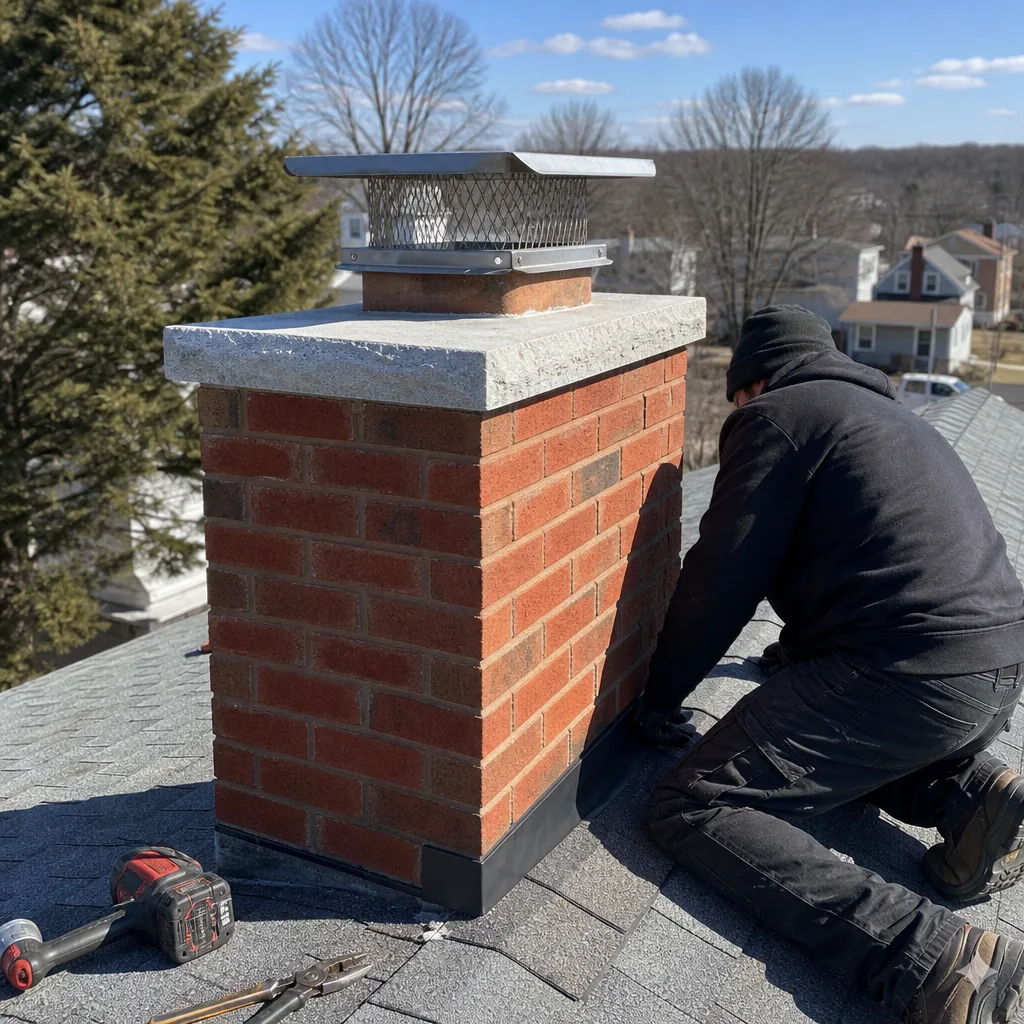
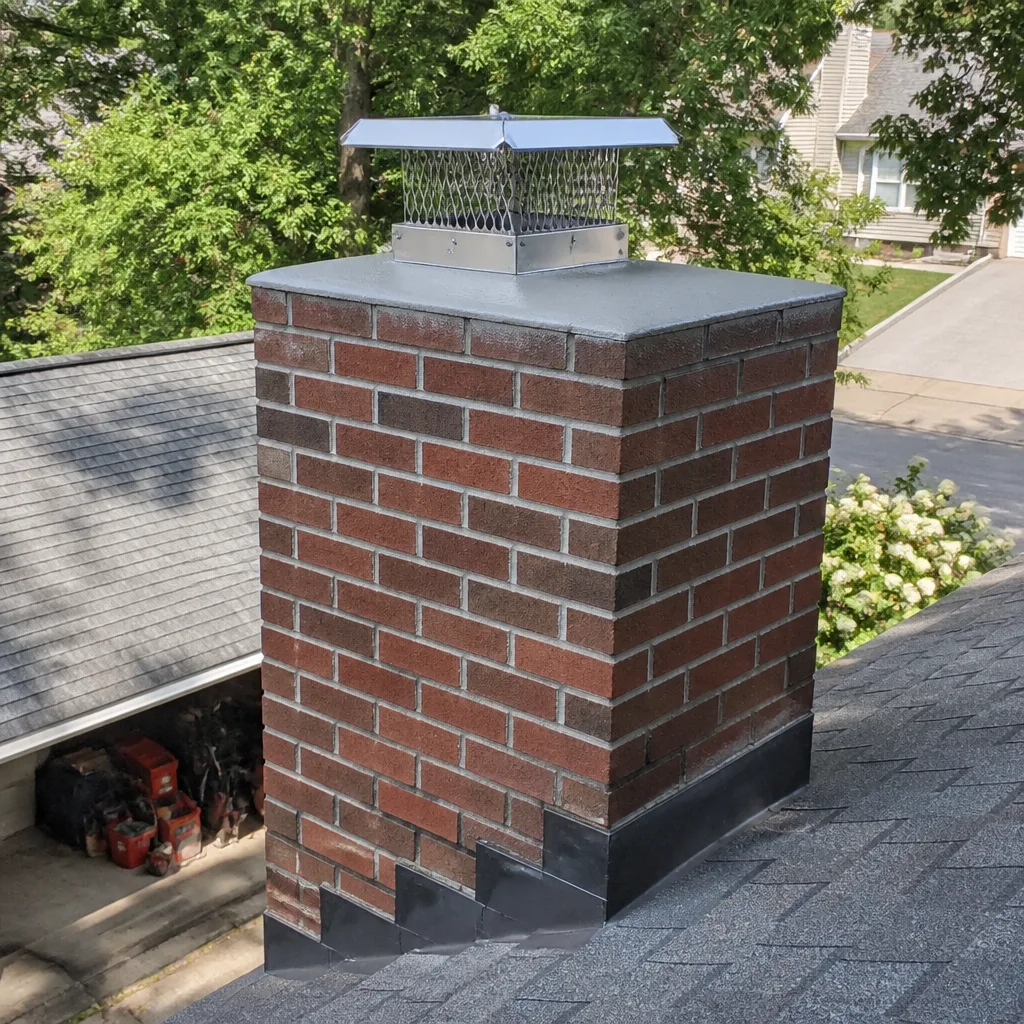
Level 1 sweep and inspection to the NFPA 211 annual standard - flue, crown, cap, and flashing checked and photographed
Chimney sweep logs do not sweep chimneys. They loosen some creosote - which then falls where a brush and vacuum still have to collect it.
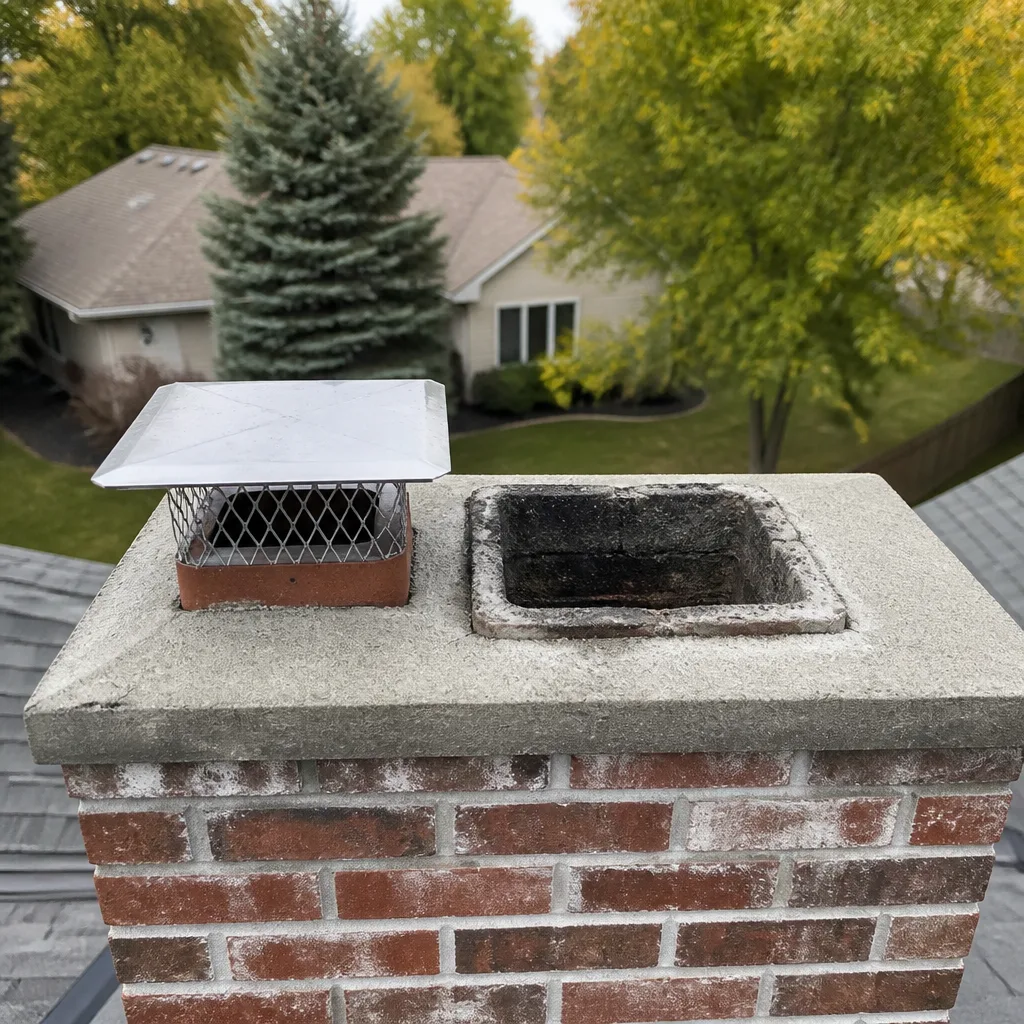
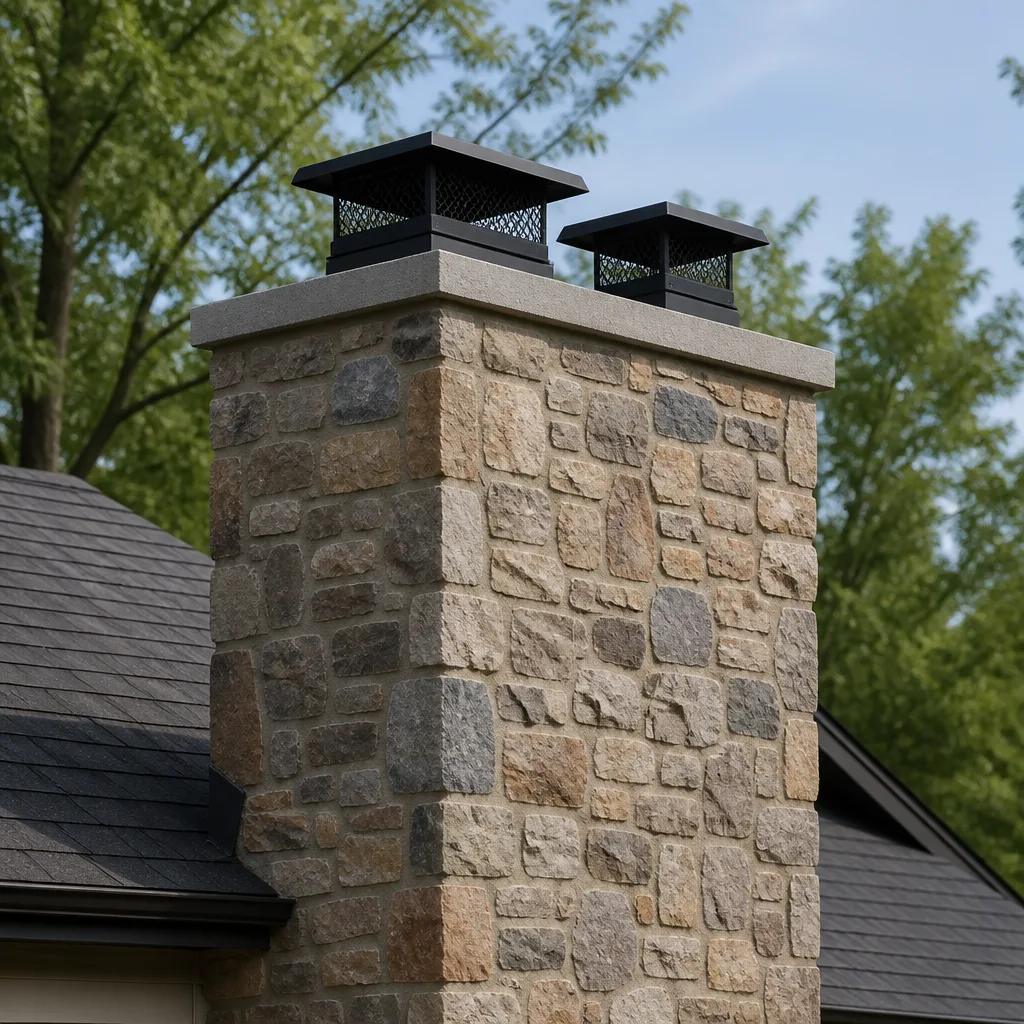
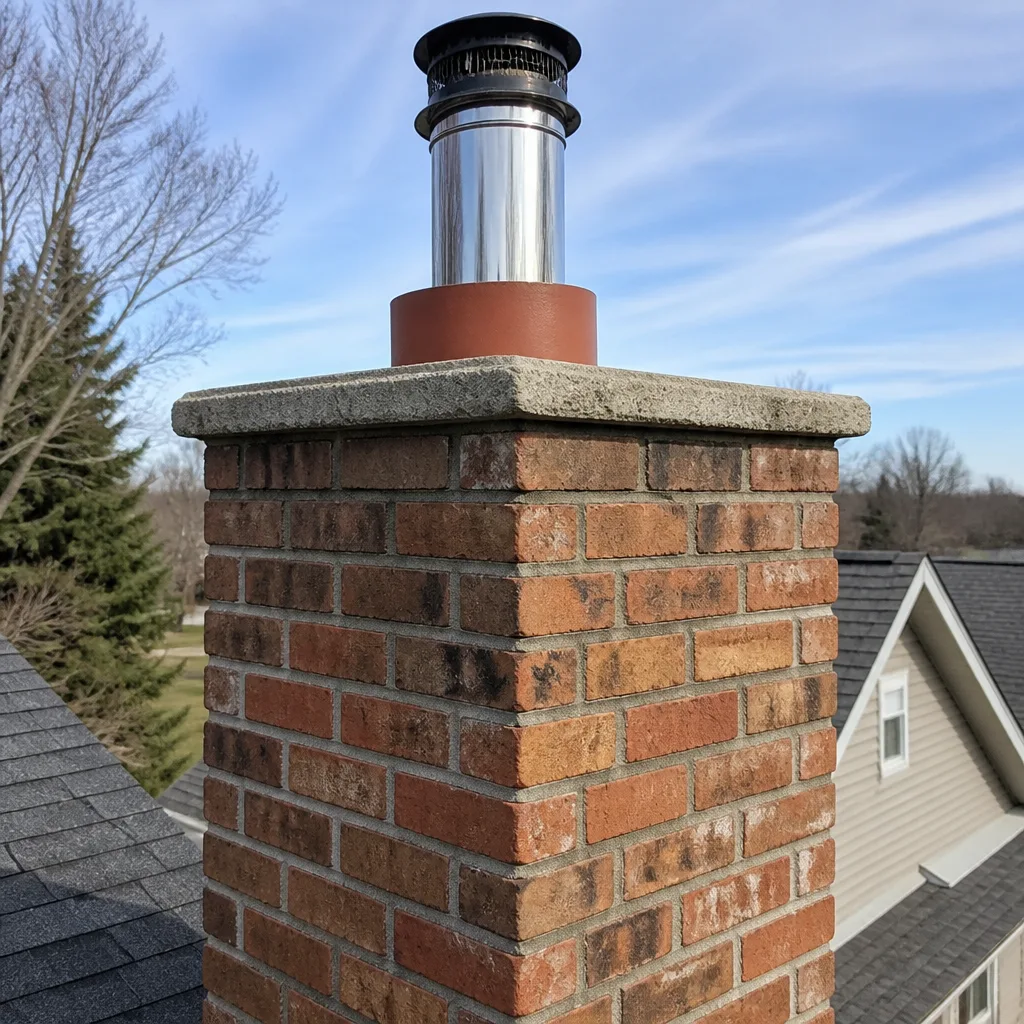
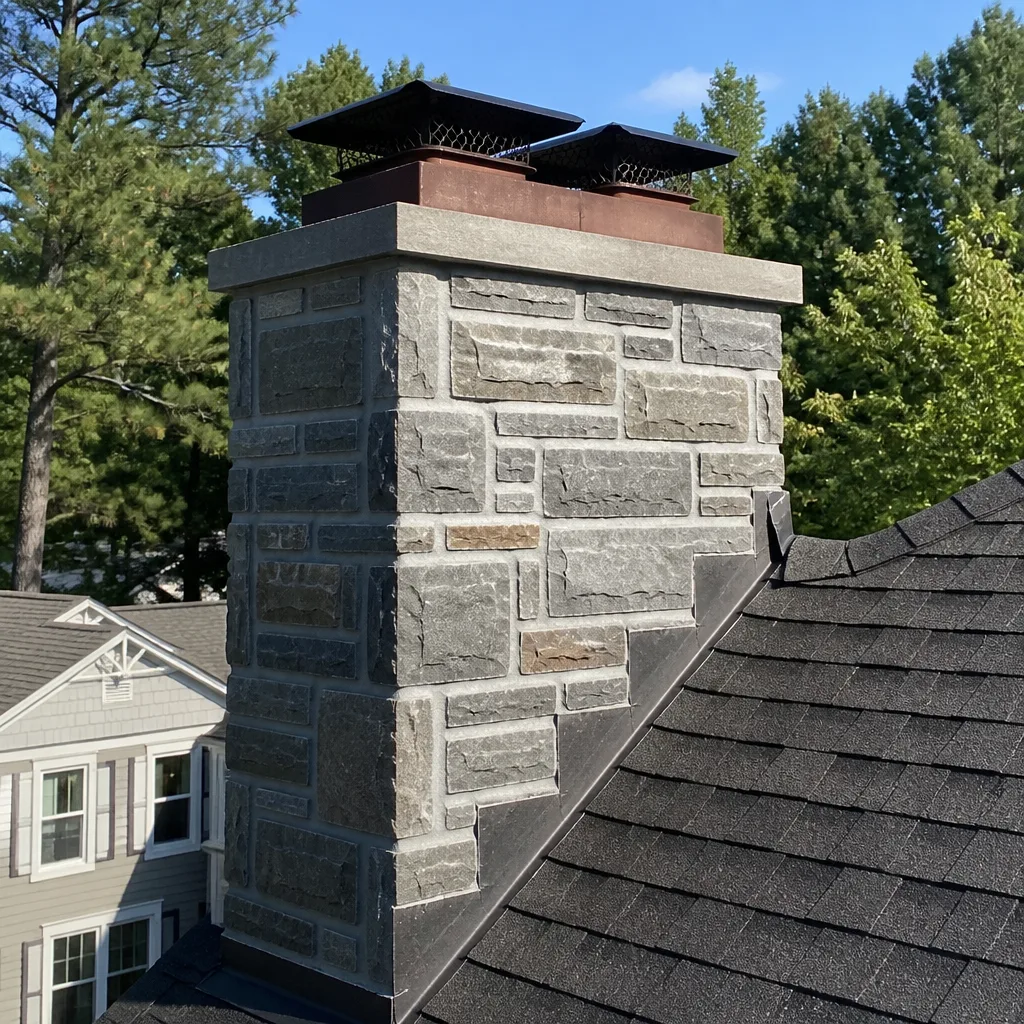
 Before
 After
After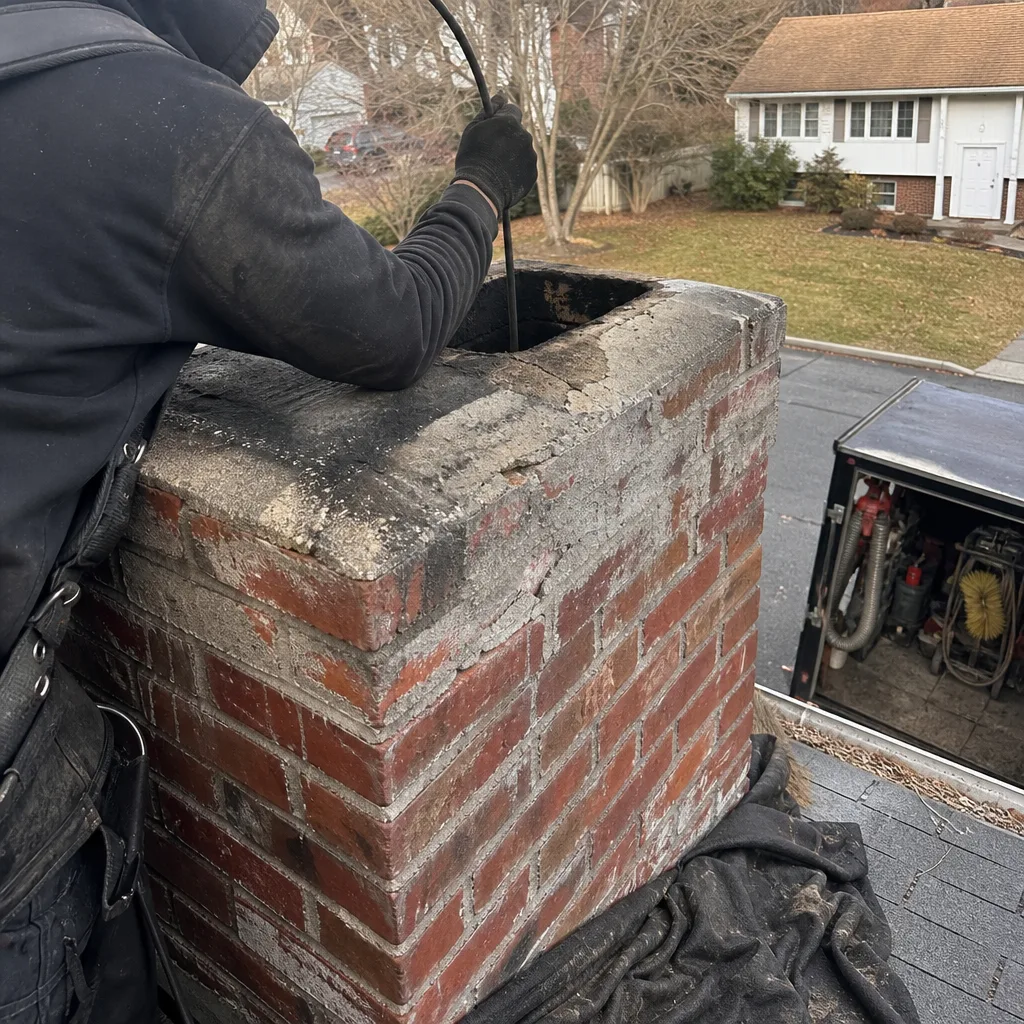 Before
 After
After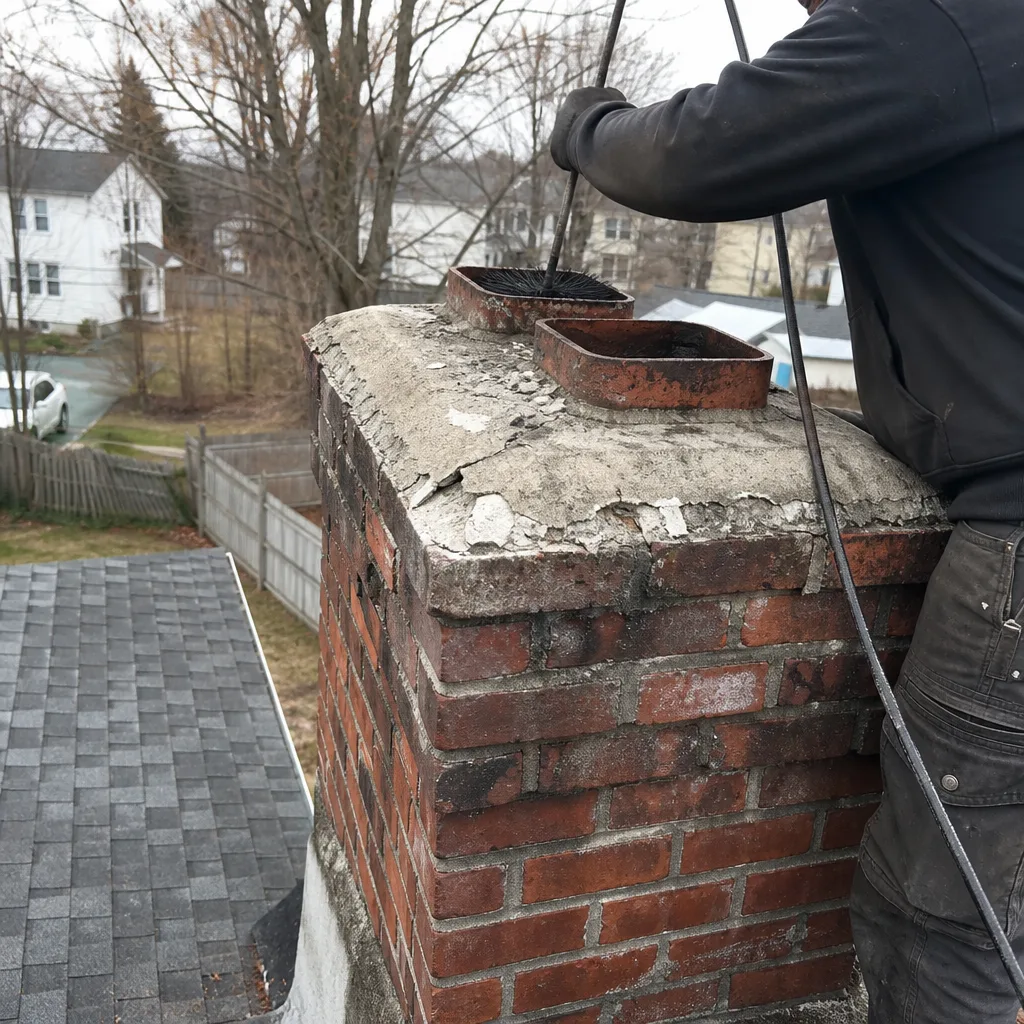 Before
 After
AfterCreosote Removal in Peabody, MA
Creosote removal in Peabody, MA typically runs between $150 and $600 depending on how far the buildup has progressed – and in most cases, we can handle it the same day you call. If you’re seeing a dark, flaky crust or a shiny tar-like glaze inside your firebox or on the damper, that’s creosote, and it needs to come out before you light another fire.
We’ve been providing Chimney Cleaning & Sweep services in Peabody and the surrounding North Shore communities since 1999, and creosote is the one thing Wendell will never let slide. It’s the leading cause of chimney fires in Massachusetts, and the homeowners who get into real trouble are almost always the ones who put off the inspection another season. If your fireplace saw any use this past winter – or even if it didn’t – a quick look inside will tell us everything. Give us a call at (978) 637-8560 and a live person will pick up, day or night.
Creosote removal is part of what we do as part of a thorough Chimney Cleaning & Sweep in Peabody. On straightforward first-degree jobs, the sweep and the removal happen in the same visit. On heavier second- or third-degree deposits, we’ll walk you through what we found, show you the camera footage, and give you a plain-English verdict before a single dollar changes hands.
When You Need Creosote Removal
You don’t always see creosote coming. Here are the situations where Peabody homeowners typically call us – and where waiting tends to make things worse:
- You smell something acrid even when the fireplace isn’t in use. A strong smoky or chemical odor drifting into the living room between fires is a reliable sign that creosote has built up to the point where it’s off-gassing. Homes in the Brooksby Village area with older masonry fireplaces tend to hold heat unevenly, and that accelerates deposit formation.
- You can see a dark, tar-like glaze on the damper or firebox walls. First-degree creosote is a light, flaky soot – a brush handles it. Second-degree is a crunchy, granular crust. Third-degree is a hardened glaze that chemically bonds to the liner surface, and that’s where you need a rotary-cleaning system and sometimes a chemical treatment before mechanical removal is even possible. Don’t try to chip it yourself – the surface temperatures involved in doing it wrong are genuinely dangerous.
- Your chimney hasn’t been cleaned in more than 12 months and you burned more than a cord of wood. The National Fire Protection Association recommends annual inspections regardless of use level. In Peabody’s climate, where a single heating season can run six months from October into March, heavy burners often accumulate enough deposit in one season to move from first-degree to second-degree.
- You had a slow-burning, smoldering fire style this winter. Low-heat fires – the kind people use to “stretch” a load of wood overnight – produce dramatically more creosote than hot, well-fed fires. If that’s your habit, expect to see heavier buildup than a neighbor who burns the same amount of wood differently.
- There’s evidence of a past chimney fire you didn’t know about. Small, fast chimney fires happen without homeowners realizing it. Signs include cracked tiles in the flue, a strong campfire smell that won’t clear, or visible puffy gray deposits on the liner. If you bought your Peabody home in the last few years and have no service records, this is exactly the kind of thing a camera inspection catches.
- You’re burning unseasoned or green wood. Freshly cut wood contains too much moisture. That moisture cools the flue gases before they exit, and cooler gases mean faster creosote accumulation. It’s one of the most common causes we see in Peabody neighborhoods with access to wooded lots on the outskirts toward Middleton and Danvers.
Our Creosote Removal Process
The process is straightforward, but the order matters. Rushing a step to save time is how removal jobs turn into bigger problems.
- Visual and camera inspection first. Before anything comes off the truck, the sweep inspects the firebox, damper, smoke chamber, and flue liner with a camera. This tells us exactly what degree of creosote we’re dealing with and whether there are any cracks or structural issues that would affect how we proceed. You’ll see the footage on a screen – no mystery, no guesswork.
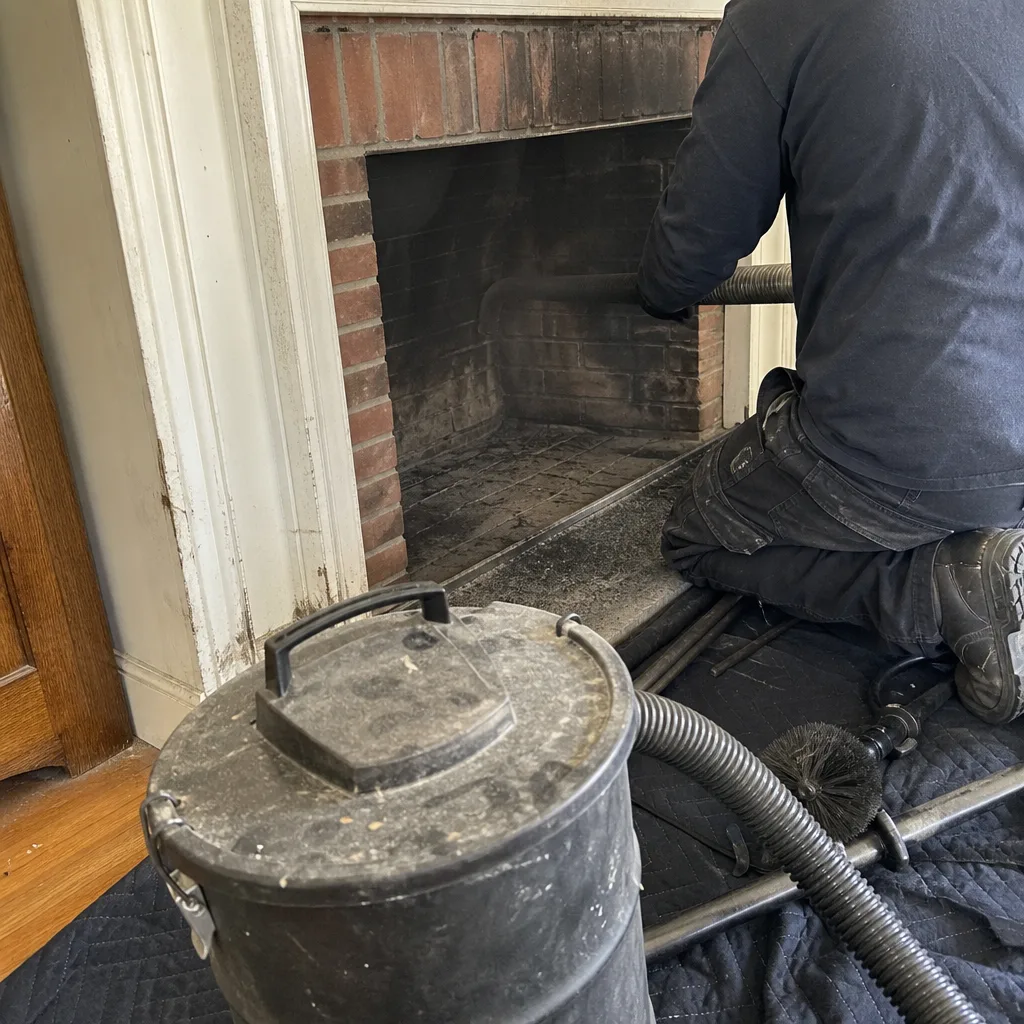
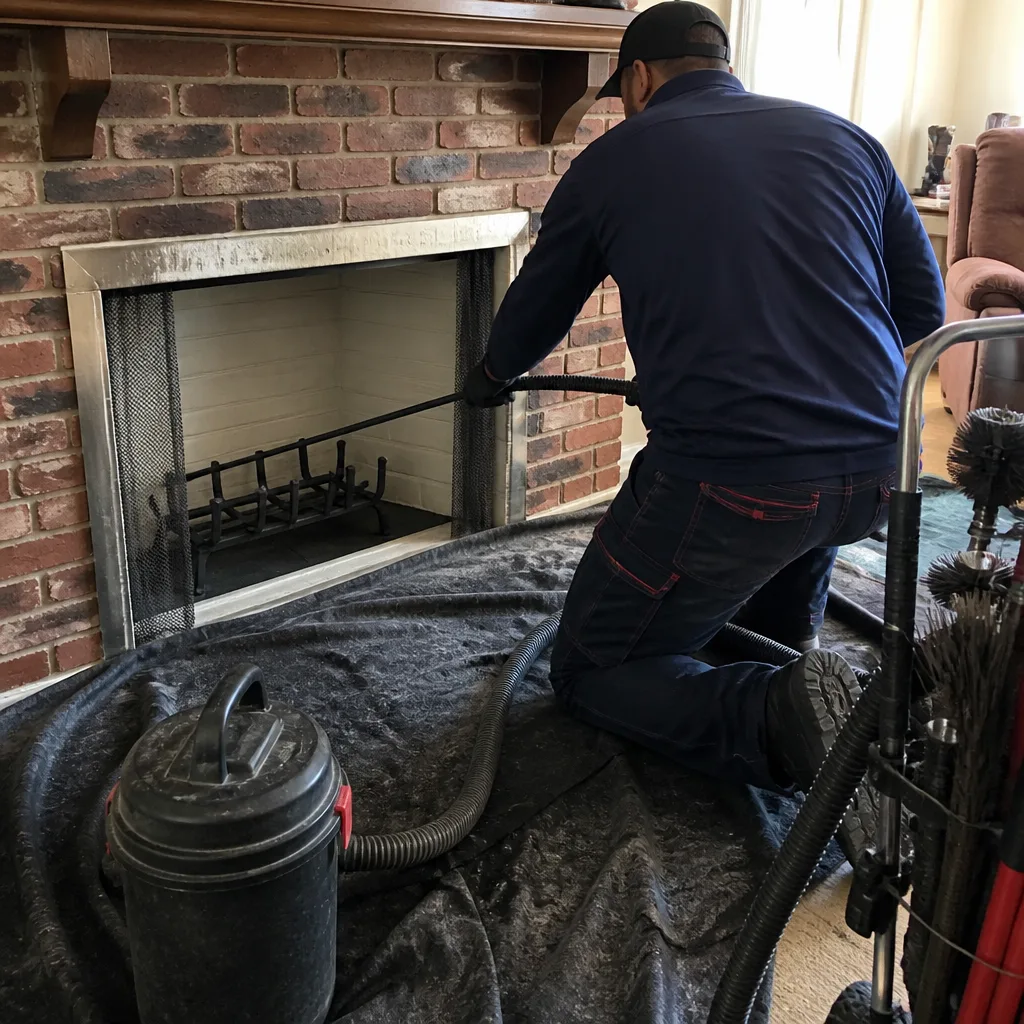
- Protect the interior of your home. Drop cloths go down across the hearth and surrounding floor. The firebox opening is sealed with a high-suction vacuum cover so that soot and debris go into the equipment, not your living room. This matters more than people realize – a poorly sealed setup can leave black soot on furniture 15 feet from the fireplace.
- Mechanical removal matched to the degree of buildup. First-degree deposits come off with a standard chimney brush – round or oval, sized to your flue. Second-degree buildup requires rotary-whip tools that work their way up from the firebox. Third-degree glaze is a different job entirely: we apply a chemical creosote remover (we use products in the Gelco line, which are specifically formulated for hardened glazes) and allow the appropriate dwell time before mechanical removal. High-tension rotary tools operate under significant torque inside a confined flue – this is not a DIY job, and we’ll always say so plainly.
- Smoke chamber and smoke shelf cleaning. The smoke shelf above the damper collects more creosote than any other part of the system because that’s where hot gases first start to slow down. Most budget cleanings skip a thorough smoke chamber scrape. We don’t. A clean smoke chamber also drafts better, so you’ll notice a real difference the next time you light a fire.
- Final camera pass and written report. Once the flue is clear, we run the camera again. You get the footage and a plain-English written summary of what we found, what we did, and whether any follow-up is warranted – cracks, repointing needs, liner gaps. No verbal-only verdicts that you’ll forget a week later.
- Cleanup and debrief. All debris is bagged and removed. The sweep walks you through the findings in person before leaving. If anything flagged during the inspection warrants a repair estimate, you’ll have it in writing before we go – with upfront pricing, so there’s no number that changes between the truck and your kitchen table.
Creosote Removal Pricing in Peabody
Creosote removal in Peabody, MA costs between $150 and $600 for most residential jobs. The range is wide because the degree of buildup drives everything – a first-degree brush job costs a fraction of what a third-degree glaze removal costs. Here’s how it breaks down:
| Buildup Level | What It Looks Like | Typical Cost Range |
|---|---|---|
| First-degree (light flaky soot) | Gray or black powder, brushes off easily | $150 – $250 |
| Second-degree (crunchy crust) | Harder, granular, stuck to liner surface | $250 – $400 |
| Third-degree (hardened glaze) | Shiny, tar-like, chemically bonded | $400 – $600+ |
| Camera inspection (included with service) | Full flue video before and after | Included |
A few things affect where your job lands in those ranges: the height and accessibility of your chimney, whether it’s a masonry flue or a factory-built system with a metal liner, and how long it’s been since the last cleaning. Chimneys in Peabody’s older neighborhoods – around Lynn Street, the downtown side of Lowell Street, and some of the cape-style homes near the Lynnfield line – often have original clay-tile liners that require a slower, more careful approach to avoid fracturing tiles during aggressive removal.
All pricing is upfront before work begins. The number you hear on the phone is the number on the invoice – full stop. We also offer $40 off any repair over $200, and seniors and veterans always get 10% off. Call (978) 637-8560 for a free estimate – no trip charge for jobs inside our service county.
What Makes Third-Degree Creosote Dangerous
Most homeowners understand that creosote is flammable. What they don’t always know is that third-degree creosote – the hardened, glaze-like form – burns at temperatures that can exceed 2,000 degrees Fahrenheit inside the flue. At that temperature, clay tile liners crack, mortar joints fail, and the heat can transfer through the chimney wall into the framing of your house. That’s how chimney fires become house fires.
The tricky part is that third-degree buildup often develops quietly over several seasons of smoldering fires. By the time a homeowner notices any exterior sign – a cracked crown, spalling bricks on the upper stack, a smell that won’t go away – the glaze inside may be thick enough that a standard brush is essentially useless against it. Chemical treatment has to go first to soften the surface, and then mechanical removal follows. It’s a longer job, and it costs more, but it’s the only way to do it safely.
If the liner itself has been compromised, we’ll tell you. In some cases, a HeatShield resurfacing or a full reliner is the right next step. We’ll never push you toward a liner job if the flue is structurally sound – but we’ll also never pretend a cracked liner is fine when it isn’t.
Peabody-Specific Notes: What We See Here
Peabody has a mix of housing stock that shows up in the chimney work. The older triple-deckers and capes near downtown were built with masonry fireplaces that need Fireplace Cleaning designed for coal or wood, and many still have original clay-tile flue liners from the 1940s and 1950s. Those liners are functional but fragile at the joints, and aggressive rotary cleaning on a badly glazed flue can pop tiles if the operator isn’t paying attention.
On the newer side, the subdivisions built out toward the Lynnfield line in the late 1980s and 1990s tend to have factory-built fireplaces with metal liners. These accumulate creosote faster in colder weather because the metal liner conducts heat away from the flue gas more quickly than masonry does – the gas cools, condenses, and deposits. Homeowners in those neighborhoods who burn through the whole winter and only clean every two or three years are the ones we most often see with second- or third-degree buildup.
We’ve also seen a pattern with wood stoves connected via a flexible liner insert – a common upgrade in Peabody homes through the late 2000s. When the connector pipe between the stove and the liner develops any sag or offset, creosote pockets form at the low point. It’s the first thing Wendell checks on insert jobs in this area.
Key Takeaways
- First-degree creosote is a standard sweep. Third-degree glaze requires chemical treatment before any mechanical removal – skipping that step damages your liner.
- Annual cleaning is the right interval for anyone burning wood in Peabody. The heating season here runs long enough that a single winter can push light deposits into heavier territory.
- Third-degree creosote burns at temperatures that crack tile liners and transfer heat into house framing. It’s not a cosmetic problem.
- All Top Hat Chimney jobs include camera footage before and after, upfront pricing with no changes at the door, and the 90-Day Done Right Promise in writing.
- Seniors and veterans always receive 10% off. Any repair over $200 qualifies for $40 off.
- Wendell Pike has been working in these communities since 1999 – you’ll see his name on the truck and the invoice.
FAQs – Creosote Removal
How much does creosote removal cost in Peabody, MA?
Creosote removal in Peabody typically costs between $150 and $600, depending on the degree of buildup. First-degree deposits run $150 to $250 and are often handled in the same visit as a standard chimney sweep. Second-degree buildup runs $250 to $400. Third-degree glaze – the hardened, shiny form that requires chemical treatment before mechanical removal – runs $400 to $600 or more. Upfront pricing is always given before work starts, and the estimate is free. Call (978) 637-8560 for an exact number based on your chimney’s condition.
Is creosote removal something I can do myself?
Light, first-degree soot can sometimes be brushed by a careful homeowner who has the right equipment and knows what they’re dealing with. But second- and third-degree buildup is a different situation. Third-degree glaze bonds chemically to the liner and requires specific chemical removers applied correctly, followed by high-torque rotary tools inside a confined flue. Getting this wrong can fracture tile liners, and the temperatures involved if you start a fire over unremoved glaze are genuinely dangerous. Our strong recommendation is to leave anything beyond light surface soot to a trained sweep. The risk to your liner – and your house – isn’t worth it.
How do I know what degree of creosote I have?
A camera inspection is the only reliable way to know. You can get a rough idea by looking into the firebox with a flashlight – if you see gray or black powder that brushes away easily, that’s first-degree. If it looks like a dark crust or has a crunchy texture, that’s second-degree. A shiny, tar-like surface that doesn’t budge is third-degree. But the smoke chamber and upper flue are where the worst deposits often hide, and no flashlight reaches there. Every job we do starts with a Level 2 Inspection camera pass so there’s no guessing. Call (978) 637-8560 and we’ll schedule an inspection.
How often does a Peabody homeowner need creosote removal?
Once a year is the right answer for anyone who burns wood – and the inspection should happen even in years when the fireplace saw light use. Creosote isn’t the only thing that develops in an idle chimney; animals, moisture damage, and settling cracks all show up in the off-season too. Peabody’s climate means a heating season that can run six months or more, which is enough time to accumulate meaningful buildup in a single year if you’re burning regularly. If you haven’t had a cleaning since last spring or earlier, now is the right time to schedule it. The home page has everything you need to reach us.
If you’re in Peabody and have any question about what’s going on inside your chimney – whether you can see something that concerns you or just haven’t had it looked at in a while – call (978) 637-8560. A live person will pick up. Wendell and his crew offer free estimates, upfront pricing, and the 90-Day Done Right Promise on every single job. No voicemail, no price changes at the door, no strangers you’ll never see again. Just a sweep who has been working these neighborhoods since 1999 and will still be here next season.
Written by Wendell Pike, Owner at Top Hat Chimney, serving Peabody.