
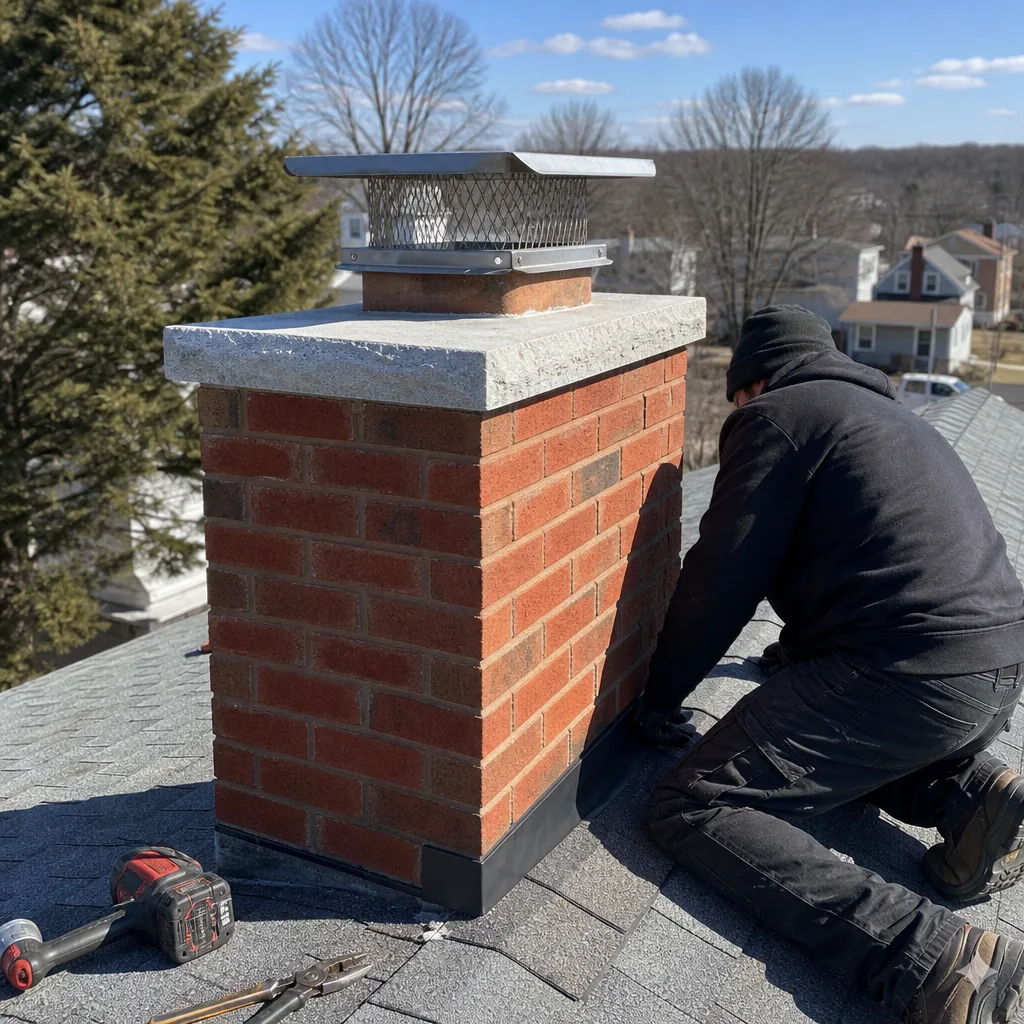
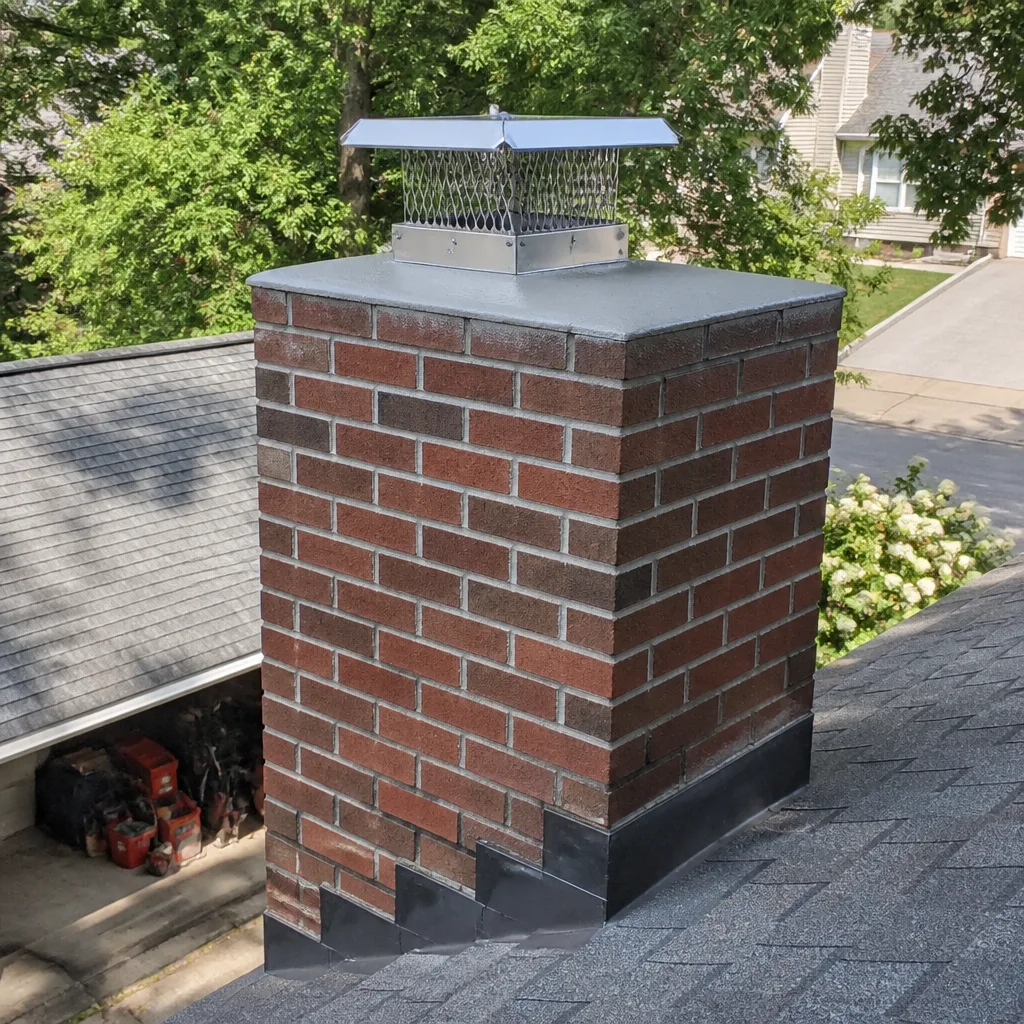
Level 1 sweep and inspection to the NFPA 211 annual standard - flue, crown, cap, and flashing checked and photographed
Chimney sweep logs do not sweep chimneys. They loosen some creosote - which then falls where a brush and vacuum still have to collect it.
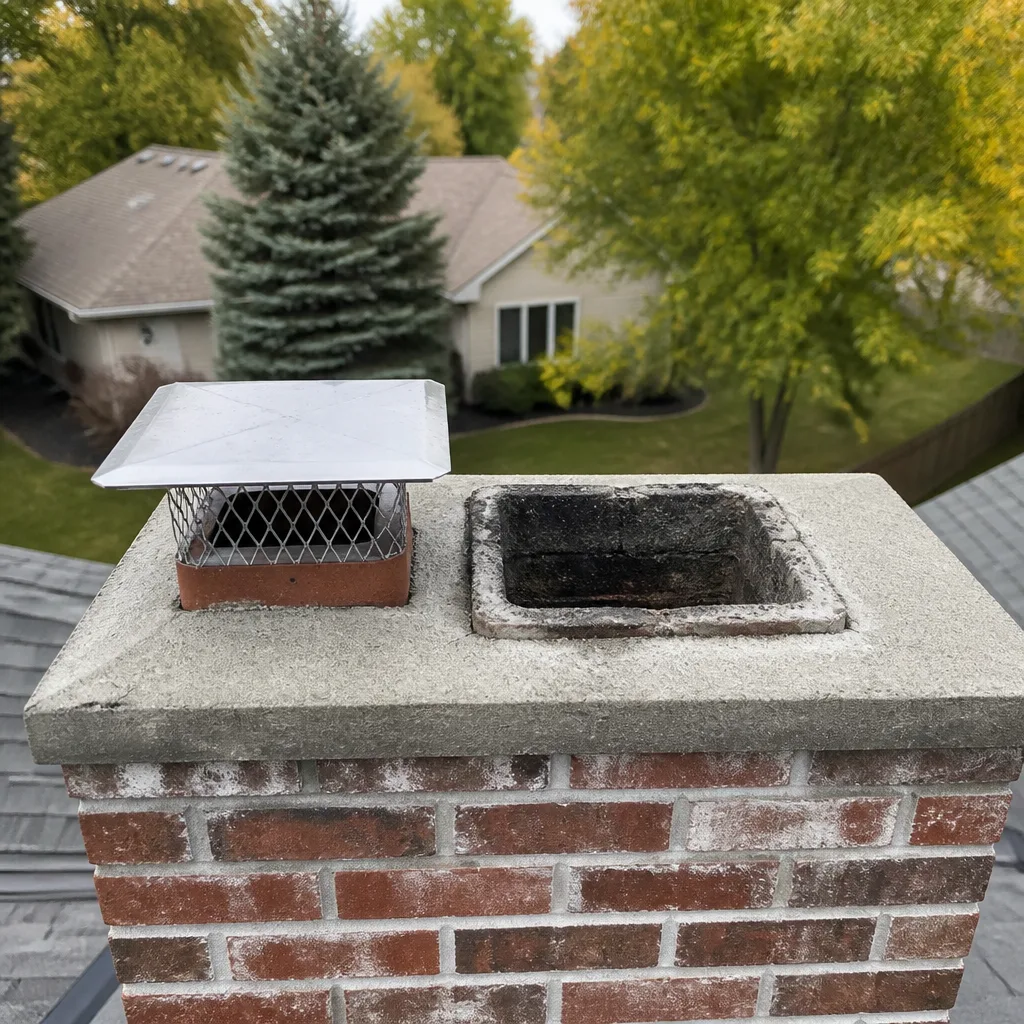
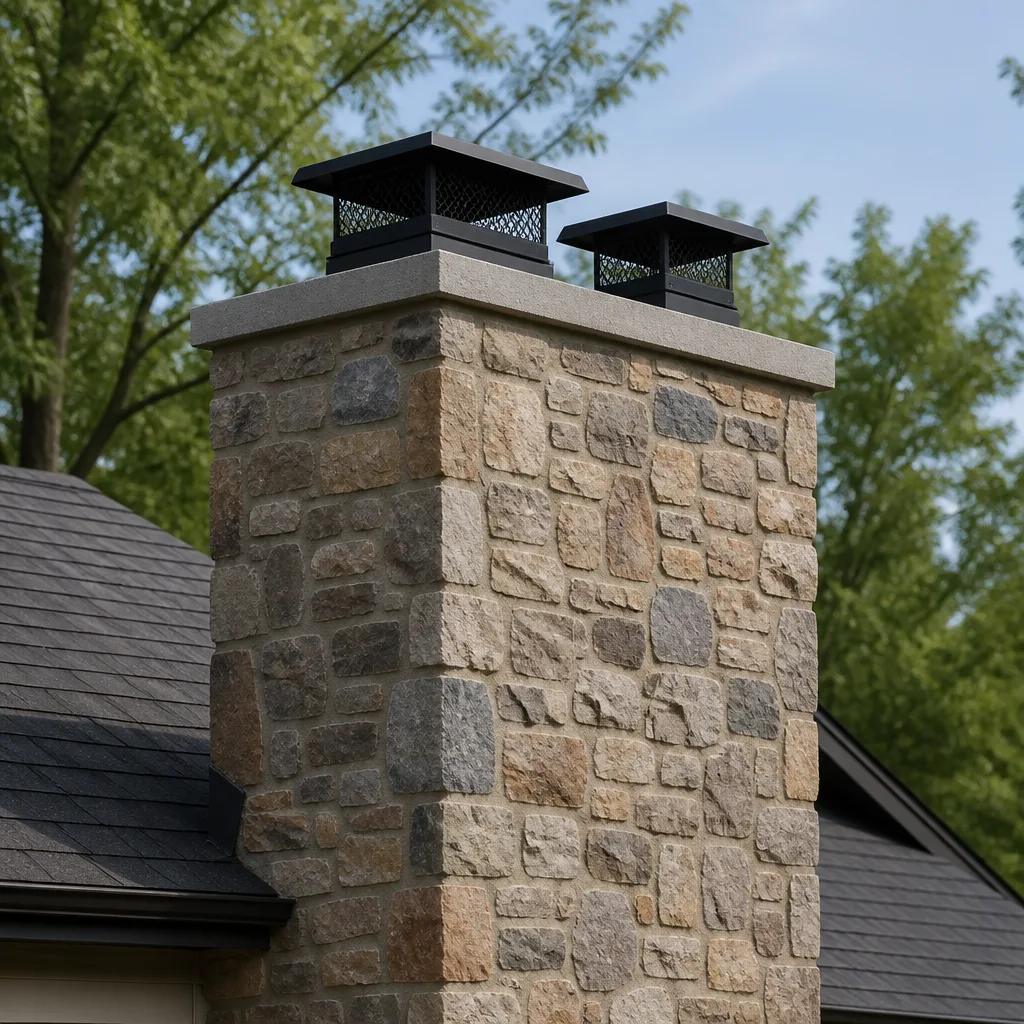
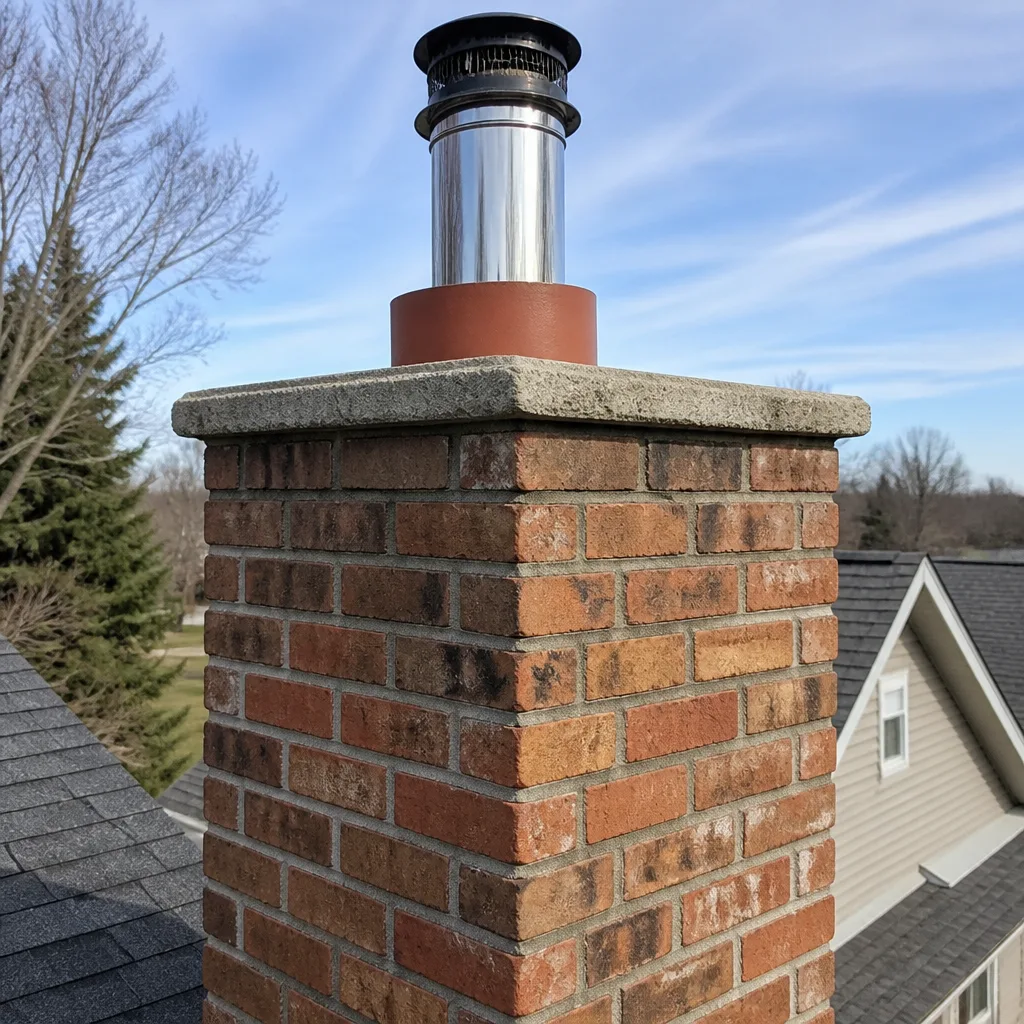
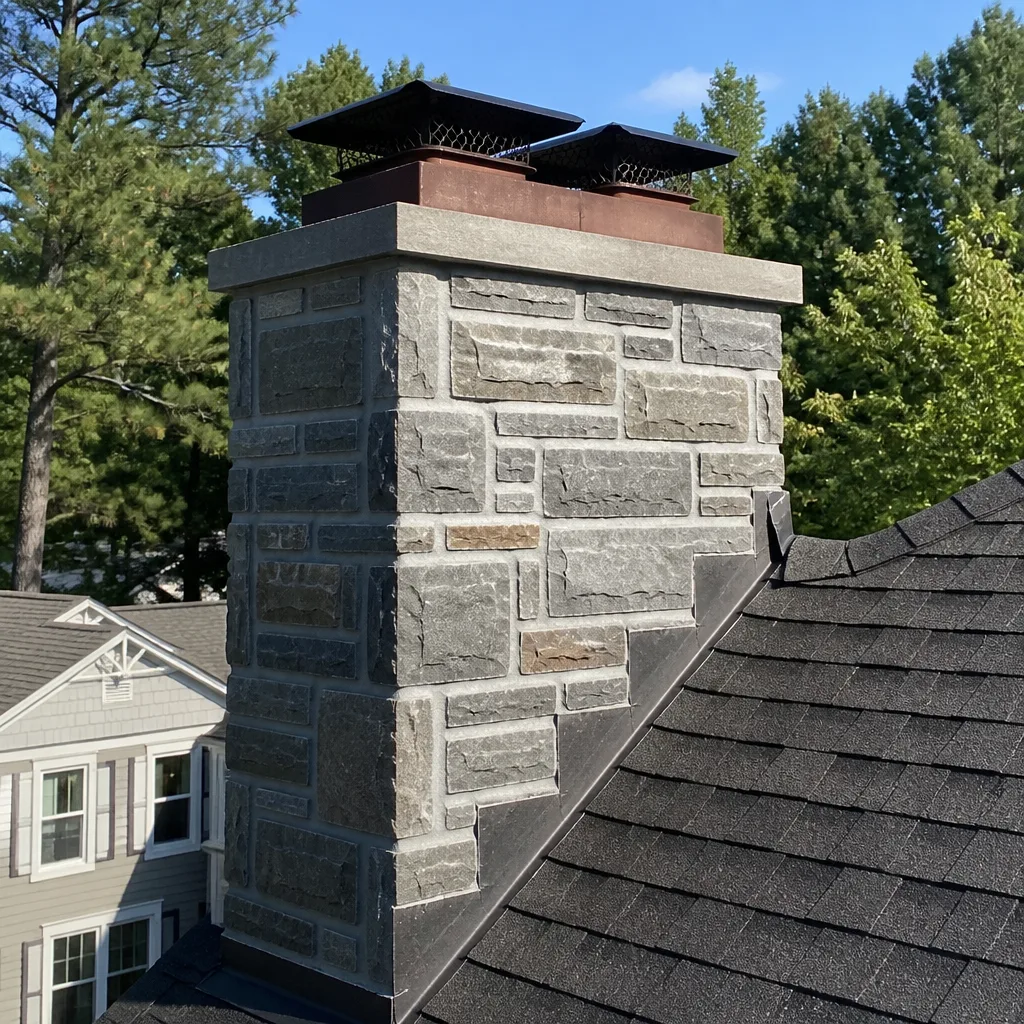
 Before
 After
After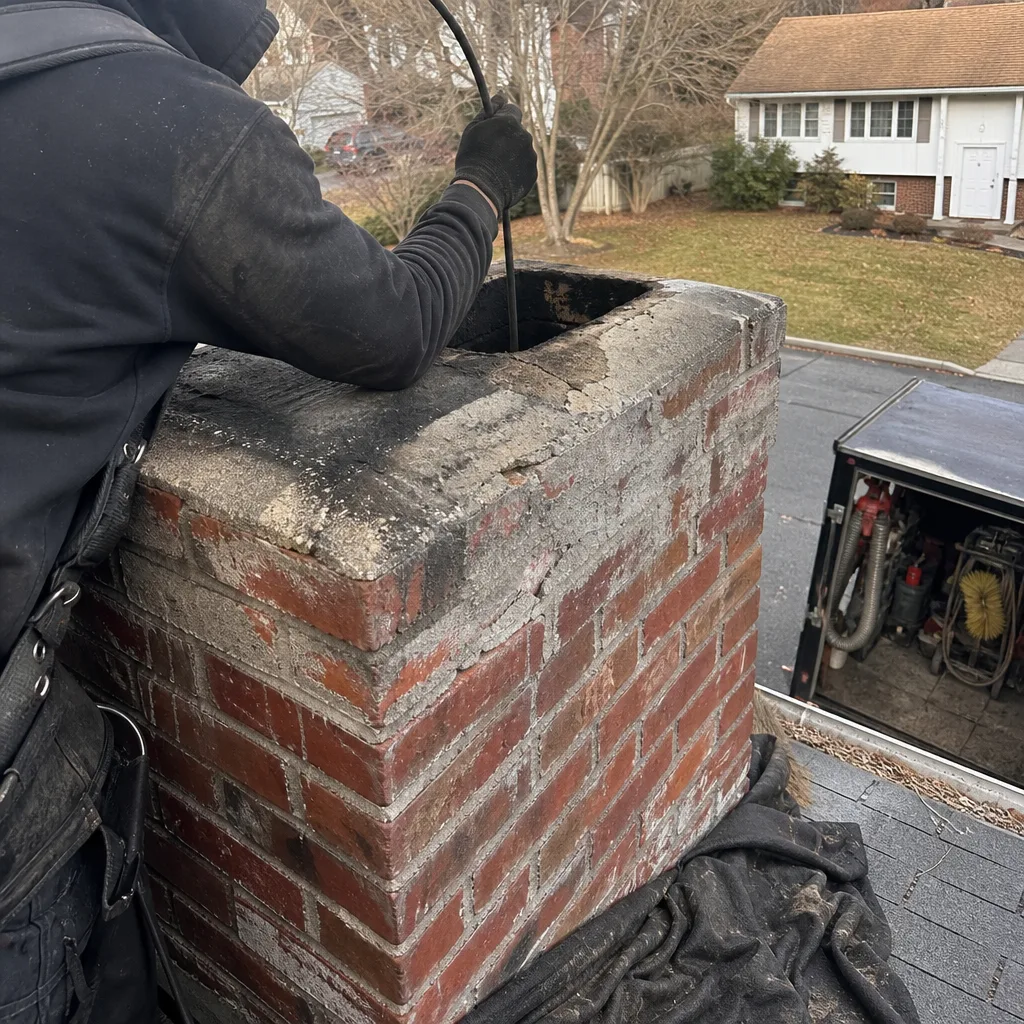 Before
 After
After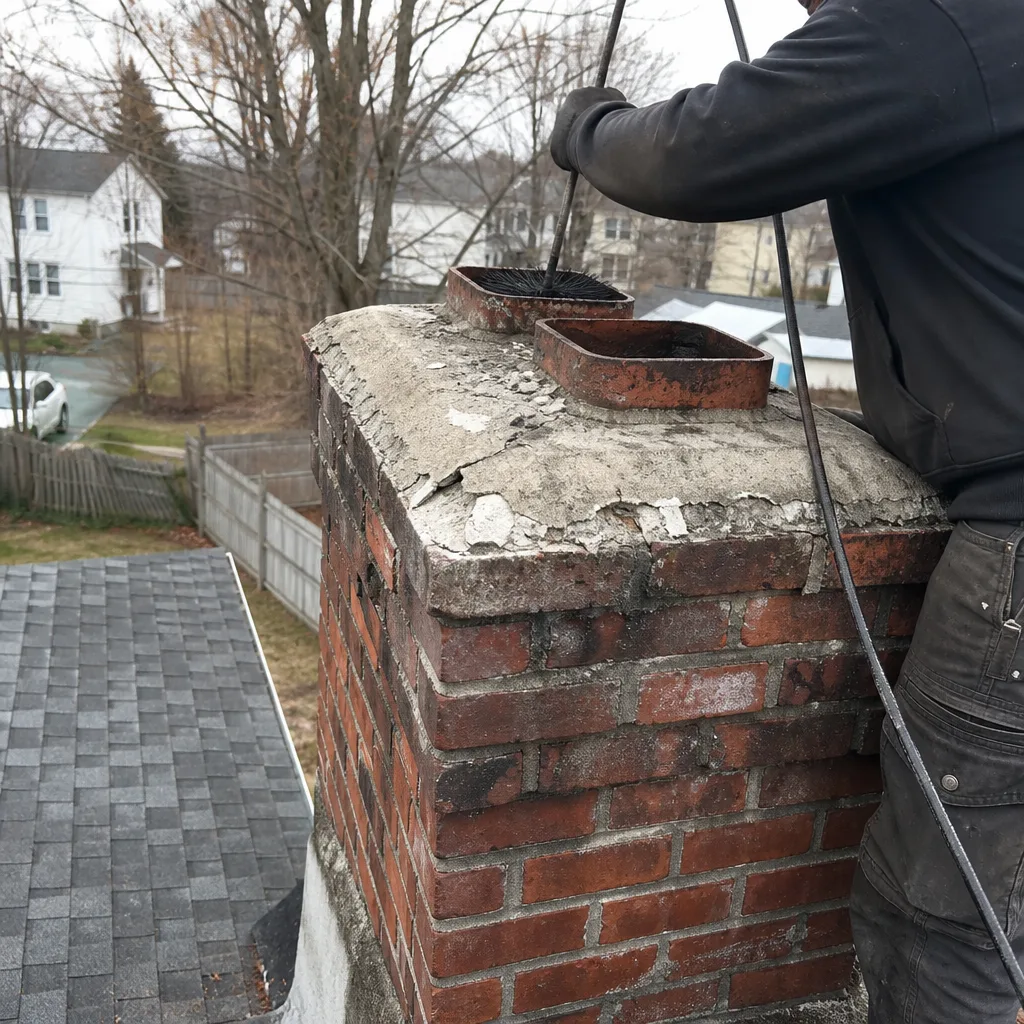 Before
 After
AfterAnnual Sweep in Peabody, MA
An annual chimney sweep in Peabody takes between 45 minutes and 90 minutes, costs most homeowners between $149 and $229, and is the single most reliable way to keep creosote from turning into a fire hazard before the next heating season. If your fireplace or wood stove got any use last winter, the flue needs cleaning before you light it again – full stop.
Top Hat Chimney has been doing this work in Peabody and the surrounding North Shore towns since 1999. Wendell Pike founded the company and still runs it. When you call (978) 637-8560, a live person picks up – no voicemail, no call center – and you get an honest price before anyone touches a tool. That number on the phone is the number on the invoice. Always has been.
If you want the full picture of what goes into keeping a chimney clean and safe, our Chimney Cleaning & Sweep in Peabody page covers every service we offer, start to finish. This page focuses on the annual sweep specifically: what it includes, what it costs here in Peabody, and why skipping it even one year is a gamble that isn’t worth taking.
When You Need an Annual Sweep
The short answer is once a year, whether you burned a cord of wood or only lit a fire on Christmas Eve. Chimneys don’t only collect creosote during heavy use – they collect moisture, animal debris, deteriorating mortar dust, and nesting material in the off-season too. Any of those can block airflow or hold heat in ways that cause problems.
That said, a few specific signs tell us the sweep is overdue before the calendar even comes into play:
- You notice a smoky smell in the house when the fireplace is not in use. In Peabody’s older housing stock – particularly the colonials and Capes built before 1970 in the Emerson and Prospect Hill neighborhoods – this usually means creosote is off-gassing through small mortar cracks rather than drafting cleanly up the flue.
- Smoke backs into the room when you open the damper. Partial blockages from third-degree glazed creosote or debris nesting near the throat are common causes. This is a brush-and-camera job, not a ventilation problem with the house.
- You skipped last year. One season of use can deposit enough first-degree creosote for a straightforward cleaning. Two seasons without a sweep and that deposit frequently hardens into second-degree flake – harder to remove, more combustible.
- You bought the house and don’t know the history. We see this regularly on homes near the Salem line and along the Lowell Street corridor. A previous owner’s deferred maintenance is now your liability. A camera inspection at the same visit tells you exactly what you are dealing with.
- You switched fuel types or added a wood-burning insert. Inserts produce more concentrated heat and often push more particulate into the liner than an open fireplace does. The deposit pattern changes, and it usually builds faster.
- An animal got into the flue. Starlings nest in unlined masonry chimneys across Essex County every spring. Their nests are dry, compact, and extremely flammable. If you heard scratching this past April, that debris needs to come out before the first fire of fall.
Our Annual Sweep Process
Wendell and his crew work the same way on every job. There is no variation based on who answers the door or which neighborhood the house is in. Here is what happens from the time we pull up to the time we leave:
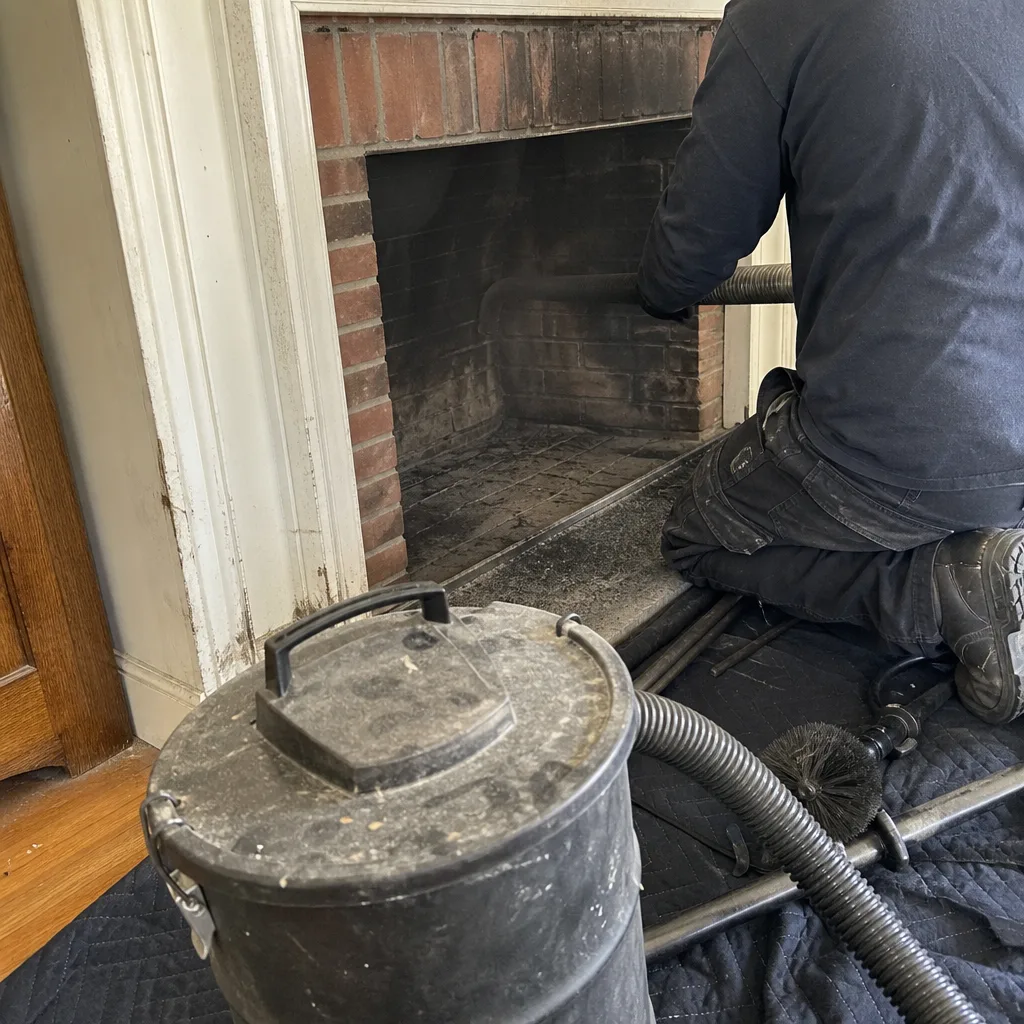
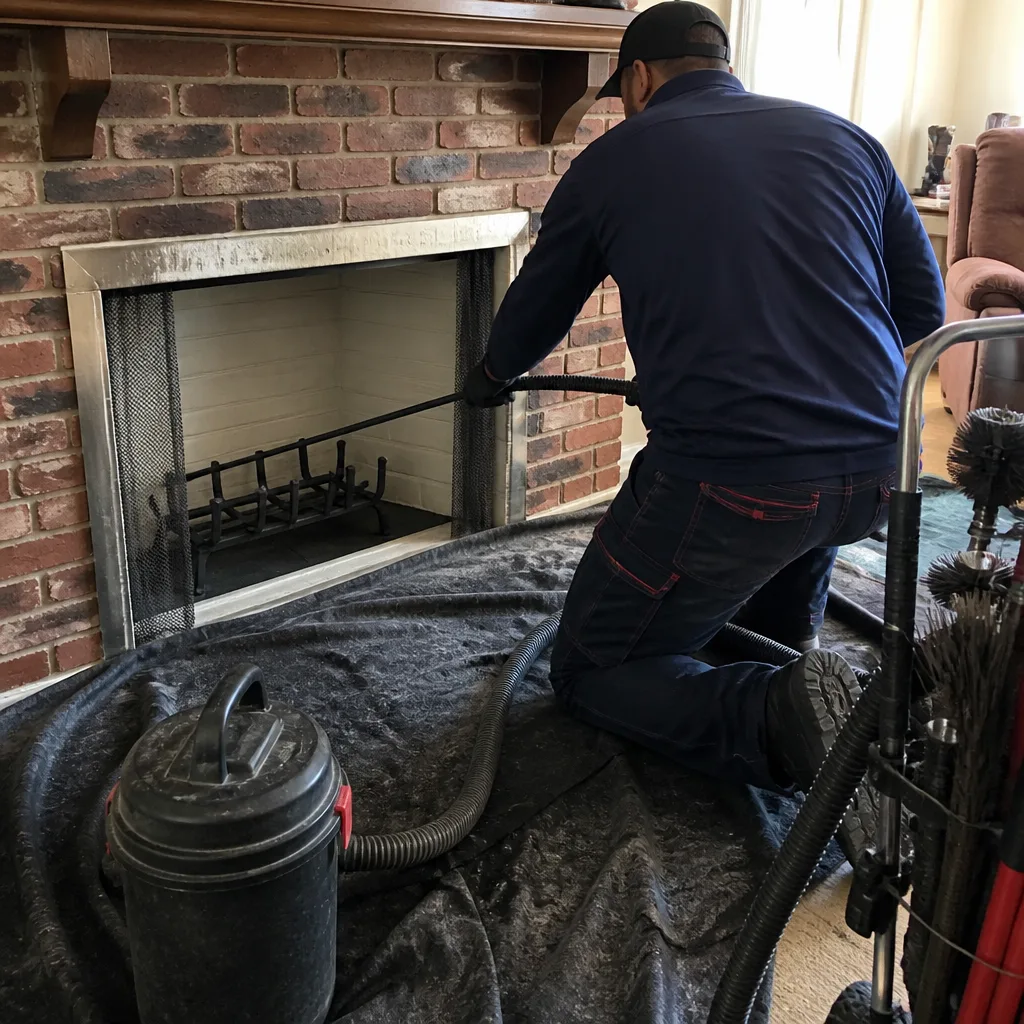
- Arrival and setup. The sweep arrives in a marked truck within the window you were given – and if anything changes, you get a call before the window closes. Drop cloths go down over the hearth and surrounding floor. The firebox, damper, and accessible smoke chamber get a visual once-over before any tools come out. We want to know what we are looking at before we start brushing.
- Top-down cleaning. The crew works from the crown down, running rotary or hand brushes through the flue liner to break up creosote and loose debris. For Peabody homes with older terracotta tile liners – very common in the three-deckers on Washington Street and the 1960s ranch builds near Highland Avenue – we pay close attention to the joint transitions where tiles meet, because that is where glazed buildup concentrates.
- Firebox and smoke chamber cleaning. Once the flue is clear, debris falls into the firebox and smoke chamber. We clean it out by hand and with a HEPA vacuum. The smoke chamber shelves get brushed down. The damper plate is wiped and checked for operation.
- Camera inspection. Every annual sweep at Top Hat includes a Level 1 video inspection of the flue interior. We run a camera up and show you the footage in plain English – not a sales pitch, just what the camera sees. Cracked tiles, liner separation, heavy deposits we could not fully dislodge: you see it the same time we do. If there is nothing to worry about, we tell you that too.
- Verdict and documentation. Before we pack up, you get a written summary of the condition of the system – what we found, what we cleaned, and whether anything needs follow-up. If we see a minor issue like a deteriorating cap or a small mortar crack at the crown, we tell you what it is, what it means, and roughly what it costs to fix. You decide. No pressure.
- Cleanup and out. The hearth looks the way it did when we walked in. Every job is backed by the 90-Day Done Right Promise: if something is not right about the work we did, one call brings us back at no additional cost. That is in writing, on every invoice.
Annual Sweep Pricing in Peabody
Annual chimney sweep pricing in Peabody runs between $149 and $229 for most single-flue residential fireplaces, based on what we have been quoting in this market over the past several years. That range covers the cleaning itself plus the camera inspection. Here is how the number shifts:
- Standard masonry fireplace, light to moderate creosote (first-degree): $149 to $175
- Masonry fireplace with heavier buildup or second-degree flake creosote: $175 to $209
- Prefab or factory-built fireplace systems: $159 to $189, depending on flue access
- Wood stove or insert connected to a liner: $169 to $229, depending on liner length and access configuration
- Additional flues on the same chimney: $79 to $119 per additional flue when done at the same visit
Third-degree glazed creosote – the hard, shiny layer that bonds to tile and steel liners – costs more to remove because it often requires chemical treatments or rotary power tools rather than standard brushes. If the camera shows that level of buildup, we will quote the additional work before we touch it. You are never on the hook for something you did not agree to.
No trip charge for calls inside our service county. Seniors and veterans always receive 10% off. If you have a competing written estimate and want a free second opinion, call us – we look at it honestly and tell you if the other quote is fair.
Call (978) 637-8560 for an exact quote. Estimates are free, and the price you hear is the price you pay.
Why Peabody Chimneys Need This Every Year
Peabody sits in a stretch of Essex County where the winters are cold enough to push a wood-burning system hard but short enough that homeowners sometimes talk themselves into skipping a year. That logic costs money in the long run.
The bigger factor here is the housing stock. A significant share of Peabody’s homes were built between 1940 and 1975, which means a lot of original masonry fireplaces with unlined or terracotta-lined flues. Those liners are past their design life in many cases. The mortar between tiles shrinks and cracks with freeze-thaw cycling – Peabody averages around 26 freeze-thaw cycles per year through the winter months – and every small crack is a path for combustion gases or radiant heat to reach combustible framing. An annual sweep catches those cracks while they are still repair-sized, not rebuild-sized.
We also see a pattern in Peabody’s neighborhoods near Lynnfield and Danvers: homes with older prefab fireplaces whose owners assume “it’s a newer system, it doesn’t need the same attention.” Prefab systems actually have shorter inspection cycles recommended by manufacturers, and they’re not immune to creosote. The liner panels can crack under thermal stress, and a cracked refractory panel in an otherwise clean-looking firebox is exactly the kind of thing a camera catches and a naked eye misses.
First-degree creosote is a brush job. Third-degree is a glaze. Catch it in the first year and it’s a $175 cleaning. Wait three years and you may be looking at a HeatShield application or a full DuraFlex liner installation to get the system back to code. We would rather you spend $175 once a year than $2,400 every decade because the problem compounded.
Top Hat Chimney has been doing this work in Peabody since Wendell started the company in 1999. That is over 29 years of watching what happens to chimneys in this specific climate, in these specific neighborhoods, with these specific building materials. That experience is not something a franchise rotation brings to your door. It’s the kind of thing that only comes from working the same streets for a generation.
If you are researching everything a proper chimney maintenance program covers – cleaning, inspection, repair, liner work – the home page gives you the complete picture of what Top Hat Chimney does and how we do it.
FAQs – Annual Sweep in Peabody
How often does a chimney need to be swept in Peabody, MA?
Once per year is the standard recommendation for any chimney that sees regular use, and it applies in Peabody regardless of how many fires you actually burned. The National Fire Protection Association’s NFPA 211 standard calls for annual inspection of every chimney, fireplace, and venting system, and cleaning whenever deposits reach a level that warrants it. In practice, a Peabody home that burned five cords of hardwood last winter needs the same annual visit as one that lit a handful of fires – because even the light-use system accumulated moisture, minor deposits, and any debris that fell in from the top during spring and summer. If your system has not been swept in two or more years, call (978) 637-8560 and we will tell you honestly what we find.
What is the difference between an annual sweep and a chimney inspection?
A sweep removes physical deposits – creosote, ash, debris, nesting material – from the flue, smoke chamber, and firebox. An inspection assesses the structural and operational condition of the whole system. Top Hat includes a Level 1 camera inspection with every annual sweep, so you get both at the same visit. The camera footage and a plain-English verdict – every time, no exceptions. If we see a crack, a damaged tile, or a failed mortar joint, you see it on the screen at the same moment we do and we tell you what it means in plain language, not upsell language.
Can I use my fireplace before the annual sweep if it looks clean?
We would not recommend it, and here is the specific reason: creosote buildup is not always visible from inside the firebox. The heavier deposits tend to form higher in the flue, well above where you can see without a mirror and a flashlight, and glazed third-degree creosote can coat a liner heavily without looking like much from below. Beyond creosote, a bird or squirrel nesting in the flue cap area – common in Peabody through late spring – creates a blockage that can force carbon monoxide back into the living space even on the very first fire of the season. A one-hour sweep before the first burn is cheap insurance against that outcome.
How long does an annual sweep take, and do I need to be home?
Most annual sweeps at a single-flue residential fireplace run between 45 and 90 minutes on-site. Two-flue homes or systems with heavy buildup may take a bit longer, and we will let you know if we anticipate that when you book. You do need to be home – or have someone over 18 there who knows the system – so we can access the firebox, ask a couple of questions about how the system has been running, and walk you through what we found before we leave. Wendell and his crew will give you a real arrival window and call if it slips. No four-hour mystery windows.
Schedule Your Annual Sweep in Peabody Today
If the last sweep was more than twelve months ago – or if you honestly cannot remember when it was – this is the call worth making before the heating season starts. Peabody’s shoulder season fills up fast; we see a significant spike in sweep requests every September and October as homeowners realize they want the fireplace ready before the first cold snap. Booking in August or early September usually means you get your preferred day and window.
Call (978) 637-8560 to schedule or to get a free estimate. Wendell or another live person will pick up. The price you hear is the price you pay, the job is backed by the 90-Day Done Right Promise, and if you are a senior or veteran, your 10% discount applies automatically. No trip charge inside the county. No surprises at the door.
Written by Wendell Pike, Owner at Top Hat Chimney, serving Peabody since 1999.