

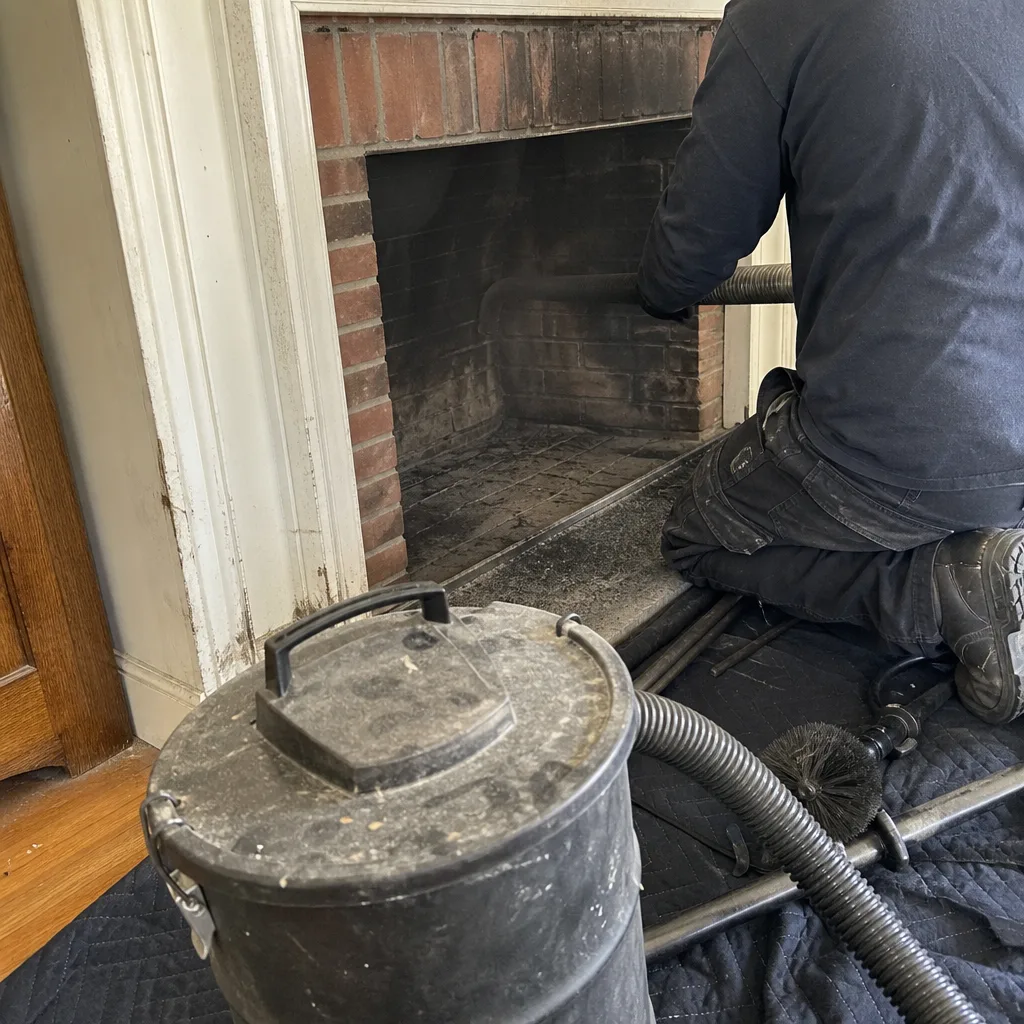
Level 1 sweep and inspection to the NFPA 211 annual standard - flue, crown, cap, and flashing checked and photographed
Chimney sweep logs do not sweep chimneys. They loosen some creosote - which then falls where a brush and vacuum still have to collect it.
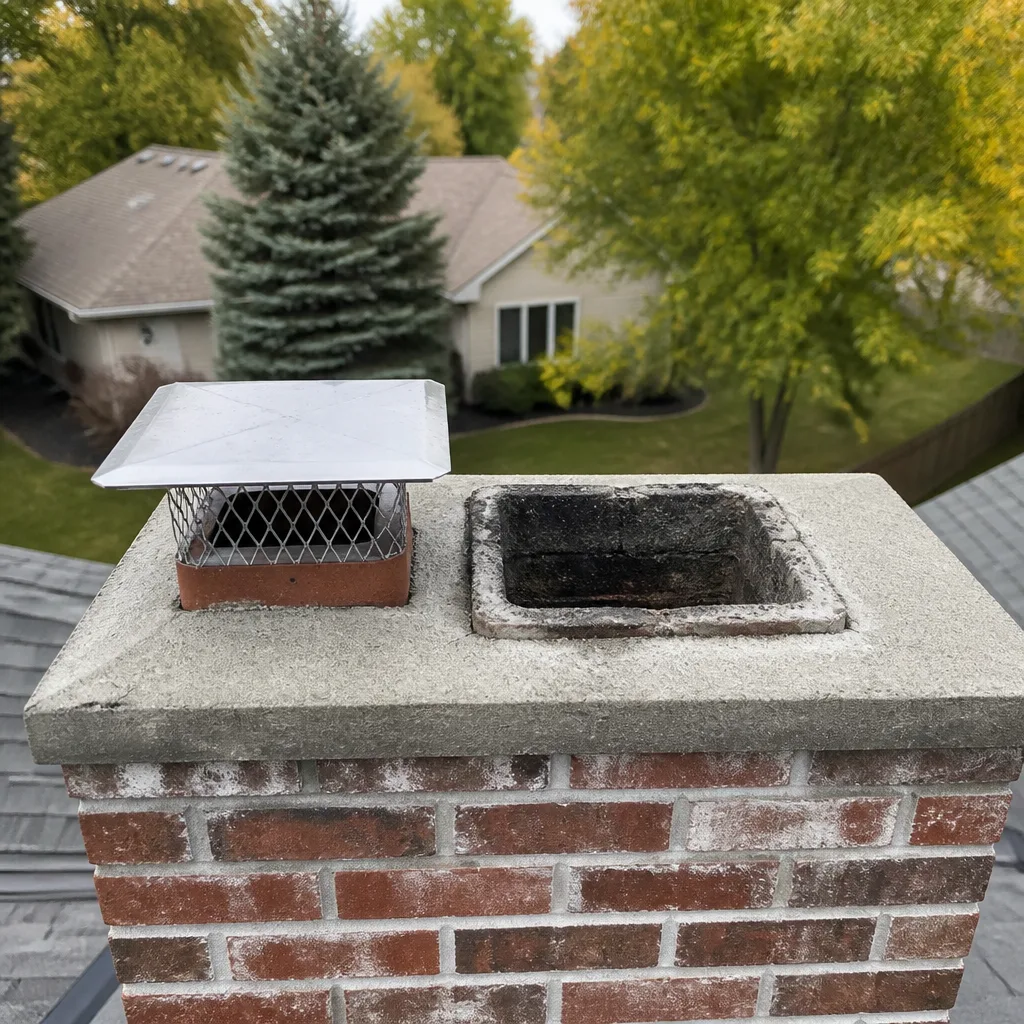
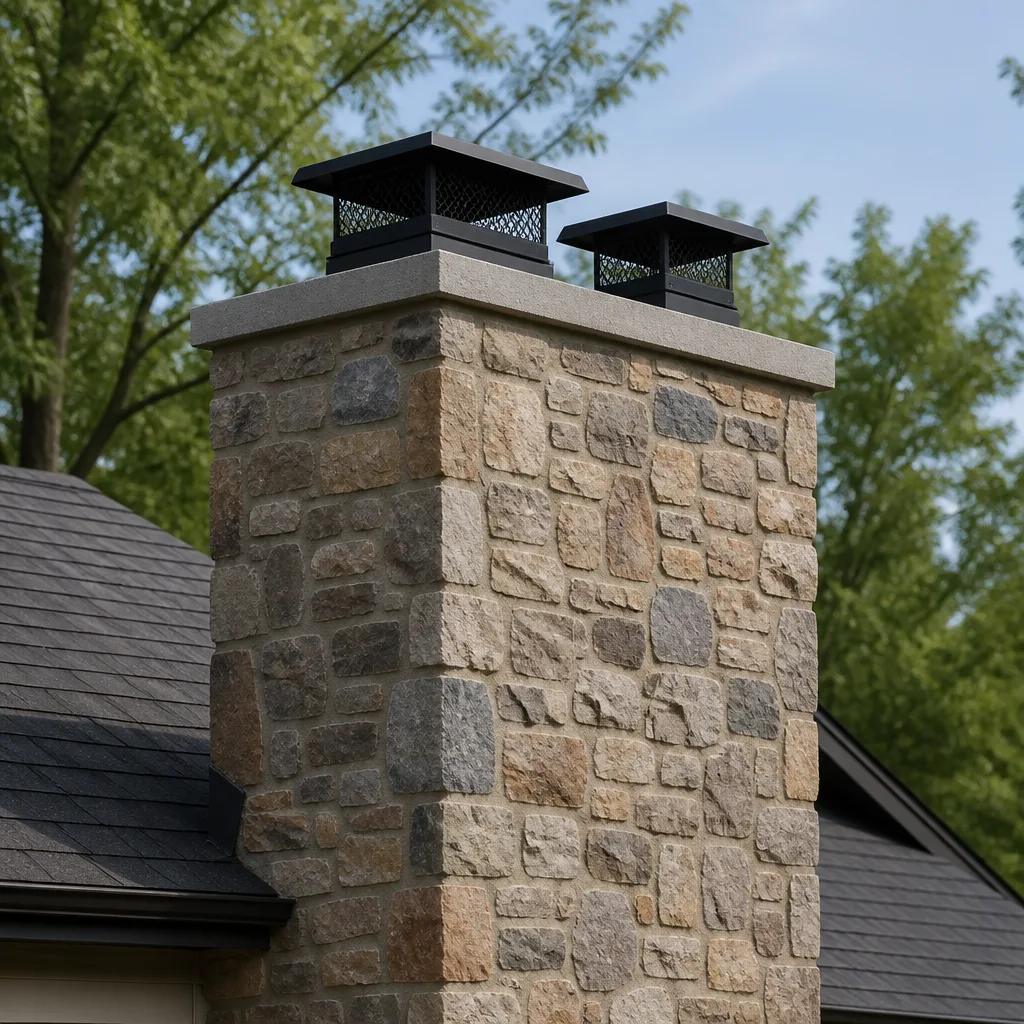
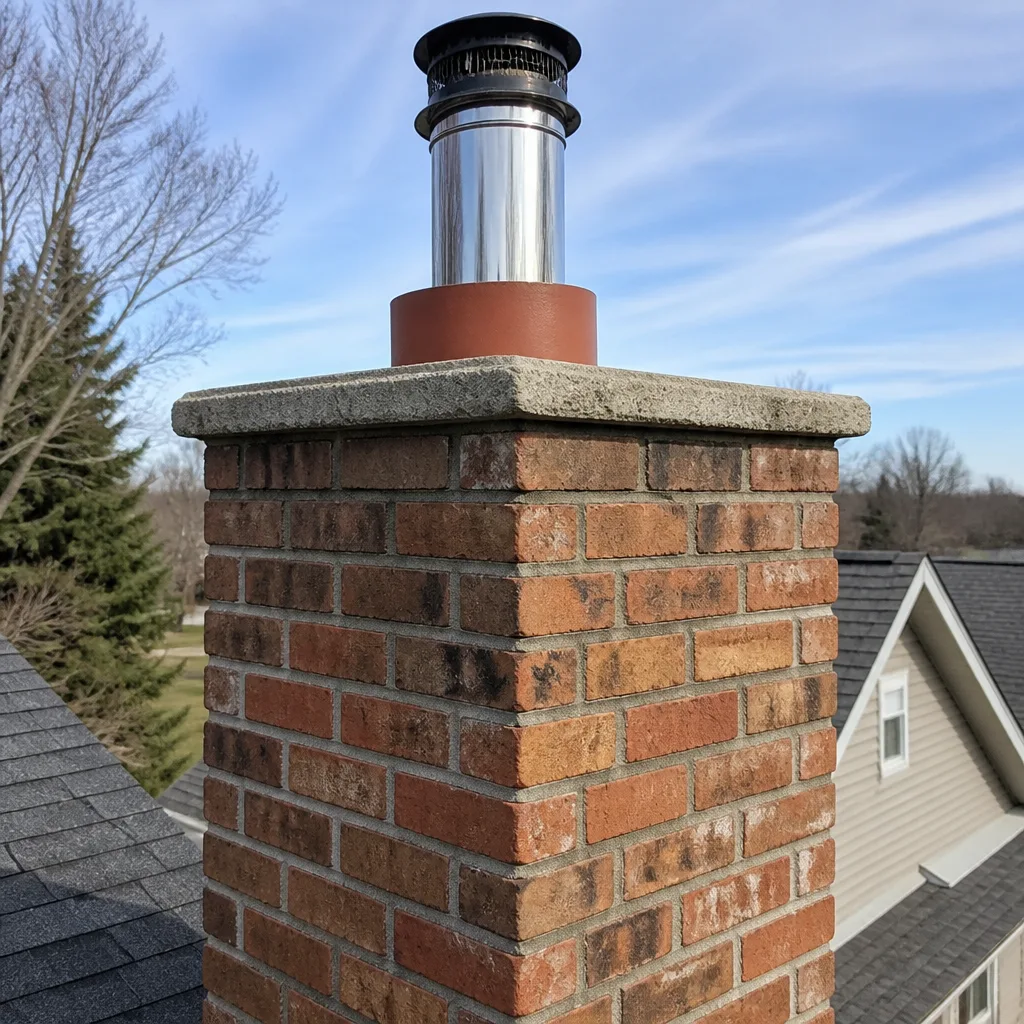
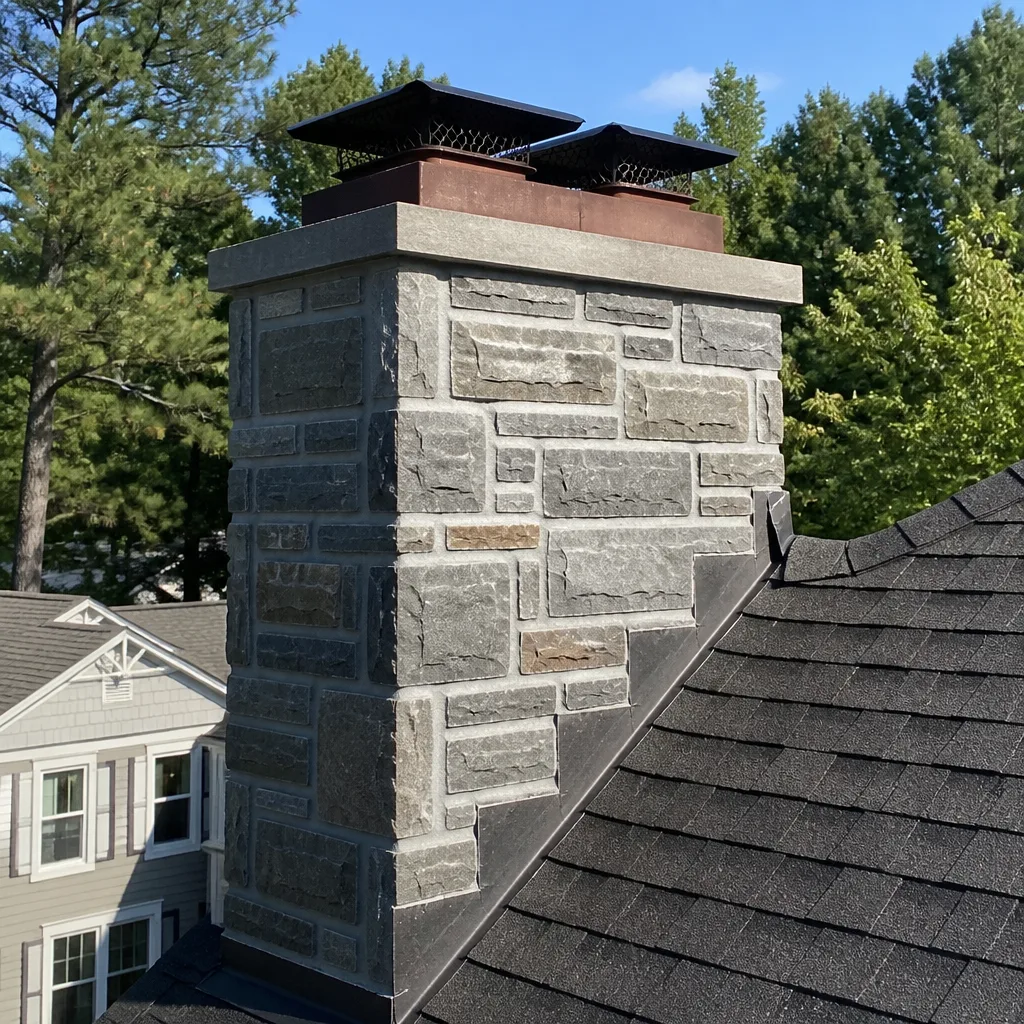
 Before
 After
After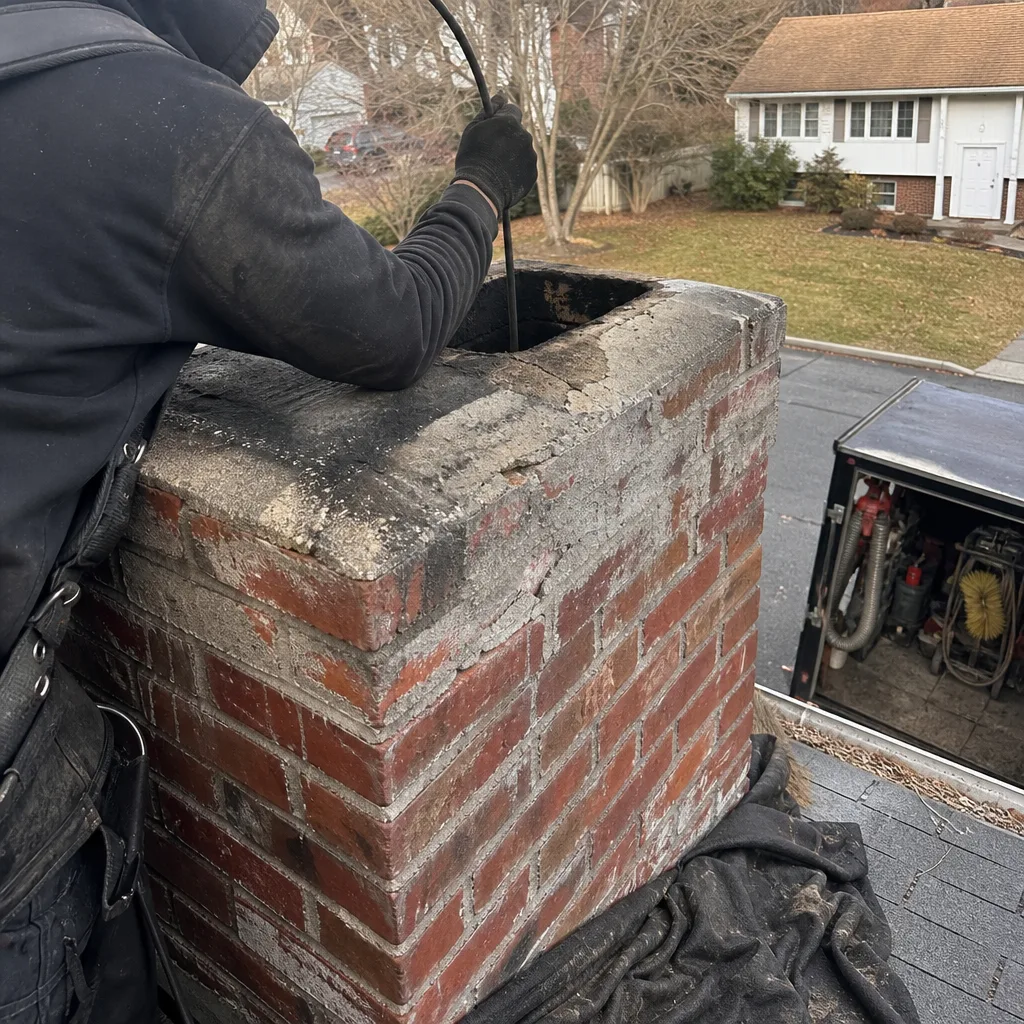 Before
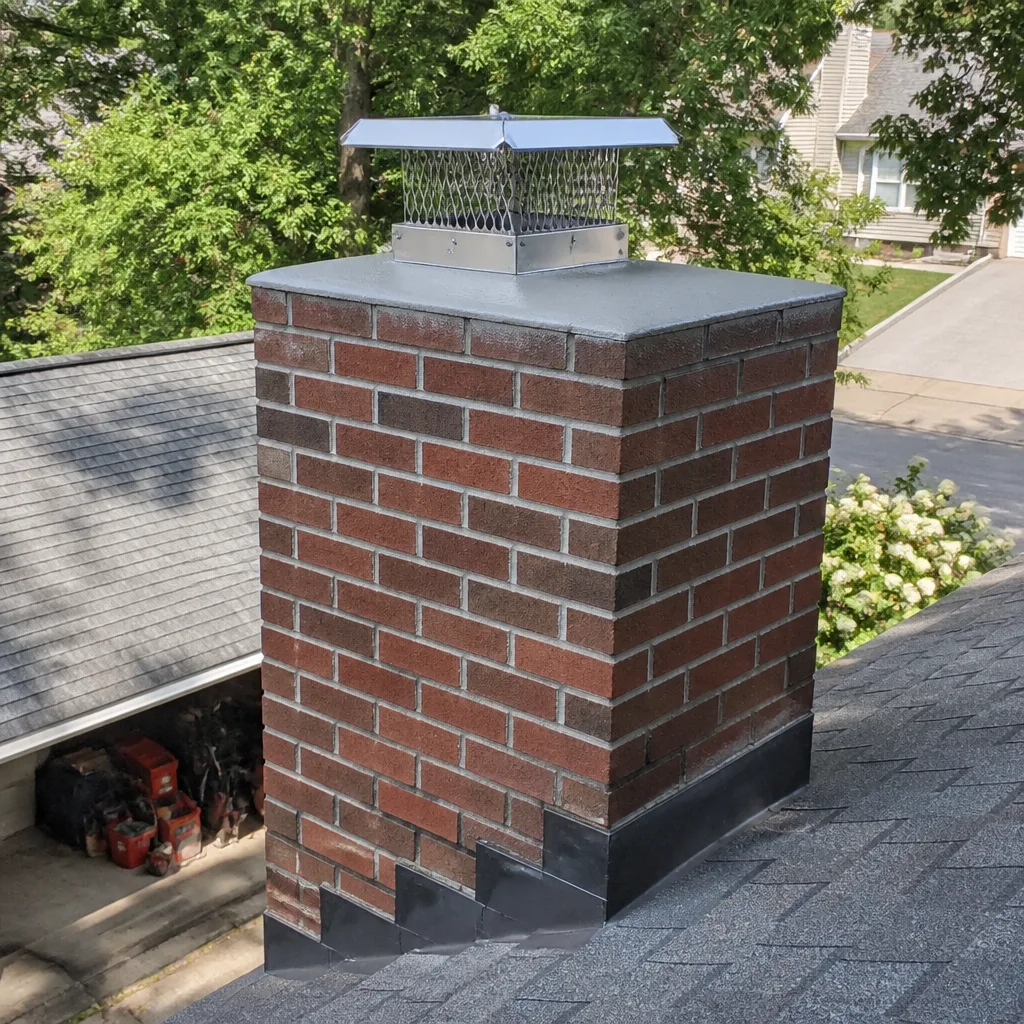 After
After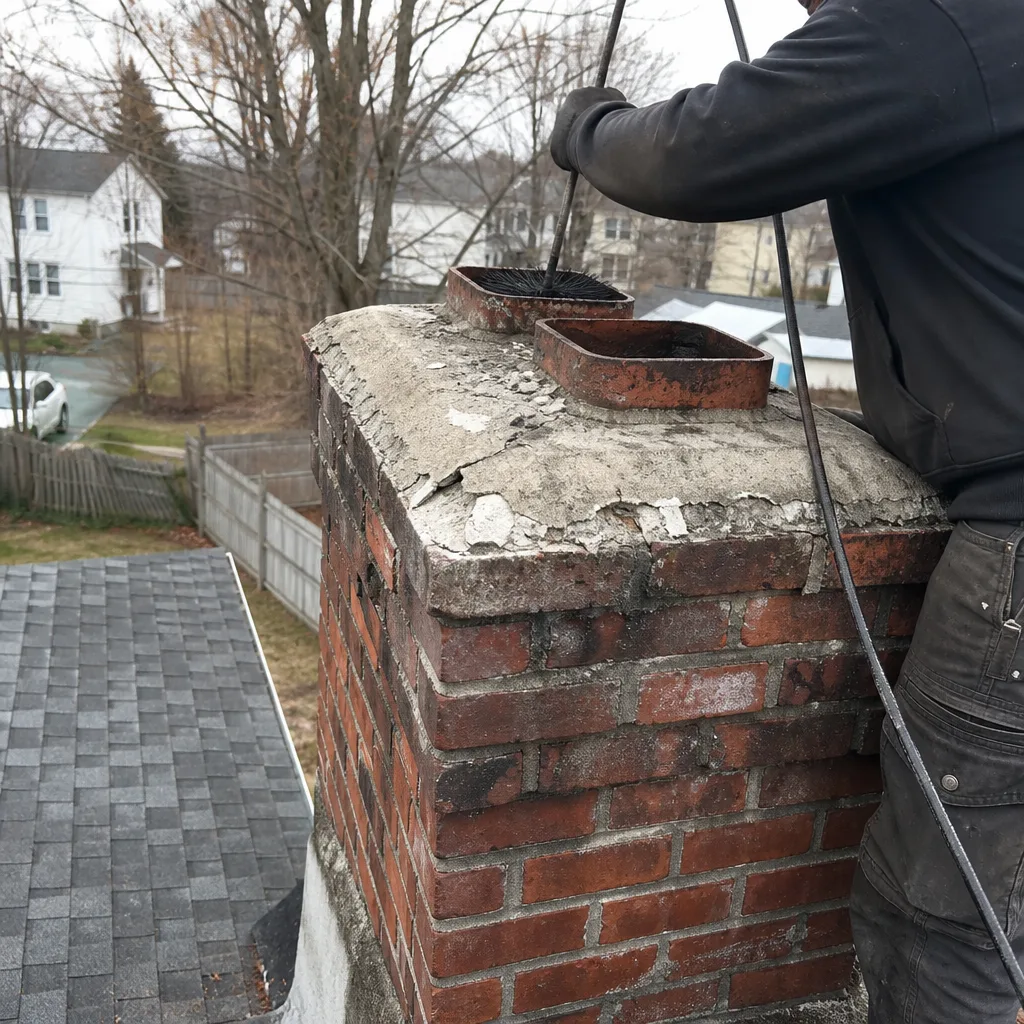 Before
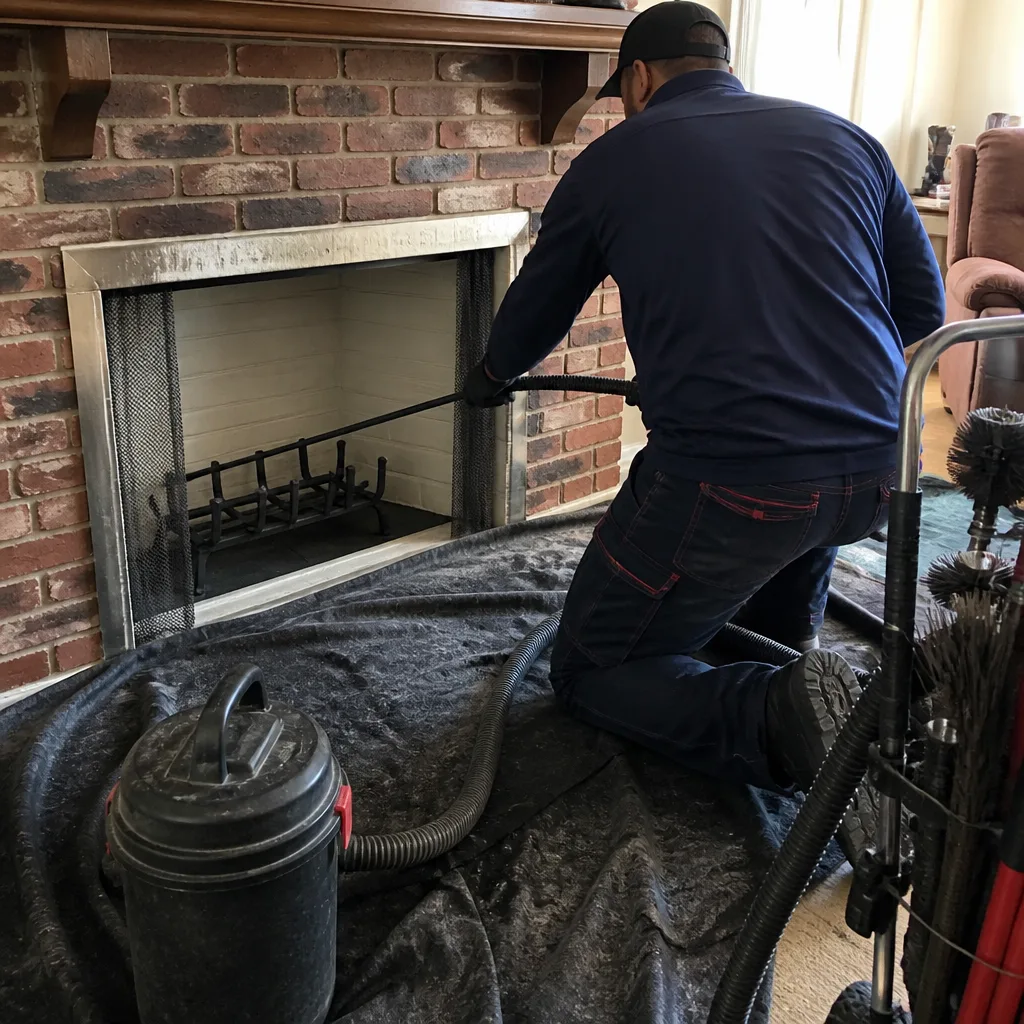 After
AfterFast, Reliable Chimney Cap & Crown Across Reading
Chimney cap and crown work in Reading, MA typically runs $425-$1,900 depending on whether you need a simple cap replacement or a full crown rebuild with custom fabrication, and most jobs are completed in a single visit. If you live near the town center or along the commuter rail corridor, your chimney probably has a story: coal-era brick, a mid-century oil liner, and now a gas appliance asking that same flue to do a third job it was never sized for. We know those chimneys. We’ve been inside them, over them, and on top of them. Call (978) 637-8560 and Wendell will tell you straight whether your cap and crown need work today or can wait a season.
This page is written for Reading homeowners specifically, because your chimneys behave differently than the detached single-family stock in surrounding towns. The Chimney Cap & Crown work we do here has to account for something most towns don’t deal with: shared party-wall flues in attached colonials and capes, where one side’s failure becomes the neighbor’s problem. That changes how we inspect, how we quote, and what we recommend.
Why Top Hat Chimney Is Reading’s Preferred Chimney Cap & Crown Company
Wendell Pike founded Top Hat Chimney in 1999, and he still answers the phone. That matters in Reading, where a lot of the homes near Woburn Street and Haverhill Street were built before 1930 and need someone who recognizes what he’s looking at before he even gets the ladder off the truck. When a Reading customer calls about water staining on a bedroom ceiling shared with an attached neighbor, Wendell doesn’t start with a sales pitch. He starts by asking which side of the party wall the chimney sits on and when the last liner inspection happened.
Our reputation in Reading is built on the jobs where we said “you don’t need this yet” instead of writing an estimate. The camera footage we pull from every inspection gets shown to you before any recommendation is made. That’s not a marketing line. It’s the only way Wendell works. If the crown has hairline cracks that can wait another season, you’ll hear that. If the cap is undersized for a multi-flue coal-era stack and rain is driving into the dormant shaft, you’ll see it on the screen and know exactly why the repair makes sense right now.
Response time to Reading is usually one to three business days for non-emergency cap and crown work, and we coordinate scheduling from our Boston office with crews working locally throughout the area. You don’t get a stranger who’s never seen Reading before. You get someone who knows that parking on Woburn Street means setting up cones and that the pitch on a 1920s craftsman bungalow roof near the town center requires a different setup than a 1970s ranch out toward the Wakefield line.
Our Chimney Cap & Crown Services in Reading
Four services cover almost every cap and crown job we do in Reading. Here’s what each one means for your chimney, in plain terms.
Cap Installation
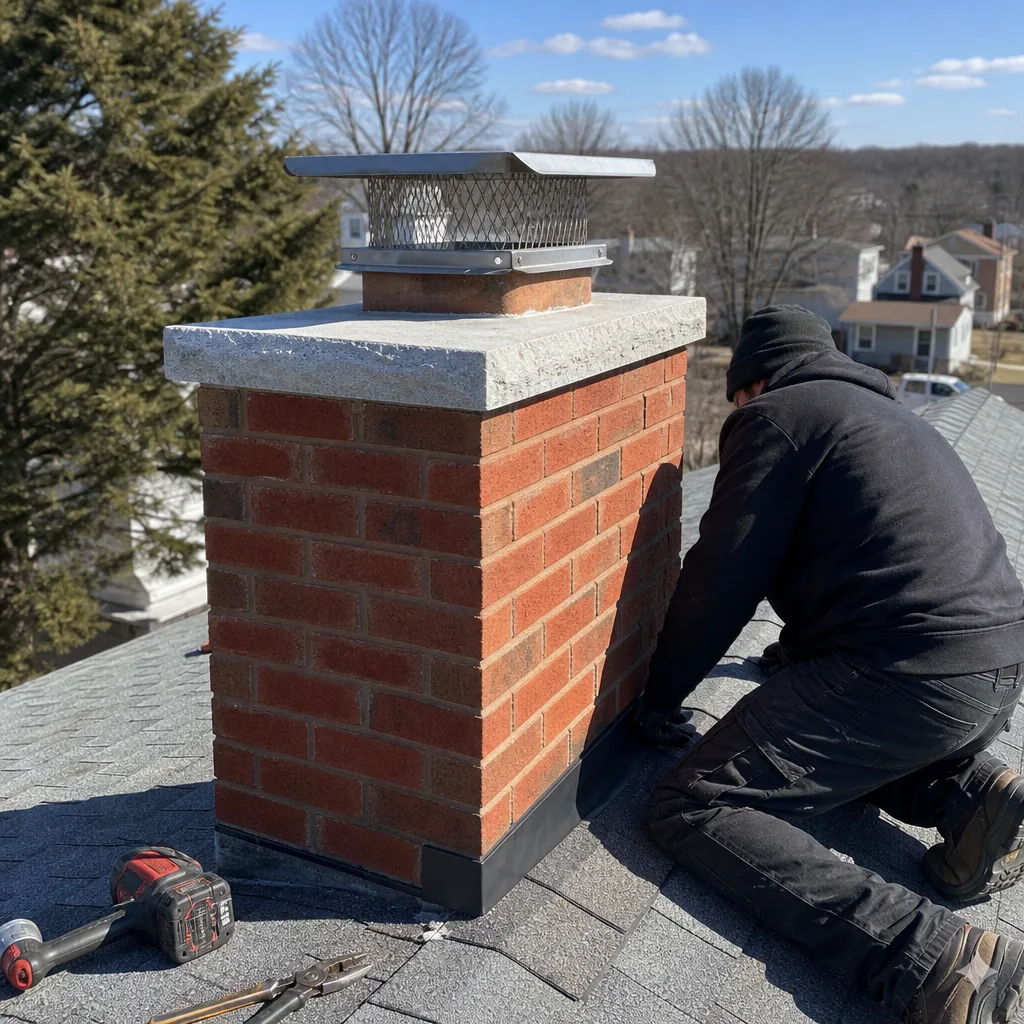
A properly sized cap on every flue of a Reading chimney keeps rain, snow, and the occasional starling or squirrel out of the shaft. On the town’s older coal-era stacks, we often find the original terra cotta caps were never replaced when the chimney was converted to oil, and the opening is now far too large for a standard cap. We measure, fabricate, and install caps that actually fit the opening you have, not the opening a stock catalog assumes.

Cap Replacement
If your existing cap is rusted through, blown off in a nor’easter, or simply sized for a different appliance than the one now venting through your flue, replacement is often a same-day job. In Reading, where freeze-thaw cycles are rough on galvanized steel, we see caps that look fine from the ground but have rusted bolt holes and lifted seams once you’re actually standing at the crown. A replacement cap in Reading typically runs $185-$450 installed, depending on flue size and whether you need stainless steel or copper. Call (978) 637-8560 and Wendell can give you a firm number before anyone comes out.

Crown Repair
The crown is the concrete or mortar shoulder that sheds water away from your flue opening. On Reading’s pre-war brick chimneys, the original poured crowns have now been through 80 to 100 New England winters, and hairline cracks are the rule, not the exception. Once water gets behind those cracks and freezes, it expands and widens them, eventually working into the brick itself. We repair crowns with a proper slope and a drip edge so water runs off instead of soaking in. Small crack repairs start around $275; a full crown rebuild is typically $900-$1,400 depending on chimney size and access.

Crown Coating
For crowns that are structurally sound but showing surface porosity, we apply a specialized elastomeric crown coat that flexes through freeze-thaw cycles without cracking. This is a common recommendation for Reading homeowners whose crowns have minor spalling but don’t yet need full replacement. Coating typically runs $350-$650 and adds years to a crown that would otherwise be a rebuild in three or four seasons. We’ll tell you honestly if coating is enough or if you’re past the point where it makes sense.

Multi-Flue Cap and Custom Cap
Most Reading homes with two or more flues share one chimney stack, and the cap decision matters more here than on a single-flue chimney. A stock multi-flue cap is sized to cover a standard opening. Your coal-era stack isn’t standard. When the original flue was built for a coal furnace, then relined for oil, and is now carrying a gas exhaust, the dimensions often require a custom-fabricated cap. We build those to spec using Copperfield and Famco components so the cap actually covers the opening, sheds water correctly, and leaves the right clearance for draft. Custom caps in Reading typically run $650-$1,200 including fabrication and installation.

What happens when you call
- 1
A real person answersNo phone trees - you reach a local pro.
- 2
You get an upfront price rangeHonest numbers before anyone is dispatched.
- 3
A background-checked tech heads outLicensed & insured, dispatched right away.
- 4
You approve before work beginsNothing starts until you say go.
Trusted Brands We Service in Reading
We install and service caps, crowns, and liner systems from DuraFlex, HeatShield, Olympia Chimney, Famco, and Copperfield. We keep common components in local inventory for the patterns we see most in Reading’s housing stock, which means a lot of cap replacements get done in one visit instead of waiting a week for a part. DuraFlex liners and Copperfield custom caps are two we reach for often in Reading, because they hold up to the specific conditions this town throws at a chimney: long heating seasons, heavy snow loads, and the oversized flues that make an off-the-shelf part the wrong call.
Common Chimney Cap & Crown Problems We See in Reading Homes
These are the patterns we see again and again in Reading. They’re connected to the town’s housing age and building style, and they’re not what you’d see in a newer subdivision.
- Shared party-wall cross-contamination. Reading’s 1910-1950s colonials and capes near the commuter rail frequently share a chimney stack with an attached unit. A missing cap on one unit’s flue lets rain drive into the shaft, saturate the old mortar collar, and push moisture through to the neighbor’s side. More seriously, a downdraft from a missing cap can push exhaust gases from one unit’s appliance back through the open mortar joints and into the other unit’s living space.
- Freeze-thaw cracking in the poured crown. Reading averages around 55 inches of snow and sits in a freeze-thaw zone that works year-round on old mortar. The poured crowns on pre-war brick chimneys develop hairline cracks that let water behind the flue tiles. Once that happens in a shared party wall, you see efflorescence on the neighbor’s bedroom wall before you see anything on your own side.
- Undersized caps on relined coal-era flues. When mid-century oil liners were inserted into coal shafts, the original flue opening stayed huge. Homeowners then bought whatever cap the hardware store had, which rarely covers the full opening. Rain, snow, and animals get in around the edges, accelerating liner deterioration and loading moisture into the void between the old brick and the newer tile.
- Broken multi-flue caps on two-family homes. Two-family properties near the town center often have a single cap covering two flues at different heights. When one flue’s appliance was changed, the cap was sometimes left as-is, leaving one flue open to rain and the other functioning. That’s a specific Reading pattern: the cap was sized for the original configuration and never updated when the fuel source changed.
Pricing for Chimney Cap & Crown in Reading, MA
Here’s what you should expect for cap and crown work in Reading’s market. These are real ranges based on the jobs we do regularly in town, not national averages that don’t account for your housing stock.
- Cap installation (single flue, standard): $185-$450
- Cap replacement (stainless or copper): $200-$550
- Custom multi-flue cap (fabricated to fit oversized coal-era opening): $650-$1,200
- Crown crack repair (small, localized): $275-$500
- Full crown rebuild (typical Reading chimney): $900-$1,400
- Crown coating (elastomeric): $350-$650
What moves the price in Reading is access and the condition of what’s underneath. A two-story colonial on a tight lot near Haverhill Street costs more to work on than a single-story ranch out toward the North Reading line, because the setup takes longer and the roof pitch is steeper. If we find that the crown has been hiding liner damage, the quote changes and you’ll see exactly why on the camera. Every quote is given before work begins, and the number you hear on the phone is the number on the invoice. You can also take $40 off any repair over $200, and seniors and veterans always get 10% off. Call (978) 637-8560 for a free estimate.
We Also Serve Cities Near Reading
Top Hat Chimney serves Reading and the surrounding communities, including Stoneham, North Reading, Lynnfield, and Melrose. If you’re in one of those towns and you’re seeing water stains, rusted caps, or you’re not sure whether your crown survived the last winter, call (978) 637-8560 and we’ll get you scheduled.
Serving Reading, MA - Our Local Coverage Area
We’re based in the Reading area and know this community well. Use the map below to see our service coverage - if you’re nearby, we can almost certainly help.
FAQs - Chimney Cap & Crown in Reading
You’ll know by looking at the crown for a proper drip edge, a slope that sheds water away from the flue instead of toward it, and no visible patching that looks like someone skimmed over old cracks with fresh mortar. In Reading, we often see “rebuilds” that were really just a cosmetic skim coat over a failing crown. The camera inspection shows what’s underneath. If you’re not sure, call (978) 637-8560 and we will pull the footage and show you exactly what’s there before recommending anything.
Yes. In a shared party-wall chimney, the flues run side by side inside the same masonry stack, separated only by brick wythe and mortar. When the neighbor’s cap is missing or their flue has open mortar joints, downdraft can push exhaust gases across into your flue, especially when your appliance isn’t firing and theirs is. In Reading’s older two-family homes near the commuter rail, this is one of the most common cross-contamination patterns we document. If you share a chimney wall and you smell combustion odors or see staining near the ceiling line, call us. This is worth inspecting right away, not next season.
Reading sits a few miles inland and a bit higher, and the freeze-thaw cycling here is relentless. When snow piles on a crown and melts into hairline cracks, then refreezes overnight, the ice expands and widens those cracks. That cycle repeats dozens of times each winter. Boston’s denser urban environment and slightly warmer microclimate moderate that somewhat, but Reading’s older brick chimneys get the full force of it. A crown with small cracks in October can be a spalling mess by March.
The Reading pattern is a mid-century oil flue liner mortared into a much larger coal-era shaft, leaving hidden voids between the old brick and the newer tile. Those voids trap moisture, breed efflorescence, and eventually let the liner shift. A borescope inspection catches that before your new gas insert gets installed and the chimney suddenly doesn’t meet code. Once that liner shifts, you’re looking at a rebuild, not a repair. Wendell has pulled a camera through enough Reading chimneys to know this pattern on sight.
Stock multi-flue caps are built to cover standard flue openings, and your coal-era chimney almost certainly doesn’t have a standard opening. The original flue was dimensioned for a coal furnace burning around the clock, then a smaller oil liner was dropped in and mortared around. The remaining opening is too wide for a stock cap to cover properly, which leaves gaps for rain and animals and undermines the whole point of the cap. A custom cap fabricated to your actual dimensions costs more but does the job. That’s the difference between a cap that works and a cap that just looks like it works from the ground.
Written by Wendell Pike, Owner at Top Hat Chimney, serving Reading and surrounding communities since 1999.